
What Should an Accounting Website Include? 12 Essential Features
Choosing an accountant isn’t quite like choosing someone to clean your gutters.
You’re potentially handing over years of financial information, discussing things you may not particularly enjoy discussing, and relying on that person to help you make decisions that affect your business, your money and sometimes your future.
So before a prospective client ever calls an accounting firm, there’s a good chance they’ll do some investigating.
They’ll look at the website. They’ll look at the people. They’ll look at the services. They may check Google reviews, qualifications and LinkedIn profiles. And somewhere along the way they’ll form an opinion about whether this feels like a business they can trust.
That’s why an accounting website shouldn’t simply be an online brochure listing tax returns, bookkeeping and business advisory.
It needs to answer a much bigger question:
“Are these the people I want looking after my finances?”
After more than 20 years designing websites for Australian small businesses, I’ve found that the strongest professional-service websites aren’t necessarily the biggest or the flashiest. They’re the ones that remove uncertainty.
Here are 12 things I’d want an accounting website to get right.
1. Tell Me Who You Help Before You Tell Me Everything You Do
One of the most common mistakes on professional-service websites is trying to speak to everybody.
The homepage says something along the lines of:
“We provide comprehensive accounting, taxation and advisory solutions tailored to your individual needs.”
It sounds professional. It also tells me almost nothing.
Compare that with a firm that makes it immediately obvious that it works primarily with:
- small and family businesses;
- medical professionals;
- property investors;
- tradies and construction businesses;
- startups;
- high-net-worth individuals; or
- a particular local community.
The second approach lets the prospective client recognise themselves.
That doesn’t mean you have to exclude everybody else. It means you stop making visitors work so hard to decide whether they’re in the right place.
A useful test: show somebody only the first screen of your homepage for five seconds. Can they tell what you do, who you work with and roughly what makes your firm different?
If not, your logo probably isn’t the problem. Your message is.
2. Structure Your Services Around What Clients Are Actually Looking For
Accountants know the difference between compliance, advisory, management accounting, business structuring, SMSF services and tax planning.
Prospective clients don’t always use the same language.
Someone might arrive thinking:
- “I’ve started a business and don’t know what I need.”
- “My accountant only talks to me once a year.”
- “My bookkeeping is a mess.”
- “I’m paying too much tax and don’t understand why.”
- “My business has grown and I need better financial advice.”
Your website needs to bridge the gap between the client’s problem and the professional service that solves it.
That’s one reason I’m not a fan of squeezing every service onto one enormous Services page.
If business advisory is an important part of your practice, give it enough room to explain what that actually means. The same applies to services such as bookkeeping, tax planning, SMSF accounting or business structuring.
A good individual service page can answer:
- Who is this service for?
- What problem does it solve?
- What’s actually included?
- When might somebody need it?
- What happens when they contact you?
That’s far more useful than a bullet point saying “Business Advisory”.
3. Make Your Accountants Visible
If I’m considering giving your firm access to sensitive financial information, I want to know who I’m dealing with.
Yet plenty of professional websites hide the people behind paragraphs about “our commitment to excellence”.
Show them.
A strong accountant profile might include:
- a good-quality, current photograph;
- qualifications and professional memberships;
- areas of expertise;
- industries or types of clients they particularly understand;
- relevant experience; and
- a little personality.
That last one doesn’t mean telling us your favourite pizza topping unless that’s genuinely part of your brand.
It means giving people some sense of the human being they’re potentially going to sit across from.
“CPA with 18 years’ experience advising family businesses” is useful.
“Passionate about delivering holistic solutions and exceeding client expectations” could belong to almost anybody.
4. Show Evidence Instead of Simply Saying You’re Good
Almost every accounting firm says it is professional, experienced, reliable and client-focused.
Those words aren’t bad. They’re simply easy to claim.
Evidence is stronger.
That might include:
- CPA or CA qualifications;
- registered tax agent details where relevant;
- professional memberships;
- years in practice;
- industry specialisations;
- client reviews;
- case studies; or
- recognisable businesses or industries you’ve worked with, where appropriate.
Think of it as the difference between saying “Trust us” and giving somebody reasons to trust you.
The second is much more convincing.
5. Use Testimonials That Actually Tell a Story
There’s nothing wrong with a client saying:
“Great accountant. Highly recommended.”
I’d certainly rather have that review than no review.
But from a website perspective, it doesn’t tell a prospective client very much.
Now imagine a testimonial explaining that the client came to the firm after outgrowing their previous accountant, needed help getting their business finances under control, and finally received advice they could understand.
Suddenly the reader can recognise their own situation.
The best testimonials often reveal three things:
Before: What was frustrating or difficult?
Experience: What was it like dealing with the firm?
After: What changed?
You don’t need to rewrite what clients say, of course. But when you’re deciding which reviews to feature prominently, choose the ones that reveal something meaningful about working with you.
Reviews also matter beyond your own website. Research into local consumer behaviour continues to show that people use the detail in both positive and negative reviews when assessing businesses – another reason genuine, specific reviews are more useful than a wall of generic praise.
6. Don’t Make Every Accounting Website Look Like an Accounting Website
You know the look.
Dark blue.
A calculator.
A pen sitting on a spreadsheet.
Maybe a stock photograph of four impossibly happy executives staring at a graph.
There’s nothing inherently wrong with blue, calculators or graphs. The problem comes when your website could swap logos with five competing accounting firms and nobody would notice.
Your design should reflect your practice.
An established corporate accounting firm may need a very different visual presence from an accountant working closely with creative businesses, startups or local family businesses.
The question isn’t:
“Does this look like an accountant’s website?”
It’s:
“Does this feel like our accounting firm?”
7. Decide Whether Showing Fees Will Help or Hurt
This is one of those questions where there isn’t one correct answer.
Some accounting firms can publish packages or starting prices relatively easily. Others provide services that vary too much in scope and complexity.
But simply hiding every mention of price because competitors do the same isn’t necessarily the answer either.
If you don’t publish fees, you can still reduce uncertainty.
For example, explain:
- whether you offer fixed-fee arrangements;
- whether services are packaged or quoted individually;
- what affects the cost;
- whether an initial consultation is free or paid; and
- what happens before somebody commits.
The objective isn’t necessarily to give everybody a dollar figure.
It’s to remove that slightly uncomfortable feeling of: “If I contact them, what am I getting myself into?”
8. Make the Next Step Feel Easy
“Contact us” is technically a call to action.
It’s just not always a particularly helpful one.
A prospective client may be wondering what happens after they contact you.
Do they book a 20-minute introductory call? Complete a short form? Speak to an accountant? Receive a proposal? Bring their existing financial information?
Explain it.
For example:
Book an introductory call.
We’ll talk about your business, what you need help with and whether we’re the right fit. If we can help, we’ll explain the next steps and costs before you commit to anything.
That’s far less intimidating than a lonely button saying “SUBMIT”.
Your enquiry form should also ask enough to help you understand the lead without turning into a tax return in its own right.
Name, contact details, business type and a simple “What can we help you with?” may be enough for the first conversation.
9. Think Carefully About Security and Privacy
This matters for every business website, but accounting firms have an additional trust hurdle because of the information clients associate with accountants.
Your public website should not become an unnecessarily risky way for clients to send sensitive financial documents.
If clients need to exchange confidential files, a secure client portal or appropriate document-sharing system is generally a much better experience than encouraging them to attach everything to a basic website enquiry form.
Your website itself should also be properly maintained, use HTTPS, run current software and have appropriate security measures in place.
And if your website collects personal information, make sure your privacy practices and notices are appropriate for your business and the Australian privacy requirements that apply to you.
The key principle is simple:
Only ask for information through your website that you actually need at that stage.
You probably don’t need someone’s tax file number to arrange an introductory phone call.
10. Build for the Person Looking You Up on Their Phone
Imagine somebody has just been given your name at a business lunch.
They’re not going back to their office, opening their laptop and carefully studying your website on a 27-inch monitor.
There’s a good chance they’ll pull out their phone and Google you.
What do they see?
Can they immediately work out who you are? Can they read the text without pinching and zooming? Can they see your reviews? Can they tap your phone number? Can they complete your enquiry form without wanting to throw the phone across the room?
This isn’t just about visitors. Google crawls websites for Search using its smartphone crawler and recommends responsive web design.
So when reviewing an accounting website, don’t approve the desktop version and assume the job is finished.
Actually use it on your phone.
11. Answer the Questions Prospective Clients Are Already Asking
Accountants have an enormous advantage when it comes to website content: clients ask you questions all day.
Those questions are content ideas.
If clients repeatedly ask:
- Should I operate as a sole trader or company?
- When should I register for GST?
- Do I need a bookkeeper and an accountant?
- What records should I keep?
- Can you help me move to Xero?
- When should I speak to an accountant about buying a business?
you already know people want those answers.
A useful article can answer the question, demonstrate how you think and introduce somebody to your firm long before they’re ready to make an enquiry.
But don’t fall into the trap of publishing 50 generic articles simply because somebody told you “Google likes fresh content”.
I’d rather see an accounting firm publish ten genuinely useful resources based on real client questions than 100 forgettable posts written purely to fill a content calendar.
12. Give People a Reason to Remember You
This may be the most important point of the lot.
Your website doesn’t exist in isolation.
A potential client might look at yours, then three competing firms, then answer an email, make coffee and forget which accountant said what.
What will they remember about you?
Perhaps you specialise in helping family businesses through growth and succession.
Perhaps you’re particularly good at helping business owners understand their numbers without drowning them in accounting jargon.
Perhaps your firm is highly responsive and technology-focused.
Perhaps you know a particular industry inside out.
Whatever it is, your website should make that distinction clearer rather than burying it underneath generic promises about quality service.
A website can’t manufacture a point of difference that doesn’t exist.
But it can do a much better job of communicating the one you already have.
Putting It All Together: The 10-Second Accounting Website Test
Open your own homepage and pretend you’ve never seen it before.
Within about ten seconds, can you answer these questions?
- Who is this firm?
- Who do they help?
- What can they help me with?
- Why might I choose them?
- Do they look credible?
- Can I see the actual people?
- What do their clients say?
- What should I do next?
If several answers require hunting through menus or decoding accounting terminology, that’s where I’d start improving the website.
What Does a Good Accounting Website Actually Look Like?
There isn’t one correct answer – and that’s rather the point.
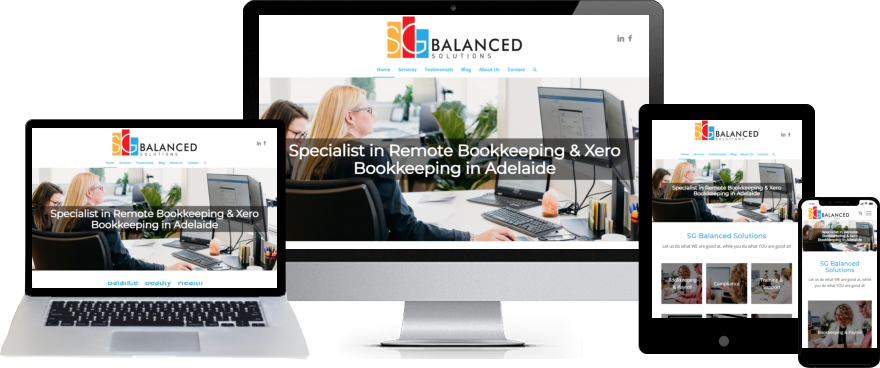
We’ve designed websites for accountants and other financial-services businesses with very different audiences, personalities and services. The objective isn’t to force them all into the same template. It’s to make the website feel appropriate for the business behind it.
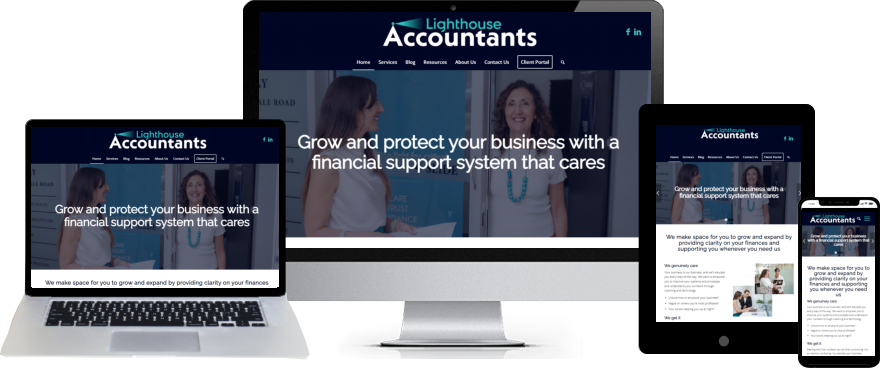
You can see some real examples in our Financial Services Website Design Gallery.
Planning a New Website for Your Accounting Firm?
If you’re looking at your current website while reading this and mentally ticking off everything that’s missing, don’t panic.
You don’t necessarily need more pages, more features and more stuff.
You need the right information presented clearly, a design that reflects your business and a straightforward path for the right prospective client to take the next step.
That’s exactly what we focus on with our web design for accountants service.
We create professional websites for accountants and accounting firms that build trust, showcase your expertise and – importantly – give you a website you’re proud to put your name to.
Frequently Asked Questions
How much does a website for an accountant cost in Australia?
The cost of an accounting website varies enormously depending on whether you use a DIY website builder, a template or a professional web designer. The number of pages, custom design, copywriting, booking systems, client portals and other integrations can also affect the price. Rather than comparing website quotes on price alone, check exactly what is included – particularly design, mobile optimisation, hosting, ongoing costs, content and support. A simple website for a sole practitioner will naturally have very different requirements from a multi-partner accounting firm with numerous services and locations. Our prices for a professional accounting website start from $1440.
What pages should an accounting website have?
Most accounting websites need a homepage, About page, contact page and clear information about the firm’s main services. Important accounting services may benefit from their own pages rather than being grouped together on one general Services page. Depending on the practice, the website may also include individual accountant or team profiles, industries served, client testimonials, FAQs, useful articles or resources and access to a secure client portal. The right structure depends on what the firm offers and what prospective clients need to know before making contact.
Should an accounting firm have a separate website page for each service?
Not necessarily for every minor service, but important services usually deserve their own pages. Someone looking for an SMSF accountant, business advisory, bookkeeping or tax planning has a specific need and may want much more information than a few sentences on a general Services page can provide. Separate pages also allow an accounting firm to explain who each service is for, what is involved and the problems it can help solve. They can also give search engines clearer information about the individual accounting services the firm provides.
Does an accountant’s website need a secure client portal?
Not every accounting website needs a client portal, but accounting firms that regularly exchange sensitive financial documents should consider using a secure system designed for that purpose. A normal website enquiry form is generally better suited to initial enquiries than collecting tax returns, financial statements or other confidential documents. A client portal can give existing clients a dedicated place to exchange documents or access information, while the public website concentrates on introducing the firm, explaining its services and attracting prospective clients. This separation is also recommended in current accounting-website guidance.
Can an old accounting website be redesigned, or does it need to be completely rebuilt?
It depends on what’s underneath it. If the existing website is technically sound, mobile-friendly and easy to manage, a redesign may be enough. If it uses outdated software, has a confusing structure, performs poorly on mobile or has accumulated years of technical problems, rebuilding it may be more practical than continually patching it. Before deciding, look at the website’s design, content, structure and technology separately – an old-looking website doesn’t automatically mean everything behind it needs replacing.
Do accountants need SEO on their website?
If an accounting firm wants to be found by people who don’t already know its name, search visibility matters. SEO for an accountant’s website starts with clear website structure and useful pages describing the firm’s actual services, clients and locations. For example, a firm wanting to attract searches for business advisory, SMSF accounting or tax services needs enough relevant information for Google to understand that it genuinely offers those services. Useful articles answering real client questions can then support those core service pages. SEO isn’t simply adding “accountant Sydney” repeatedly throughout the website.
Should an accounting firm have a blog?
An accounting firm doesn’t need a blog simply because businesses are told they should have one. It does, however, have a ready-made source of genuinely useful content: the questions clients ask every day. Articles explaining issues such as business structures, GST, bookkeeping, cash flow, tax planning or accounting software can demonstrate the firm’s expertise and attract people researching those topics online. The important thing is to publish useful content that reflects the firm’s actual expertise rather than filling the website with generic financial articles that could have been written for any accounting practice.