
The Complete Guide to Small Business
Website Conversion & Growth

Having a website is one thing. Getting results from it is something else entirely.

Many small business owners invest time and money into their website, only to find that it doesn’t generate enquiries, bookings, or consistent leads. It might look professional, but it isn’t actively supporting the growth of the business.

This is where website conversion and growth come in. It’s not about adding more features or making things more complicated. It’s about making your website clearer, easier to use, and more aligned with how people actually make decisions online.

When your website is structured properly, guides visitors clearly, and builds trust along the way, it becomes more than just an online presence. It becomes a reliable part of how your business attracts and converts new clients.

This guide brings all of these elements together, so you can start making practical improvements that help your website support your business more effectively.

On this page, you will learn:

  • What website conversion really means for a small business
  • How to structure your website to generate more enquiries
  • How to guide visitors with clear calls to action
  • When and how to use landing pages effectively
  • What your website data is actually telling you about user behaviour
  • How to build trust and credibility through your website
  • How to improve your website over time without starting from scratch
Lead Generation & Enquiries

If your website isn’t generating enquiries, it’s not supporting your business in the way it should.

A lot of small business websites rely on hope. They assume that if someone is interested enough, they’ll find a way to get in touch. In reality, people don’t work that hard. If the next step isn’t obvious or feels even slightly inconvenient, they move on.

This is where many websites quietly lose opportunities. Not because the service isn’t good, but because the path to enquiry isn’t clear, visible, or easy to follow. Small points of friction, like long forms, unclear buttons, or buried contact details, can make a bigger difference than most people expect.

Good lead generation is not about adding more features. It’s about making it easier for people to take action. When someone lands on your website, they should immediately understand what to do next without having to think about it.

A strong enquiry-focused website also relies on clear structure and layout, which is covered in our Website Design & Redesign guide.

What Lead Generation & Enquiries Covers

This section focuses on how to structure your website so people can easily take the next step and get in touch with you.

  • How to design a website that naturally generates enquiries
  • Creating contact forms that are simple and effective
  • Where to place contact options across your website
  • Using click-to-call, email, and fast contact methods
  • When to use booking systems and when to keep things simple
  • Reducing friction in your enquiry process

— >  Explore Lead Generation & Enquiries

Calls to Action & Conversion Strategy

Your website should guide people, not leave them guessing.

One of the most common issues on small business websites is the lack of clear direction. Visitors land on a page, read some information, maybe scroll a little, and then leave without taking any action. Not because they’re not interested, but because they’re not sure what to do next.

This is where calls to action come in. A call to action is simply the next step you want someone to take, whether that’s getting in touch, booking a service, or learning more. When this step isn’t clearly communicated, people tend to hesitate, and hesitation usually leads to them leaving your website.

Good conversion strategy is not about being pushy or overly sales-focused. It’s about making the journey through your website feel clear and natural. Each page should gently guide visitors toward the next step, without overwhelming them or forcing a decision too early.

Placement also plays a big role. If your calls to action are buried at the bottom of the page or scattered inconsistently, they’re easy to miss. When they are placed strategically and repeated where appropriate, they become part of the flow rather than an interruption.

Another common mistake is trying to do too much on a single page. When there are too many competing actions, visitors become unsure which one to choose. A clear, focused approach tends to perform better, especially for small business websites.

When your calls to action are clear, well-placed, and aligned with what your visitors are looking for, your website becomes easier to navigate and more effective at turning interest into action.

What Calls to Action & Conversion Strategy Covers

This section focuses on how to guide visitors through your website and make it easier for them to take the next step.

  • What makes a strong and effective call to action
  • Where to place calls to action across your website
  • How to guide visitors from one page to the next
  • Understanding when to use soft versus direct calls to action
  • Avoiding common mistakes that reduce conversions
  • Creating a clear and consistent user journey

— > Explore Calls to Action & Conversion Strategy

Calls to action work best when they are supported by clear messaging and content, which is explored further in our Content & Visibility guide.

Landing Pages & Sales Pages

Landing Pages & Sales Pages

Not every page on your website is designed to do the same job.

Some pages are there to inform, while others are designed to encourage action. Landing pages and sales pages fall into the second category. They focus on a single goal, whether that’s capturing an enquiry, promoting a specific service, or supporting a marketing campaign.

One of the biggest mistakes small business websites make is trying to make every page do everything. When a page has too many purposes, it becomes unclear, and visitors are less likely to take action. Landing pages work because they remove distractions and keep the focus on one clear outcome.

These pages are especially useful when you are running campaigns, promoting a specific offer, or targeting a particular audience. Instead of sending people to a general page and expecting them to figure things out, a dedicated landing page gives them exactly what they need, in the right order.

Sales pages follow a similar idea but are often more detailed. They guide visitors through your offer step by step, helping them understand the value, address common questions, and build confidence before taking action.

Structure plays a big role here. A strong landing or sales page is not just about good design, but about how information is presented. When content flows logically and answers the right questions at the right time, people are more likely to stay engaged and move forward.

When used well, these pages can significantly improve how your website converts, especially when they are aligned with a specific goal rather than trying to serve every possible purpose.

What Landing Pages & Sales Pages Covers

This section focuses on when and how to use dedicated pages to support specific goals and improve conversions.

  • Understanding the difference between landing pages and standard website pages
  • When to use landing pages for campaigns or specific services
  • What makes a landing page effective and easy to follow
  • How sales pages guide visitors through a complete offer
  • Structuring pages to reduce distractions and increase focus
  • Common mistakes that reduce the effectiveness of these pages

— >  Explore Landing Pages & Sales Pages

Website Analytics, Behaviour & Performance

What you think is happening on your website and what is actually happening are often very different.

Many small business owners assume their website is working simply because it looks good or because they occasionally receive enquiries. But without understanding how people are actually using your website, it’s difficult to know what’s working and what’s quietly holding it back.

This is where analytics and user behaviour come in. It’s not about getting lost in numbers or complicated reports. It’s about gaining a clear, practical understanding of how visitors move through your site, what they engage with, and where they lose interest.

For example, if people are landing on your homepage but not clicking through to your services, that tells you something. If they start filling out a form but don’t complete it, that tells you something else. These small signals give you insight into where improvements can be made.

One of the biggest mistakes is focusing on the wrong metrics. High traffic might look impressive, but if it’s not leading to enquiries, it’s not helping your business. Understanding which numbers actually matter allows you to make better decisions without overcomplicating things.

The goal here is not to track everything, but to focus on the information that helps you improve your website in a meaningful way. When you understand how people behave on your site, you can make changes that are based on real insight rather than guesswork.

Over time, even small adjustments based on this understanding can lead to noticeable improvements in how your website performs.

What Website Analytics, Behaviour & Performance Covers

This section focuses on understanding how people use your website and how to use that insight to improve results.

  • What website analytics actually matter for small businesses
  • Understanding how visitors move through your website
  • Identifying where people drop off and why
  • How to tell if your website is performing effectively
  • Tracking enquiries and key actions without overcomplicating it
  • Using data to make practical, informed improvements

— >  Explore Website Analytics, Behaviour & Performance

Understanding how people interact with your content also plays a role in improving performance, which ties closely into our Content & Visibility guide.

Trust, Credibility & Social Proof

Before someone contacts you, they need to feel confident that you are the right choice.

No matter how good your services are, if your website doesn’t build trust, people will hesitate. And when people hesitate, they often leave and continue looking elsewhere. This happens quietly, without any clear signal, which is why it’s often overlooked.

Trust is not built through design alone. While a professional look helps, what really matters is what your website communicates about you. People are looking for reassurance that you are experienced, reliable, and capable of delivering what you promise.

This is where credibility comes in. Clear information about what you do, who you help, and how you work plays a big role. When your website answers these questions naturally, it reduces uncertainty and makes it easier for someone to take the next step.

Social proof strengthens this further. Testimonials, case studies, and real examples show that others have already trusted you and had a positive experience. This helps new visitors feel more confident, especially if they are comparing multiple options.

A common mistake is either not including enough proof or hiding it where people don’t see it. Trust-building elements should be visible, relevant, and integrated into your pages rather than treated as an afterthought.

When trust and credibility are handled well, your website feels more reassuring and professional. This doesn’t just improve how people perceive your business, it directly influences whether they choose to contact you.

What Trust, Credibility & Social Proof Covers

This section focuses on how to build confidence through your website and reduce hesitation for potential clients.

  • Why trust matters more than design when it comes to conversions
  • What builds credibility on a small business website
  • How to use testimonials effectively and where to place them
  • The difference between testimonials and case studies
  • Key trust signals every website should include
  • Common mistakes that reduce credibility and trust

— >  Explore Trust, Credibility & Social Proof

Continuous Website Improvement

Your website is not a one-time project. It’s something that should evolve alongside your business.

Many small business owners launch their website and then leave it unchanged for years. Over time, services shift, messaging becomes outdated, and the way people interact with websites continues to change. When this happens, even a well-designed site can gradually lose its effectiveness.

Improving your website doesn’t always require a full redesign. In many cases, small, consistent updates can have a meaningful impact. Adjusting your content, refining your calls to action, or improving how information is presented can all contribute to better results.

One of the biggest advantages small business owners have is flexibility. Unlike larger organisations, you can make changes quickly and respond to what you’re seeing in real time. This allows you to refine your website based on how people are actually using it.

It’s also important to recognise when a website needs more than small adjustments. If your structure no longer supports your services, or your messaging no longer reflects your business, it may be time for a more significant update.

The key is not to wait until your website stops working completely. Regularly reviewing your site and making small improvements keeps it aligned with your business and helps it continue to support your growth.

Over time, these incremental changes build on each other, creating a website that becomes more effective and more aligned with your goals.

As your website evolves, tools like automation and AI can also support ongoing improvements, helping you save time and streamline how your website operates. You can explore this further in our AI & Automation guide.

What Continuous Website Improvement Covers

This section focuses on how to keep your website performing effectively as your business evolves.

  • Why your website should be reviewed and updated regularly
  • Small changes that can improve performance over time
  • How to identify areas of your website that need improvement
  • When to update your website versus when to redesign it
  • Creating a simple and manageable improvement plan
  • Using insights and feedback to guide ongoing changes

— >  Explore Continuous Website Improvement

Bringing It All Together

Each of the areas covered in this guide plays a role in how your website performs.

It’s easy to focus on just one element, whether that’s design, content, or trying to get more traffic. But on their own, these rarely deliver consistent results. A website works best when all of these pieces come together in a clear and connected way.

Your website should make it easy for people to understand what you offer, guide them toward the next step, and build enough trust for them to feel confident reaching out. When any one of these areas is unclear or missing, it creates friction, and that friction is often what stops people from taking action.

The good news is that improving your website doesn’t require a complete overhaul. In many cases, small, focused changes can make a noticeable difference. Simplifying your enquiry process, improving your messaging, or making your calls to action clearer can all contribute to better outcomes.

Over time, these improvements build on each other. Instead of relying on guesswork, your website becomes something you understand, something you can refine, and something that actively supports your business.

If your website isn’t generating the level of enquiries or results you expect, it’s usually not one major issue. It’s a combination of smaller gaps that, when addressed, can significantly improve how your site performs.

Start by focusing on one area at a time. Work through the sections in this guide, make practical adjustments, and build from there. That’s how a website moves from simply existing to becoming a reliable part of your business growth.

If you’d like help identifying where your website can be improved or want a website that reflects your business and gives you confidence to share it, you can explore more about our website design services.

Frequently Asked Questions

Traffic alone doesn’t guarantee results. If your website doesn’t clearly guide visitors on what to do next, build trust quickly, or make it easy to get in touch, people will leave without taking action. Small issues like unclear messaging, weak calls to action, or complicated forms can significantly reduce enquiries.

Both matter, but conversion usually has the bigger impact first. If your website isn’t converting visitors into enquiries, increasing traffic won’t solve the problem. Improving how your website performs often leads to better results without needing more visitors.

Each page should have one clear primary action, supported by a few secondary ones where appropriate. The key is consistency, not quantity. Too many competing calls to action can confuse visitors, while a clear, repeated action helps guide them naturally.

Not always, but landing pages are useful when you have a specific goal, such as promoting a service or running a campaign. They remove distractions and focus on one outcome, which often leads to higher conversion compared to general website pages.

A working website consistently generates enquiries, leads, or actions aligned with your goals. Looking at how visitors move through your site, where they drop off, and whether they complete key actions gives you a much clearer picture than just checking traffic numbers.

Not necessarily. Many websites can be improved with small, focused changes such as clearer messaging, better call-to-action placement, or simplifying the enquiry process. A full redesign is only needed when the structure or direction of the website no longer supports your business.

Your website should be reviewed regularly, even if changes are small. Updating content, refining messaging, and making adjustments based on how people use your site helps keep it effective. Waiting years between updates usually leads to a drop in performance.

Yes. Small improvements, such as simplifying a form, clarifying a headline, or improving call-to-action placement, can have a noticeable impact. These changes reduce friction and make it easier for people to take action, which directly affects your results.

Ready to Build or Redesign Your Website?

If you’re reading this and thinking, “This explains exactly what’s wrong with my site,” you’re not alone.

Most small business websites don’t fail because of effort. They fail because they were built without a clear structure, proper planning or long-term thinking.

If you want a website that reflects your business properly, feels organised, and gives you confidence to send people to it, then it might be time for a proper redesign or rebuild.

You can see how I approach website projects here:

Website Design Services for Small Business

View recent website design projects

Whether you’re starting from scratch or improving what you already have, the goal is the same – clarity, structure and a site you’re proud to share.

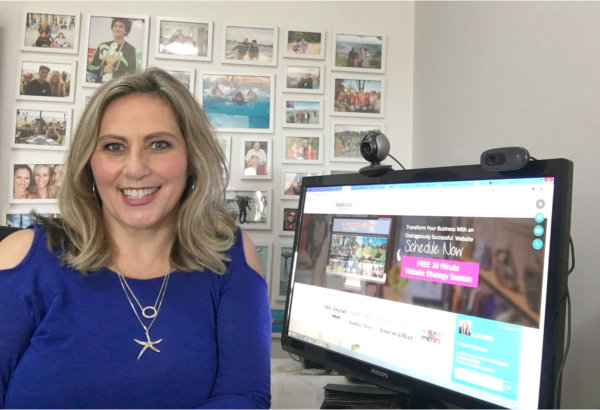
Ivana Katz - Website designer