
Continuous Website Improvement & Growth:
How to Keep Your Website Working for You

This guide forms part of our complete resource on Small Business Website Conversion & Growth.

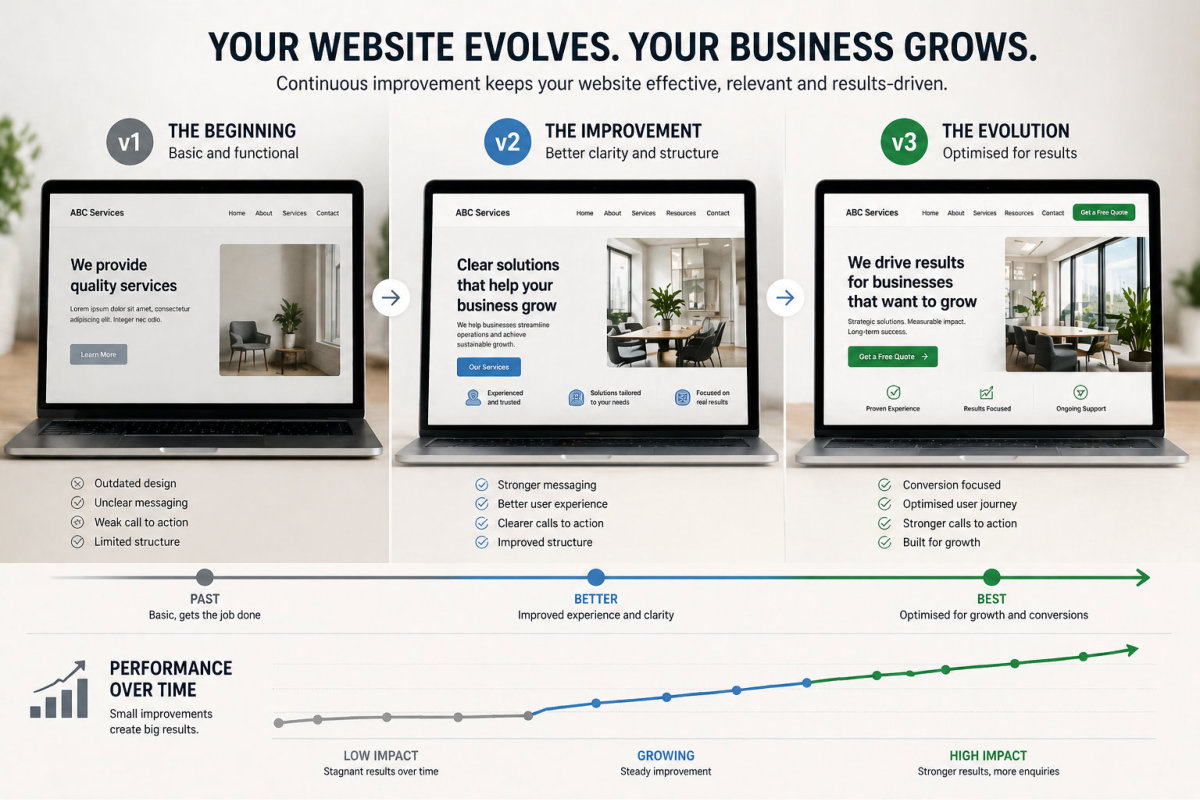
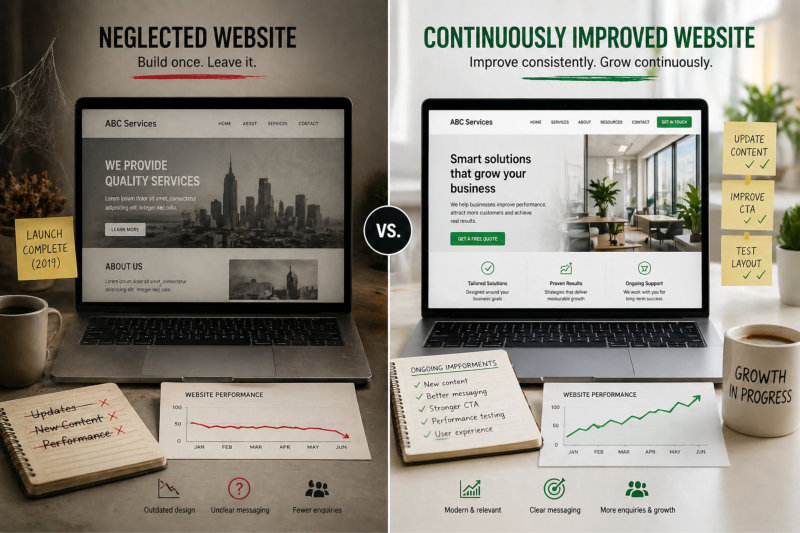
One of the biggest misconceptions about websites is that they are something you build once and then leave alone. In reality, a website that is not maintained or improved over time will gradually lose effectiveness.

User behaviour changes, technology evolves, and your business grows. If your website does not keep up, it can quickly become outdated, less relevant, and less effective at generating enquiries.

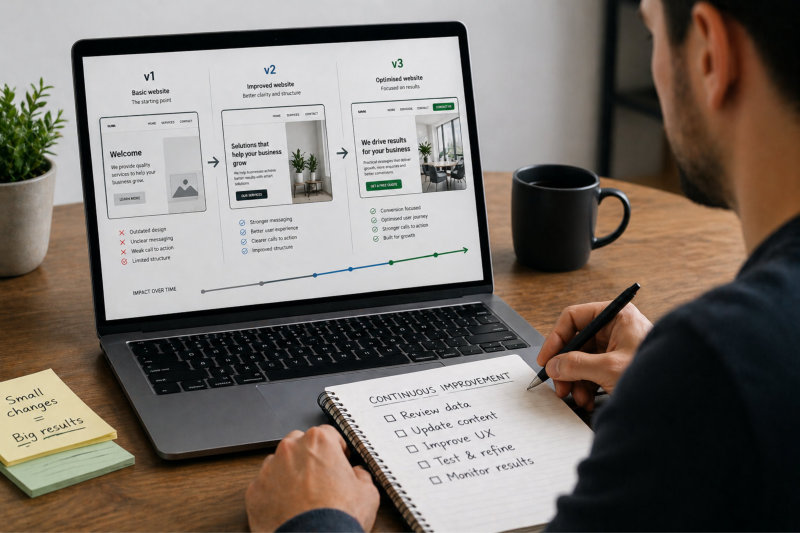
This does not mean you need constant redesigns or major changes. In most cases, small, consistent improvements are far more effective and far less disruptive.

This guide forms part of our complete resource on Website Conversion & Growth: Website Conversion & Growth.

You’ll learn why your website should never be considered “finished”, how to make improvements without starting from scratch, and how to create a simple system for ongoing updates that support your business.

If you want your website to continue generating results over time, ongoing improvement is not optional. It is essential.
Why Your Website Should Never Be “Finished

Websites Need to Evolve with Your Business

Your business does not stay the same over time, and your website should not either. As your services evolve, your experience grows, and your audience changes, your website needs to reflect those updates.

A website that was accurate and effective a year ago may no longer represent your current offering. This creates a gap between what you do and what your website communicates.

Keeping your website updated ensures that it continues to align with your business and present the right message to potential clients.

When your website reflects where your business is now, it becomes a more effective tool for generating enquiries.

User Expectations and Technology Are Always Changing

What users expect from a website is constantly evolving. Design trends, functionality, and user experience standards all shift over time, and websites that do not keep up can quickly feel outdated.

This does not mean chasing every trend, but it does mean maintaining a level of usability and clarity that meets current expectations.

Technology also plays a role. Plugins, themes, and platforms are updated regularly to improve performance, security, and compatibility.

Ignoring these updates can lead to issues that affect both user experience and website reliability.

Why your website should never be finished

Performance Naturally Declines Without Updates

Even if nothing changes on the surface, a website can gradually lose effectiveness over time. Content may become less relevant, calls to action may stop performing as well, and user behaviour may shift.

Without ongoing improvements, these small declines add up and can result in fewer enquiries and lower engagement.

Regular updates help maintain performance and ensure your website continues to support your business goals.

This is why treating a website as a one-time project often leads to missed opportunities.

Small Improvements Are More Effective Than Big Overhauls

Many businesses assume that the only way to improve a website is through a full redesign. In reality, smaller, ongoing changes are often more effective and far less disruptive.

Updating content, refining structure, improving calls to action, and adjusting layouts can all have a noticeable impact without requiring a complete rebuild.

This approach allows you to improve your website gradually while maintaining stability.

If you are looking for practical ways to improve performance, 5 Web Design Hacks to Boost Your Conversion Rates highlights simple changes that can make a difference.

Maintaining Security and Stability Over Time

Ongoing updates are not just about performance, they are also critical for security and stability. WordPress, themes, and plugins are updated regularly, often every few weeks, to address vulnerabilities and improve functionality.

Leaving these updates too long can create risks and increase the likelihood of issues that affect your website.

This is why a structured update schedule is important. For most active websites, quarterly updates provide a practical balance between staying current and maintaining stability.

For example, our WordPress update and maintenance service is $240 per website, per quarter. This ensures that updates are handled properly, issues are minimised, and your website continues to run smoothly without you needing to manage it yourself.

Why your website should never be finished

How to Improve Your Website Without a Full Redesign

Refining Your Messaging for Clarity

One of the most effective ways to improve your website is by refining your messaging. Many websites underperform not because the service is weak, but because the message is unclear or too generic.

Visitors need to quickly understand what you do, who you help, and why they should choose you. If this is not immediately obvious, they are unlikely to stay long enough to take action.

Updating headlines, simplifying language, and making your value clearer can have a significant impact without changing the overall design.

Clear messaging improves engagement and helps guide users toward enquiries more effectively.

Improving Structure and Page Flow

How your content is structured plays a major role in how users experience your website. Even strong content can underperform if it is difficult to follow or poorly organised.

Improving structure might involve breaking content into clearer sections, adding headings, or rearranging the order to create a more logical flow.

The goal is to guide users through your content in a way that builds understanding and leads naturally to a call to action.

Small structural changes can make your website feel more intuitive and easier to navigate.

Enhancing Visual Elements for Engagement

Visual elements play an important role in how users engage with your website. This includes images, spacing, layout, and overall presentation.

Updating visuals does not require a full redesign. Improving image quality, adjusting layouts, or introducing more visual hierarchy can make your content easier to consume.

Well-used visuals help break up text, highlight key points, and keep users engaged for longer.

If you want to improve this area, How to Use Visuals to Boost Engagement and Conversion Rates outlines practical ways to enhance your website.

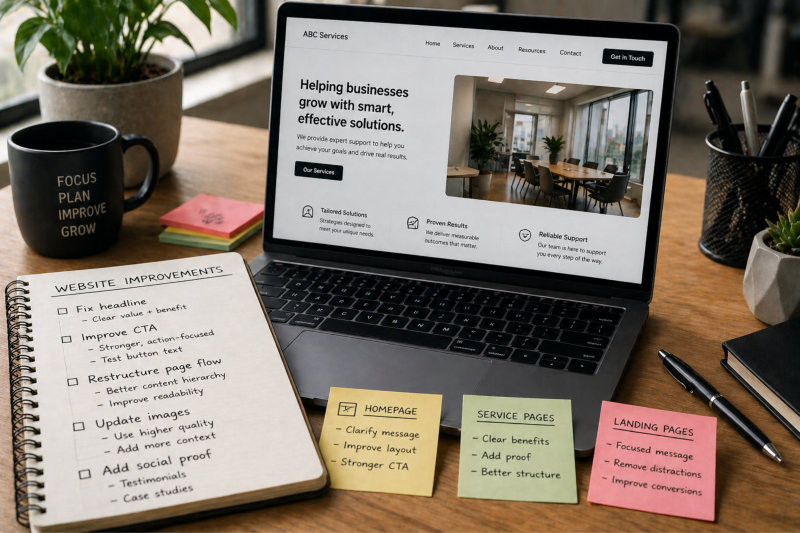
How to improve your website without full redesign

Strengthening Key Pages That Drive Results

Not every page on your website contributes equally to performance. Some pages, such as your homepage, service pages, and landing pages, have a much greater impact on whether users take action.

Focusing your efforts on improving these key pages can deliver faster results than trying to update everything at once.

This might include refining service descriptions, improving calls to action, or adding stronger proof elements such as testimonials.

For service-based businesses, Essential Website Features for Coaches highlights what these pages should include to support conversions.

Making Targeted Improvements Based on Performance

Rather than guessing what to change, improvements should be guided by how your website is currently performing. Analytics and user behaviour can highlight where visitors are engaging and where they are dropping off.

Focusing on these areas allows you to make targeted changes that address real issues rather than making broad, unnecessary updates.

This approach is more efficient and leads to more meaningful results over time.

If your website includes eCommerce elements, How to Improve Your eCommerce Website for Higher Conversions provides additional strategies that can be applied more broadly.

Small Changes That Can Improve Conversions

Rewriting Headlines to Improve First Impressions

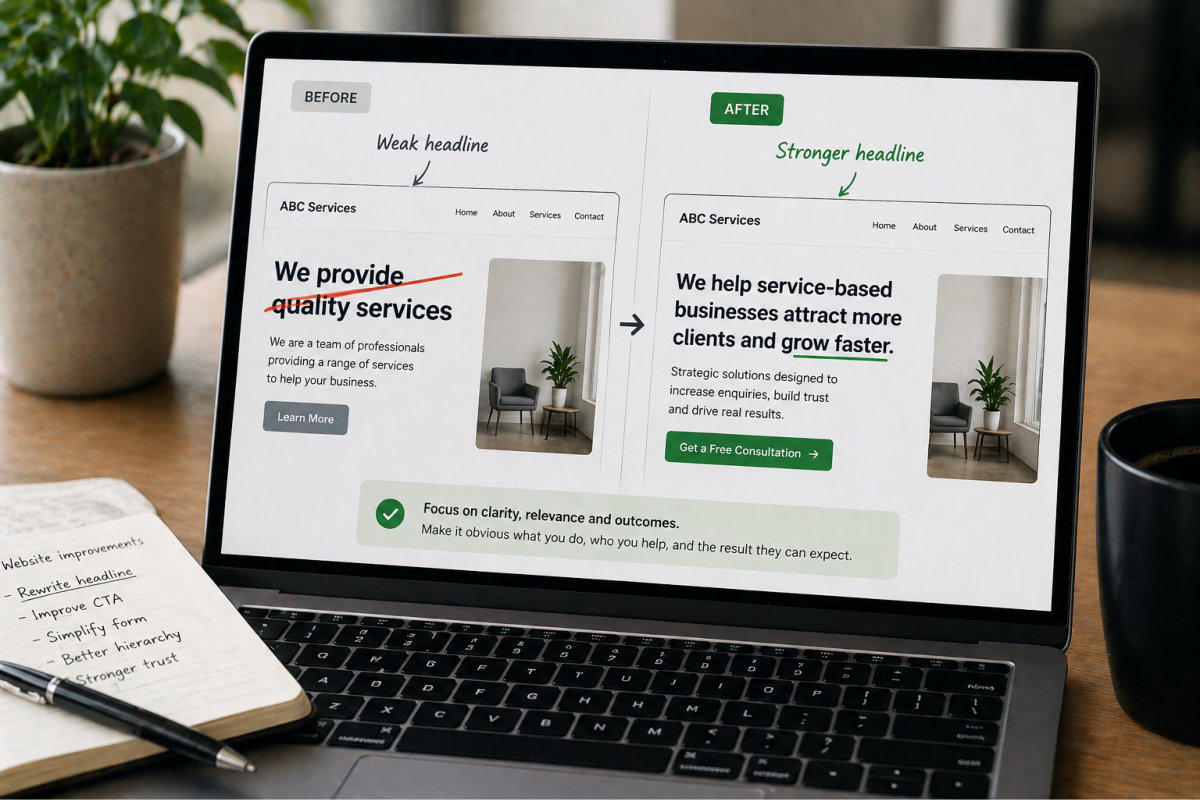
The headline is often the first point of contact between your website and a potential client, and small changes here can have a disproportionate impact on performance. Many websites lose visitors within seconds simply because the headline is unclear, too generic, or fails to communicate value quickly enough.

Improving your headline does not require a redesign. It involves making your message more specific, more relevant, and easier to understand. Visitors should immediately know what you do, who you help, and what outcome they can expect.

For example, replacing vague statements with outcome-driven messaging can significantly improve engagement. Instead of focusing on what your business offers in general terms, your headline should reflect the result your client is looking for.

This small shift can reduce bounce rates, increase time on page, and create a stronger foundation for the rest of the user journey. It is one of the simplest and most effective improvements you can make.

Adjusting Calls to Action for Better Clarity and Timing

Calls to action often underperform not because they are missing, but because they are unclear, poorly timed, or disconnected from the content around them. Small adjustments in wording, placement, and frequency can lead to noticeable improvements in conversions.

Clear, direct language tends to perform better than vague or overly creative phrasing. Visitors should not have to think about what a button means or what will happen when they click it. The action should feel obvious and low friction.

Placement is equally important. A CTA that appears too early can feel premature, while one that appears too late may never be seen. Positioning CTAs at natural decision points, such as after explaining a service or outlining benefits, makes them far more effective.

Even small refinements to how and where your CTAs appear can significantly improve enquiry rates over time.

Simplifying Forms to Reduce Drop-Off

Forms are one of the most critical conversion points on a website, and small changes here can have a direct impact on how many enquiries you receive. One of the most common issues is asking for too much information too early.

Long or complicated forms create friction. Visitors may hesitate, delay, or abandon the process entirely if it feels time-consuming or unnecessary. Reducing the number of fields to only what is essential can make the process feel quicker and easier.

Clarity also plays a role. Labels, instructions, and expectations should be simple and easy to understand. Users should feel confident completing the form without second-guessing what is required.

These small adjustments can improve completion rates and ensure that more interested visitors follow through.

Improving Visual Hierarchy and Readability

How content is presented has a significant impact on how it is consumed. Even well-written content can underperform if it is difficult to read or visually overwhelming.

Improving visual hierarchy involves making it easier for users to scan and understand your content. This includes using clear headings, breaking text into manageable sections, and highlighting key points.

Spacing, font size, and layout all contribute to readability. Small adjustments in these areas can make your website feel more accessible and easier to navigate.

When users can quickly find and absorb information, they are more likely to stay engaged and move toward taking action. How to Use Visuals to Boost Engagement and Conversion Rates provides practical ways to improve this aspect of your site.

Strengthening Key Conversion Pages Rather Than Everything

Not every page on your website needs to be optimised at the same time. In fact, trying to improve everything at once can dilute your efforts and make it harder to see what is actually working.

A more effective approach is to focus on the pages that have the greatest impact on conversions. This typically includes your homepage, service pages, and any landing pages that drive enquiries.

Small improvements to these high-impact pages can deliver better results than large changes spread across the entire site. This might include refining messaging, improving calls to action, or adding stronger trust elements.

By prioritising the pages that matter most, you create a more efficient and effective improvement process.

Using Existing Content More Effectively

Many websites already have valuable content, but it is not always being used to its full potential. Small changes such as repositioning sections, linking related content, or updating key points can make existing pages more effective.

This approach allows you to improve performance without creating new content from scratch. It also helps create stronger connections between pages, making it easier for users to navigate your site.

Internal linking plays a key role here. Guiding users to relevant pages at the right moment can improve engagement and support the overall user journey.

If you are unsure where to start, 5 Web Design Hacks to Boost Your Conversion Rates highlights additional practical improvements that can be applied quickly.

Small website changes that can improve conversions

When It’s Time to Update Your Website

Your Website No Longer Reflects Your Business

One of the clearest signs that your website needs updating is when it no longer reflects where your business is today. Over time, services evolve, positioning becomes clearer, and your experience grows. If your website still represents an older version of your business, it creates a disconnect for potential clients.

This often shows up in outdated service descriptions, messaging that no longer aligns with your audience, or content that feels generic compared to your current expertise.

When visitors cannot clearly understand what you offer or who you help, they are less likely to take action. The issue is not always traffic or design, but relevance.

Updating your website to reflect your current business ensures that your messaging is accurate, focused, and aligned with the clients you want to attract.

Declining Enquiries or Engagement

If your website traffic remains steady but enquiries have dropped, it is often a sign that something is no longer working as effectively as it should. This could be due to changes in user behaviour, increased competition, or content that no longer resonates.

Similarly, if users are visiting your website but not engaging with key pages, it may indicate that the structure, messaging, or calls to action need to be reviewed.

These are not always signs that a full redesign is required, but they do signal that updates are needed to improve performance.

Identifying these patterns early allows you to make targeted changes before the impact becomes more significant.

Outdated Design and User Experience

Design trends and user expectations evolve over time. A website that once felt modern and easy to use can gradually begin to feel outdated or less intuitive.

This does not always mean the design is “bad”, but it may no longer meet current expectations for usability and clarity. Visitors may find it harder to navigate, understand, or engage with your content.

Small updates to layout, spacing, and visual hierarchy can often improve the experience, but in some cases, a more substantial redesign may be needed.

If you are unsure whether your website falls into this category, 7 Signs It’s Time to Redesign Your Business Website outlines the key indicators to look for.

Technical Issues, Slow Performance or Security Risks

Over time, websites can develop technical issues that affect performance. This might include slow loading times, broken functionality, or compatibility issues caused by outdated plugins or themes.

Security is another important factor. WordPress and its plugins are updated regularly to address vulnerabilities. If updates are not maintained, the risk of issues increases.

These problems are not always visible immediately, but they can affect both user experience and overall reliability.

Regular updates and maintenance help prevent these issues from developing. In cases where problems have already built up, more significant updates may be required to restore performance.

Difficulty Making Changes or Managing Content

If your website has become difficult to update or manage, it can limit your ability to keep content fresh and relevant. This often happens when the structure is outdated or when the system no longer supports how you work.

When making simple changes feels complicated or time-consuming, updates are more likely to be delayed or avoided altogether. Over time, this leads to a website that feels static and out of date.

Improving how your website is structured or managed can make it easier to keep everything current and aligned with your business.

This is not always about a full redesign, but it may require restructuring key areas to support ongoing updates more effectively.

Knowing When to Improve vs When to Redesign

Not every issue requires a complete redesign. In many cases, targeted improvements to messaging, structure, and key pages can deliver strong results without starting from scratch.

However, when multiple issues exist across content, design, and performance, a more comprehensive update may be the better approach.

Understanding the difference between these scenarios helps you make more effective decisions about how to move forward.

If you are planning updates, Top Do’s and Don’ts of Website Redesign provides guidance on how to approach the process strategically and avoid common mistakes.

Testing What Works (Without Overcomplicating It)

Focus on Testing One Change at a Time

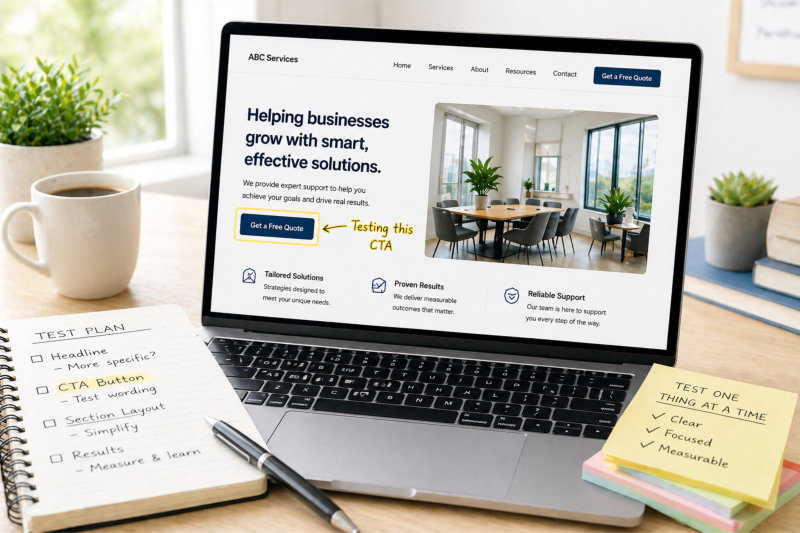
One of the biggest mistakes when testing website improvements is changing too many things at once. While it might seem efficient to update multiple elements together, it makes it difficult to understand what actually caused the result.

Testing works best when you isolate one variable at a time. This could be a headline, a call to action, a section layout, or even the wording on a button. By making a single change, you can clearly see whether it improves performance or not.

This approach removes guesswork and gives you more confidence in your decisions. It also prevents unnecessary changes that may not contribute to better results.

Over time, small, controlled tests lead to a clearer understanding of what works for your audience.

Start with High-Impact Areas First

Not every part of your website needs to be tested. Some areas have a much greater influence on conversions and should be prioritised.

This includes your homepage, service pages, landing pages, and key calls to action. These are the areas where users make decisions, so even small improvements can have a noticeable impact.

Testing low-impact pages first can lead to minimal results and wasted effort. Focusing on the pages that drive enquiries ensures that your time is spent where it matters most.

Prioritisation is what makes testing efficient rather than overwhelming.

Use Real Behaviour as Your Guide

Testing should always be guided by real user behaviour rather than assumptions. Analytics and user interaction data can show where visitors are engaging and where they are dropping off.

For example, if users are leaving a page quickly, it may be worth testing a clearer headline or improved structure. If users are clicking a call to action but not completing the process, the issue may be in the next step.

Using this data helps you focus on areas that are already showing signs of friction rather than making random changes.

This makes your testing more targeted and more likely to produce meaningful improvements.

Testing what works on your website

Keep Testing Simple and Practical

Testing does not need to be complex or highly technical to be effective. Many businesses assume they need advanced tools or detailed experiments, but simple changes can provide valuable insights.

This might include adjusting wording, repositioning elements, or refining how content is presented. Even basic comparisons over time can reveal what is working better.

The key is to keep the process manageable. If testing feels too complicated, it is less likely to be done consistently.

A simple, repeatable approach is far more effective than an overly complex system that is rarely used.

Apply What Works and Keep Improving

Testing only becomes valuable when the results are applied. Once you identify what works better, those changes should be implemented and built upon.

This creates a cycle of continuous improvement, where each small change contributes to better overall performance. Over time, these incremental improvements can have a significant impact on conversions.

It is also important to revisit and refine changes as your business evolves. What works today may need adjustment in the future as your audience and goals change.

If you are looking for additional ideas to test, 5 Web Design Hacks to Boost Your Conversion Rates provides practical examples that can be applied as part of your testing process.

Creating a Simple Ongoing Website Improvement Plan

Setting a Clear Focus for What You Want to Improve

Before making changes to your website, it is important to be clear about what you are trying to improve. Without a clear focus, updates can become scattered and less effective.

This might include increasing enquiries, improving engagement on key pages, or reducing drop-offs in the enquiry process. Defining this goal helps guide your decisions and ensures that your efforts are aligned with your business priorities.

When you know what you are trying to achieve, it becomes much easier to identify which areas of your website need attention.

A clear focus turns ongoing updates into a structured process rather than random changes.

Reviewing Performance at Regular Intervals

Ongoing improvement requires regular review. This does not mean constant monitoring, but it does mean setting aside time to assess how your website is performing.

Reviewing analytics, user behaviour, and enquiry activity on a monthly or quarterly basis is usually enough to identify trends and areas for improvement.

This allows you to spot issues early and make adjustments before they have a significant impact.

Consistency is more important than frequency. Regular reviews ensure your website continues to support your business over time.

Prioritising Changes That Have the Greatest Impact

Not all improvements will deliver the same results. Some changes, particularly those related to messaging, structure, and calls to action, tend to have a greater impact on conversions.

Focusing on these areas first ensures that your efforts are directed where they will make the most difference. This might include refining key pages, improving enquiry pathways, or strengthening trust elements.

Trying to improve everything at once can dilute your efforts and make it harder to see results.

Prioritisation keeps your improvement plan focused and effective.

Implementing Changes in a Manageable Way

Making improvements does not require large, disruptive updates. In most cases, smaller, incremental changes are easier to manage and more effective over time.

This approach allows you to maintain stability while still improving performance. It also makes it easier to track what is working and what is not.

For many businesses, this means working through updates in stages rather than attempting a full redesign.

Keeping changes manageable ensures that improvements actually happen rather than being delayed or avoided.

Maintaining Your Website with Regular Updates

An ongoing improvement plan should also include regular maintenance. This ensures your website remains secure, stable, and compatible with current technology.

WordPress, themes, and plugins are updated frequently, often every few weeks. Without regular updates, the risk of issues increases, and performance can be affected over time.

For most active websites, quarterly updates provide a practical and effective approach. This keeps everything up to date without creating unnecessary disruption.

For example, our WordPress update and maintenance service is $240 per website, per quarter. This ensures updates are handled properly, potential issues are addressed early, and your website continues to run smoothly while you focus on your business.

Building a Habit of Continuous Improvement

The most effective websites are not those that are built once and left unchanged, but those that are reviewed and improved consistently over time.

Creating a habit of ongoing improvement ensures that your website continues to evolve alongside your business and your audience.

This does not need to be complicated. Even small, regular updates can have a meaningful impact when applied consistently.

When improvement becomes part of your process, your website remains a reliable and effective tool for generating enquiries and supporting your growth.

If you are looking for additional ways to refine your website over time, 5 Web Design Hacks to Boost Your Conversion Rates provides practical ideas that can be applied as part of your plan.

Frequently Asked Questions

A website should never be considered finished because your business, your audience, and technology are constantly changing. What works today may not work in six or twelve months. Regular updates ensure your website stays relevant, continues to reflect your business accurately, and remains effective at generating enquiries.

Not always. Many improvements can be made without a full redesign. Updating messaging, refining page structure, improving calls to action, and enhancing visuals can all have a significant impact. A full redesign is usually only necessary when multiple issues exist across content, design, and functionality.

For most active websites, reviewing performance monthly and implementing updates quarterly is a practical approach. This allows you to make consistent improvements without becoming overwhelmed. Regular updates also help maintain security and stability, particularly for WordPress websites.

Some of the quickest improvements include rewriting headlines for clarity, improving calls to action, simplifying contact forms, and updating key pages such as your homepage and service pages. These changes can often be made without technical complexity and can have an immediate impact on performance.

The best way to decide what to change is by looking at how your website is currently performing. Analytics and user behaviour can highlight where visitors are engaging and where they are dropping off. This allows you to focus on areas that need improvement rather than making random updates.

Yes. Regular maintenance is essential to keep your website secure, stable, and compatible with updates to WordPress, themes, and plugins. Without it, the risk of technical issues increases, and performance can decline over time. Maintenance also supports ongoing improvements rather than leaving your website static.

Maintenance focuses on keeping your website running properly, including updates, security, and technical stability. Improvement focuses on enhancing performance, such as refining content, improving structure, and increasing conversions. Both are important and work together to keep your website effective.

Yes. Small, targeted changes can have a significant impact, especially when applied to high-impact areas such as headlines, calls to action, and key pages. Over time, these incremental improvements can lead to noticeable increases in engagement and enquiries.

Keeping Your Website Working as Your Business Grows

Your website is not a one-time project. It is an ongoing part of your business that needs to evolve as your services, audience, and goals change.

By focusing on small, consistent improvements, you can keep your website relevant, effective, and aligned with your business without the need for constant redesigns.

This approach allows you to respond to real performance data, improve user experience, and strengthen the way your website generates enquiries over time.

Regular updates also play an important role in maintaining security and stability, ensuring that your website continues to run smoothly without unexpected issues.

If you want a structured approach to maintaining and improving your website, you can explore our website design services.

You can also explore practical strategies and step-by-step resources here: Guides.

When your website is actively maintained and continuously improved, it becomes a reliable tool that supports your business growth rather than holding it back.

Ready to Build or Redesign Your Website?

If you’re reading this and thinking, “This explains exactly what’s wrong with my site,” you’re not alone.

Most small business websites don’t fail because of effort. They fail because they were built without a clear structure, proper planning or long-term thinking.

If you want a website that reflects your business properly, feels organised, and gives you confidence to send people to it, then it might be time for a proper redesign or rebuild.

You can see how I approach website projects here:

Website Design Services for Small Business

View recent website design projects

Whether you’re starting from scratch or improving what you already have, the goal is the same – clarity, structure and a site you’re proud to share.

Ivana Katz - Website designer