
Email Marketing and List Building
for Small Business Websites

This guide forms part of our complete resource on Small Business Website Content & Visibility.

Email marketing is often overlooked by small business owners, usually because it feels complicated or time-consuming. Many assume it requires advanced systems, automated funnels, or constant communication. In reality, it can be much simpler and still highly effective.

Unlike social media or search engines, your email list is something you own. You are not relying on algorithms or platform changes to reach your audience. When someone joins your list, you have a direct way to stay in touch, share updates, and remind them of your services over time.

This is what makes email marketing valuable. Not everyone who visits your website is ready to enquire immediately. Some need more time, more information, or simply a reminder. Email allows you to stay visible without relying on them to find you again.

Email marketing also supports your broader strategy. It works alongside your traffic sources and your content, helping you build relationships with visitors who are not ready to take action straight away.

It does not need to be complex. A simple system that captures email addresses and sends occasional, useful communication can make a significant difference over time. The focus is not on volume, but on consistency and relevance.

If you want a broader perspective on how email fits into your marketing, you can explore whether email marketing is still effective or review email marketing for small business owners to see how it can be applied in a practical way.

This guide will walk through a simple approach to email marketing, focusing on what actually matters for small businesses.

The goal is to help you set up a system that is easy to manage, supports your website, and keeps your business visible over time.
Why Email Still Matters

Why email continues to be one of the most reliable channels

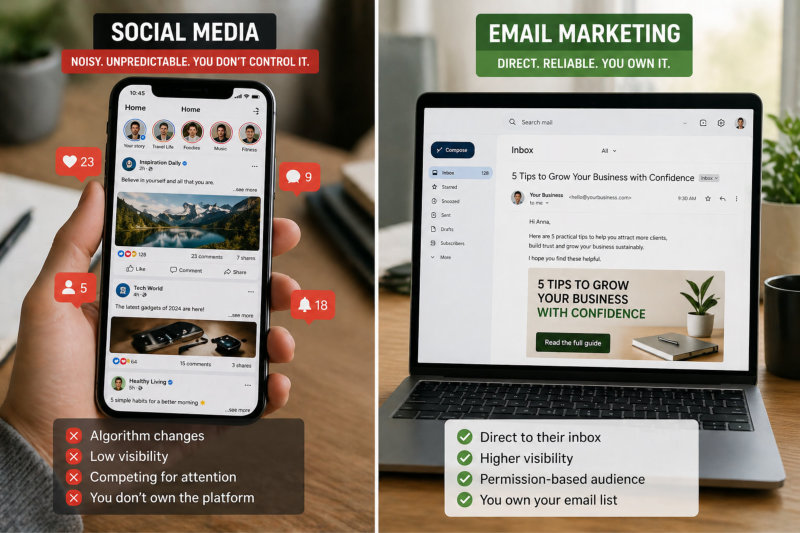
Email remains one of the most consistent and reliable ways to communicate with your audience. Unlike social media platforms, where visibility depends on algorithms, email gives you direct access to people who have already shown interest in your business.

When someone joins your email list, they are choosing to hear from you. This makes email a permission-based channel, which is very different from relying on someone discovering your content through search or scrolling through social media.

This level of control is important. Social platforms can change their reach at any time, and search rankings can fluctuate. Your email list is something you own, and it provides a more stable way to stay connected with your audience over time.

This is one of the key reasons why email continues to be recommended as part of a balanced strategy, as explored in whether email marketing is still effective, where consistency and direct communication are highlighted as major advantages.

How email supports long-term visibility and trust

Not every visitor to your website is ready to take action straight away. Some may be researching, comparing options, or simply not ready to make a decision. Without a way to stay in touch, these visitors are often lost.

Email allows you to maintain visibility with these potential clients. By sharing useful content, updates, or insights, you can stay top of mind without being intrusive. Over time, this builds familiarity and trust.

Trust is rarely built in a single interaction. It develops gradually through repeated exposure to your content and your approach. Email provides a structured way to support this process.

This is particularly important when combined with your content strategy, as your emails can direct subscribers back to your website, reinforcing your expertise and keeping them engaged.

The role of email in supporting enquiries

Email marketing is not just about sending updates. It plays a direct role in supporting enquiries. By staying connected with your audience, you create more opportunities for people to reach out when they are ready.

Someone may visit your website, leave without taking action, and then return later after receiving an email that reminds them of your services. This delayed response is common and often overlooked.

Email helps bridge the gap between first visit and enquiry. It allows you to re-engage visitors who might otherwise be lost and guide them back to your website when the timing is right.

This makes email a valuable addition to your lead generation process, supporting your website’s ability to convert visitors into potential clients.

Why email marketing still matters

Why email works differently from social media

Social media and email serve different purposes, even though they are often grouped together. Social platforms are designed for discovery and visibility, while email is designed for direct communication and ongoing engagement.

On social media, your content competes with many other posts, and not all of your audience will see what you share. With email, your message is delivered directly to the recipient’s inbox, giving it a much higher chance of being seen.

This does not mean email replaces social media. Instead, the two work together. Social media can help attract attention and drive traffic, while email helps maintain the relationship and keep your audience engaged over time.

Understanding this difference helps you use each channel more effectively rather than expecting one to do everything.

Why email is often underused by small businesses

Despite its benefits, email marketing is often underused. Many small business owners avoid it because they believe it requires complex systems or frequent communication. Others simply do not know where to start.

In reality, email marketing can be kept simple. A basic system that captures email addresses and sends occasional, relevant communication is enough to make a meaningful impact.

The problem is not the channel itself, but how it is perceived. When email is seen as something complicated, it is often ignored. When it is approached as a simple way to stay in touch, it becomes far more accessible.

This is why many practical approaches, such as those outlined in email marketing success strategies, focus on simplicity and consistency rather than complexity.

Setting Up Basic Email Capture

Why capturing email addresses is essential

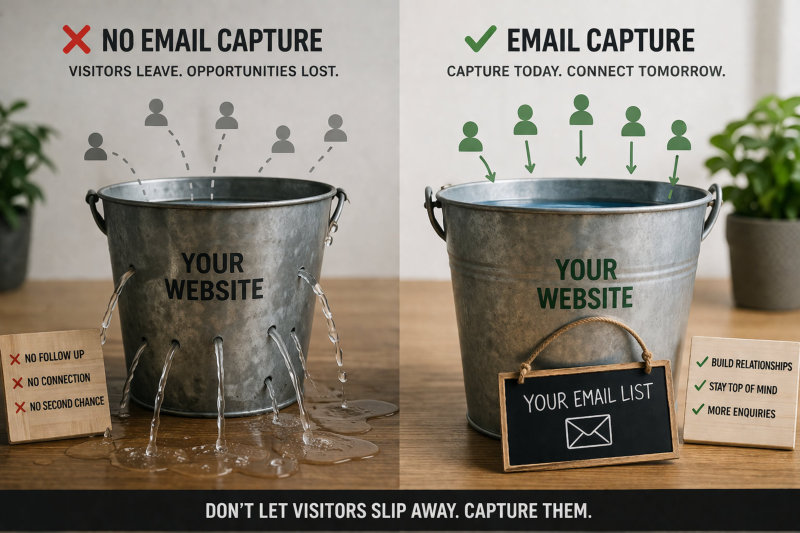
Most visitors will leave your website without taking action. This is normal behaviour. People may be browsing, comparing options, or simply not ready to enquire. Without a way to capture their details, there is no opportunity to reconnect with them later.

Email capture allows you to turn anonymous visitors into known contacts. Instead of relying on them to remember your business or return on their own, you create a direct way to stay in touch. This gives you another opportunity to build trust and guide them back to your website when they are ready.

This is what makes email capture valuable. It extends the relationship beyond a single visit and creates a longer-term connection with potential clients.

When combined with your traffic sources, it ensures that the effort you put into attracting visitors is not lost once they leave your site.

Keeping your email capture system simple

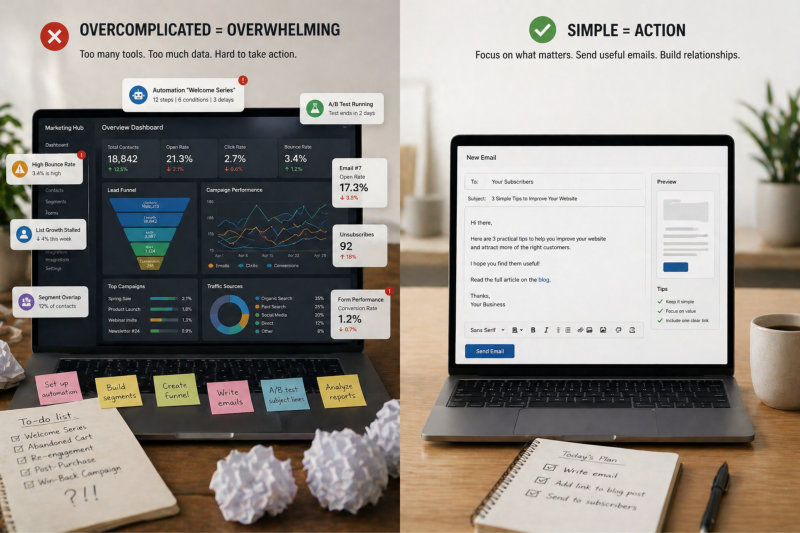
One of the biggest barriers to email marketing is overcomplication. Many business owners believe they need advanced systems, automation, or complex funnels before they can start. In reality, a simple setup is often more effective.

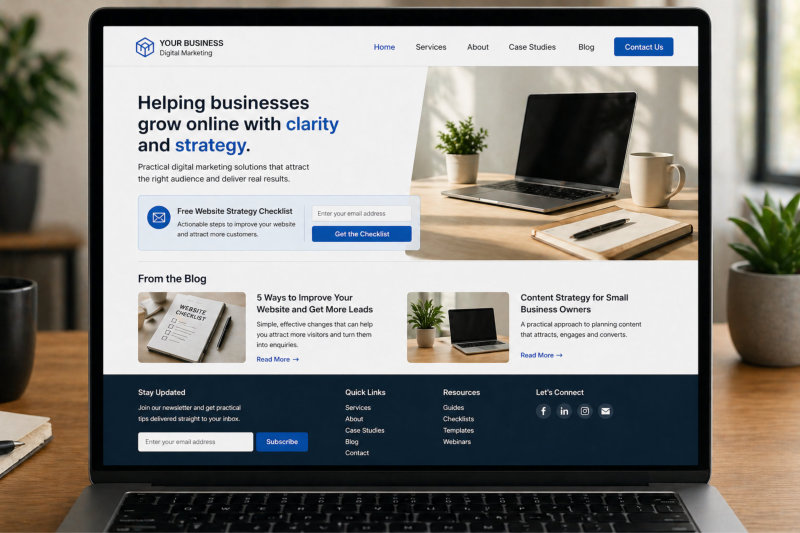
A basic email capture system involves a form on your website where visitors can enter their name and email address. This form is connected to an email platform that stores your contacts and allows you to send messages when needed.

This does not require a complicated process. Starting with a simple setup allows you to build your list without creating unnecessary pressure or confusion.

Over time, you can refine your system, but the initial focus should be on getting the fundamentals in place and making it easy for people to subscribe.

Setting up basic email capture

What information you should ask for

When setting up an email capture form, it is important to keep it simple. Asking for too much information can reduce the likelihood that visitors will complete the form.

In most cases, a name and email address are enough. This provides the basic information needed to communicate while keeping the process quick and straightforward for the user.

Additional fields can be added later if needed, but starting with a minimal approach usually leads to better results. The easier it is to sign up, the more likely people are to do it.

This approach also aligns with user expectations. Visitors are more willing to provide information when the process feels simple and not overly demanding.

Connecting your forms to an email platform

Once you have a form in place, it needs to be connected to an email platform where your contacts are stored. This allows you to manage your list and send emails when needed.

There are many platforms available, and most provide simple ways to connect forms to your website. The specific tool you choose is less important than ensuring the system works reliably and is easy to manage.

The goal is to create a seamless process where new subscribers are automatically added to your list without requiring manual input. This ensures that no opportunities are missed and that your system runs efficiently.

Having this connection in place turns your website into an active tool for building your audience rather than just a static presence.

Making email capture part of your overall strategy

Email capture should not be treated as a separate feature on your website. It should be part of your overall strategy, supporting your content and your traffic sources.

For example, blog posts, guides, and other content can encourage visitors to subscribe for more information. Social media can direct people to pages where they can join your list. Each of these elements works together to support your email capture efforts.

This integrated approach is what makes email marketing effective. It ensures that your website is not only attracting visitors but also creating opportunities to stay connected with them.

When your email capture system is aligned with your broader strategy, it becomes a natural extension of your website rather than an afterthought.

Creating Lead Magnets That Work

What a lead magnet is and why it matters

A lead magnet is something you offer in exchange for a visitor’s email address. It gives people a reason to subscribe rather than simply asking them to “join your newsletter,” which on its own is rarely compelling.

The purpose of a lead magnet is to provide immediate value. It should help solve a small problem, answer a specific question, or offer useful insight that your audience is already looking for. This creates a clear exchange – the visitor receives something helpful, and you gain the opportunity to stay in touch.

Without a strong lead magnet, email capture can feel one-sided. Visitors are less likely to share their details unless they see a clear benefit. A well-designed lead magnet makes that decision easier.

This is why lead magnets are often highlighted in practical approaches such as building B2B leads through email marketing, where providing value upfront is a key part of attracting the right audience.

Choosing the right type of lead magnet for your audience

Not all lead magnets are equally effective. The best option depends on your audience, your services, and the type of information your potential clients are looking for.

Common examples include checklists, guides, templates, short eBooks, or practical tips that can be applied quickly. The format is less important than the relevance. A simple checklist that solves a specific problem can often perform better than a long, detailed guide that feels overwhelming.

The key is to choose something that aligns closely with your services. If your lead magnet attracts the wrong audience, it may increase your list size but not improve the quality of your enquiries.

When your lead magnet is directly related to what you offer, it naturally attracts people who are more likely to be interested in your services.

Focusing on solving one specific problem

Effective lead magnets are focused. Instead of trying to cover too much, they address one clear issue or question. This makes them easier to understand and more appealing to potential subscribers.

When a lead magnet is too broad, it can feel vague and less valuable. Visitors may not see a strong reason to sign up if the benefit is not immediately clear. A focused lead magnet, on the other hand, provides a clear outcome.

For example, a checklist that helps someone prepare for a specific task or a guide that answers a common question is more likely to attract attention than a general overview of a topic.

This approach also makes it easier to create and maintain your lead magnet, as you are focusing on one specific area rather than trying to cover everything.

Creating lead magnets that work

Making your lead magnet easy to access and use

A lead magnet should be simple to access and easy to use. Once someone signs up, they should receive the promised content quickly and without complications. Any delays or confusion can reduce trust and impact the overall experience.

The format should also be practical. Whether it is a downloadable file, a short guide, or a series of tips, it should be easy for the user to understand and apply. Overly complex or lengthy content can discourage engagement.

Clarity is important here. The value of your lead magnet should be obvious from the moment it is presented. Visitors should know exactly what they are getting and how it will help them.

This reinforces the quality of your brand and sets the tone for future communication.

Aligning your lead magnet with your services

Your lead magnet should not only attract subscribers, but also support your business. This means aligning it with your services so that it naturally leads into what you offer.

For example, if your service involves helping clients improve their website, your lead magnet might focus on a specific aspect of that process. This creates a clear connection between the value you provide and the services you offer.

When this alignment is in place, your email list becomes more than just a collection of contacts. It becomes a group of people who are already interested in what you do and are more likely to engage with your business.

This approach also supports your broader strategy, where your website, your content, and your email marketing all work together to attract, engage, and convert the right audience.

Where to Place Email Sign-Ups on Your Website

Why placement has a direct impact on sign-ups

Even the best lead magnet will not perform well if people do not see it. Placement plays a significant role in how effective your email capture is. If your sign-up form is hidden, difficult to find, or placed in the wrong context, it will be overlooked by most visitors.

At the same time, overly aggressive placement can have the opposite effect. Pop-ups that appear too quickly or interrupt the user experience can create frustration and reduce trust. The goal is to find a balance between visibility and usability.

Effective placement ensures that your sign-up opportunities are easy to find without disrupting the flow of the website. It should feel like a natural part of the user journey rather than an interruption.

This is why placement needs to be considered as part of your overall website structure, not just added as an afterthought.

Using high-visibility areas without overwhelming visitors

There are several areas on your website that naturally receive more attention. These include your homepage, key service pages, and high-traffic blog posts. Placing sign-up forms in these areas increases the likelihood that visitors will notice them.

For example, a simple sign-up section on your homepage can introduce your lead magnet early in the visitor’s journey. On service pages, it can act as a secondary option for those who are not ready to enquire yet.

However, it is important not to overload these areas. Too many forms or repeated calls to action can reduce their effectiveness and make your website feel cluttered.

Strategic placement in a few key areas is more effective than trying to place forms everywhere.

Where to place email sign ups

Matching sign-ups to the content on the page

One of the most effective ways to improve sign-ups is to match the offer to the content on the page. When a sign-up form is directly related to what the visitor is reading, it feels more relevant and useful.

For example, a blog post about website strategy could include a lead magnet that provides a checklist or guide related to that topic. This creates a natural connection between the content and the offer.

This approach increases the likelihood that visitors will subscribe because the offer is directly aligned with their current interest. It also improves the overall experience, as the sign-up feels like a helpful next step rather than a generic request.

Aligning your sign-ups with your content supports your broader content strategy, ensuring consistency across your website.

Using different types of sign-up forms effectively

There are several types of sign-up forms that can be used on a website, including embedded forms, pop-ups, slide-ins, and footer sign-ups. Each has its own purpose and level of visibility.

Embedded forms are often placed within pages and feel like a natural part of the content. Pop-ups can attract attention but need to be used carefully to avoid disrupting the user experience. Slide-ins are less intrusive and can appear as the visitor scrolls through the page.

Footer sign-ups provide a consistent option across the site, although they tend to have lower visibility compared to other placements.

Using a combination of these formats can improve overall performance, as long as they are implemented thoughtfully and do not overwhelm the user.

Testing and refining your placement over time

There is no single “perfect” placement that works for every website. What works best will depend on your audience, your content, and how visitors interact with your site.

This is why it is important to review and refine your approach over time. You can observe where sign-ups are happening, which pages perform better, and where visitors may be ignoring your forms.

Small adjustments, such as changing the position of a form or refining the message around it, can have a noticeable impact. These changes are often simple but can significantly improve results.

By treating placement as something that can be tested and improved, you can gradually optimise your email capture without needing to make major changes all at once.

Nurturing Your Audience with Email

Why nurturing matters more than collecting emails

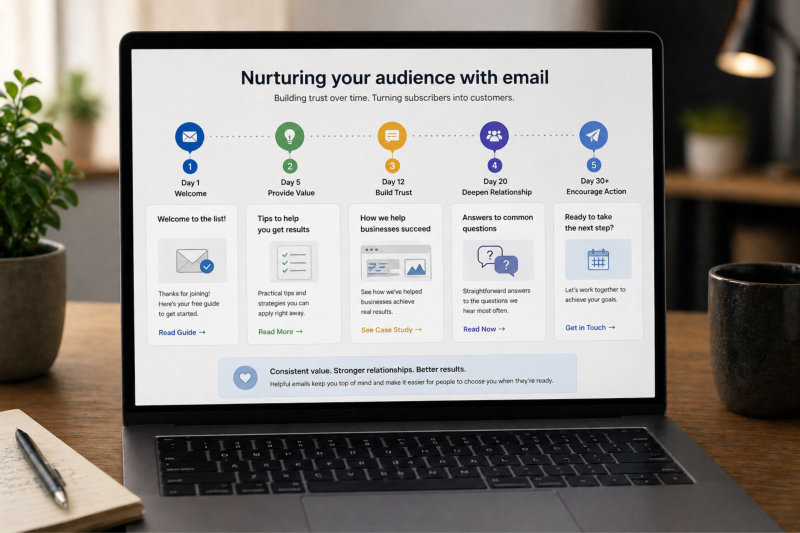
Collecting email addresses is only the first step. What you do after someone joins your list is what determines whether email marketing becomes effective. Without follow-up communication, your list becomes inactive, and the opportunity to build a relationship is lost.

Nurturing is about maintaining that connection over time. It allows you to stay visible, provide value, and gradually build trust with your audience. This is especially important for small businesses, where decisions are often based on familiarity and confidence.

Many subscribers will not be ready to enquire immediately. They may need time to understand your services or see how you approach your work. Email gives you a way to support this process without relying on them to revisit your website on their own.

This is why nurturing should be seen as a core part of your strategy rather than an optional extra.

What to send without overwhelming your audience

One of the most common concerns with email marketing is knowing what to send. Many business owners either send too little and lose momentum, or try to send too much and become overwhelmed.

The most effective approach is to keep your emails simple and relevant. This can include sharing useful insights, linking to new blog content, providing updates about your services, or answering common questions your audience may have.

Your emails do not need to be long or complex. Clear, concise messages that provide value are often more effective than overly detailed or heavily designed emails.

Guidance such as writing emails that get results focuses on clarity and relevance, which are key to maintaining engagement.

How often you should send emails

Consistency is more important than frequency. There is no fixed schedule that works for every business, but sending emails occasionally is better than sending them irregularly or not at all.

For many small businesses, a simple approach such as a monthly or bi-monthly email is enough to stay visible without becoming overwhelming. The key is to choose a frequency that you can realistically maintain.

Sending emails too frequently can lead to disengagement, while sending them too rarely can cause your audience to forget about you. Finding a balance helps maintain interest without creating pressure.

Over time, consistency builds familiarity and keeps your business in front of your audience.

Nurturing your audience

Building trust through useful and relevant content

Email is an opportunity to demonstrate your expertise and provide value. Instead of focusing purely on promotion, it is more effective to share information that helps your audience understand your services and the problems you solve.

This might include practical tips, explanations of common issues, or links to content on your website. By consistently providing useful information, you position your business as a helpful resource rather than just a service provider.

This approach builds trust over time. When your audience is ready to take action, they are more likely to choose a business that has already provided value and demonstrated its expertise.

This is where email connects back to your content strategy, as your existing content becomes a valuable resource for ongoing communication.

Connecting email back to your website

Email should not exist in isolation. Each message should create a pathway back to your website, where visitors can explore your services, read your content, and take the next step.

This might involve linking to blog posts, highlighting specific services, or directing readers to key pages on your site. These links help guide your audience and encourage deeper engagement.

By consistently connecting your emails to your website, you reinforce your overall strategy. Your website remains the central hub, while email acts as a channel that brings people back to it.

When this connection is clear, email becomes a practical tool for supporting both visibility and enquiries over time.

Keeping Email Marketing Manageable

Why overcomplicating email marketing leads to inaction

One of the main reasons small business owners avoid email marketing is the belief that it needs to be complex. Concepts such as automation, segmentation, and funnels can make it feel like something that requires advanced knowledge and a significant time commitment.

In reality, this level of complexity is not necessary to get results. When email marketing feels overwhelming, it often leads to inaction. The system is never set up, emails are not sent, and the opportunity to build a connection with your audience is missed.

A simpler approach is far more effective. By focusing on the fundamentals, capturing email addresses and sending occasional, useful communication, you can achieve meaningful results without unnecessary complexity.

This shift from complexity to simplicity is what makes email marketing manageable and sustainable.

Starting with a simple and realistic system

The most effective email marketing systems are often the simplest. A basic setup that collects email addresses and allows you to send messages when needed is enough to get started.

You do not need to build a full sequence of automated emails or create detailed campaigns before launching. Starting small allows you to build momentum without feeling overwhelmed.

For example, you might begin by sending a single email each month that shares useful content or updates. This creates a consistent presence without requiring a large time investment.

As your confidence grows, you can refine your approach, but the foundation should remain simple and easy to maintain.

Keeping email marketing manageable

Using existing content to reduce workload

Creating new content for email can feel like an additional task on top of everything else. One way to make email marketing more manageable is to use content you have already created.

Your blog posts, guides, and website pages can all be repurposed into email content. Instead of starting from scratch, you can summarise key points, highlight useful insights, and link back to the full content on your website.

This approach not only saves time but also reinforces your overall strategy. Your content continues to work across multiple channels, supporting both visibility and engagement.

Methods like those outlined in practical email marketing techniques often emphasise making the most of existing resources rather than creating everything from new.

Setting a schedule you can maintain

Consistency is key, but it needs to be realistic. Choosing a schedule that fits your capacity is more important than trying to follow an ideal frequency that is difficult to maintain.

For many small businesses, sending emails once a month or every few weeks is enough to stay visible. The important factor is that the schedule is consistent and manageable.

Irregular communication can reduce engagement, as subscribers may forget about your business. A steady, predictable rhythm helps maintain familiarity and keeps your audience connected.

By setting a schedule that works for you, email marketing becomes part of your routine rather than an added pressure.

Keeping your approach flexible and adaptable

Email marketing does not need to follow a rigid structure. As your business evolves, your approach can change. You may adjust your content, your frequency, or the way you communicate based on what works best for your audience.

Tracking engagement can help guide these decisions. If certain types of emails perform better, you can focus more on those topics. If something is not working, you can adjust your approach without needing to overhaul your entire system.

This flexibility makes email marketing easier to manage over time. Instead of feeling locked into a complex structure, you can adapt your approach as needed.

When email marketing is treated as a flexible tool rather than a rigid system, it becomes much easier to sustain and far more effective in supporting your business.

Common Email Marketing Mistakes to Avoid

Trying to do too much too early

One of the most common mistakes is attempting to build a complex email marketing system from the start. This often includes creating multiple automated sequences, segmenting audiences, and trying to plan every possible scenario before even sending the first email.

This approach can quickly become overwhelming. Instead of making progress, many business owners get stuck in planning mode and never fully implement their email strategy.

A more effective approach is to start simple. Focus on capturing email addresses and sending occasional, useful communication. Once this foundation is in place, you can gradually build on it if needed.

Keeping things simple from the beginning makes it far more likely that your email marketing will actually be used and maintained over time.

Collecting emails without following up

Another common issue is building an email list but not using it. Visitors sign up, but no emails are sent, or communication is inconsistent. Over time, subscribers lose interest or forget about the business altogether.

Email marketing only works when there is ongoing communication. Even simple updates or occasional emails can help maintain the connection and keep your business visible.

Without follow-up, the value of your email list is lost. The effort spent capturing those contacts does not translate into engagement or enquiries.

Consistency does not require frequent emails, but it does require a regular presence.

Focusing too much on promotion

Many businesses treat email as a purely promotional channel, sending messages that focus only on selling their services. This can lead to low engagement and unsubscribes, as subscribers may not see ongoing value in the communication.

A more effective approach is to balance promotion with useful content. Sharing insights, tips, or relevant information helps build trust and keeps your audience engaged.

When subscribers see value in your emails, they are more likely to stay on your list and pay attention to your messages. This makes any promotional content more effective when it is included.

This balance is often emphasised in email marketing success strategies, where providing value is key to maintaining engagement.

Common email marketing errors

Making emails too long or complicated

Emails do not need to be long or overly detailed to be effective. In fact, complex or lengthy emails can reduce engagement, as readers may lose interest before reaching the main message.

Clear, concise communication is usually more effective. A focused message that is easy to read and understand is more likely to hold attention and encourage action.

This does not mean removing important information, but rather presenting it in a way that is accessible. Structuring your emails clearly and keeping the content relevant helps improve readability.

Guidance such as writing effective emails highlights the importance of clarity and simplicity in achieving better results.

Expecting immediate results

Email marketing is often expected to produce quick results, especially when it comes to enquiries or sales. When this does not happen, it can lead to the assumption that email is not working.

In reality, email is a long-term strategy. It builds familiarity and trust over time, which eventually supports enquiries. The impact may not be immediate, but it becomes more noticeable as your list grows and your communication remains consistent.

Expecting instant outcomes can lead to abandoning the process too early. A more effective approach is to focus on steady progress and maintaining regular communication.

When email marketing is treated as an ongoing strategy rather than a quick fix, it becomes a reliable way to support your business over time.

Frequently Asked Questions

Email marketing is a way to stay in touch with people who have shown interest in your business. It allows you to send updates, share useful content, and remind potential clients about your services. For small businesses, it is important because it provides a direct and reliable way to communicate without relying on social media algorithms or search rankings.

The simplest way to start is by adding an email sign-up form to your website and connecting it to an email platform. You can then offer a lead magnet, such as a guide or checklist, to encourage people to subscribe. Once you have subscribers, you can begin sending occasional emails with useful content or updates.

A lead magnet is something you offer in exchange for a visitor’s email address. It could be a checklist, guide, or resource that provides value. While it is not required, having a lead magnet significantly increases the chances of people subscribing to your email list.

There is no fixed rule, but consistency is important. For many small businesses, sending emails once a month or every few weeks is enough to stay visible without overwhelming subscribers. The key is to choose a frequency you can maintain over time.

Emails should focus on providing value. This can include useful tips, insights, links to your blog content, updates about your services, or answers to common questions. Keeping your emails clear, relevant, and helpful is more important than making them long or complex.

No, a simple approach is often enough. While automation can be useful, it is not necessary to get started. A basic system that captures email addresses and sends occasional, useful communication can still be very effective.

Sign-up forms should be placed in visible but non-intrusive areas, such as your homepage, blog posts, and key pages. They should be easy to find without interrupting the user experience. Matching the sign-up offer to the content on the page can also improve results.

You can grow your list by offering a relevant lead magnet, placing sign-up forms in key areas of your website, and directing traffic from sources such as social media or blog content. The focus should be on attracting the right audience rather than simply increasing numbers.

Low open rates can be caused by unclear subject lines, lack of relevance, or inconsistent communication. Improving clarity, providing value, and maintaining a regular schedule can help increase engagement over time.

Yes, email marketing helps keep your business visible and build trust with your audience. Over time, this increases the likelihood that subscribers will reach out when they are ready to take action. It works best when combined with clear messaging and a well-structured website.

Keeping Your Business Visible with Simple Email Marketing

Email marketing does not need to be complex to be effective. When approached in a simple and structured way, it becomes a reliable tool for staying connected with your audience and supporting your website over time.

Not every visitor will take action on their first visit. Some need time, more information, or a reminder before they are ready to enquire. Email allows you to maintain that connection, bringing people back to your website when the timing is right.

The key is consistency rather than complexity. A basic system that captures email addresses, offers something of value, and sends occasional, relevant communication is enough to build momentum. Over time, this creates familiarity and trust, which are essential for turning interest into enquiries.

Email also works alongside your other efforts. It supports your traffic sources, reinforces your content, and strengthens your overall visibility.

If your website is attracting visitors but not generating as many enquiries as you would expect, email marketing can help bridge that gap. It ensures that visitors who are not ready yet are not lost, but instead remain connected to your business.

If you would like your website to include a clear structure, strong messaging, and simple systems such as email capture built in from the start, you can explore our website design service. This ensures your website supports both visibility and ongoing engagement.

Ready to Build or Redesign Your Website?

If you’re reading this and thinking, “This explains exactly what’s wrong with my site,” you’re not alone.

Most small business websites don’t fail because of effort. They fail because they were built without a clear structure, proper planning or long-term thinking.

If you want a website that reflects your business properly, feels organised, and gives you confidence to send people to it, then it might be time for a proper redesign or rebuild.

You can see how I approach website projects here:

Website design services for small business

View recent website design projects

Whether you’re starting from scratch or improving what you already have, the goal is the same – clarity, structure and a site you’re proud to share.

Ivana Katz - Website designer