
Visibility & Traffic Sources
for Small Business Websites

This guide forms part of our complete resource on Small Business Website Content & Visibility.

Getting traffic to your website is one of the biggest challenges for small business owners. Many focus heavily on one channel, such as SEO or social media, and expect it to deliver consistent results on its own. In reality, website traffic rarely comes from a single source.

Visitors can find your website in many different ways. Some may discover you through search engines, while others arrive through social media, referrals, directories, or direct visits. Each of these sources plays a different role in how people find and engage with your business.

This is why relying on one traffic source can limit your growth. If that channel slows down or changes, your visibility is affected. A more effective approach is to build a balanced traffic strategy where multiple sources work together to support your website over time.

Traffic also needs to be relevant. It is not just about increasing the number of visitors, but attracting the right people who are more likely to engage with your content and become enquiries.

This is where your website messaging and content strategy play an important role in supporting how visitors interact with your site.

Understanding how different traffic sources work allows you to make better decisions about where to focus your efforts. Instead of chasing every new tactic, you can build a structured approach that supports your business consistently.

This guide will walk through the main sources of website traffic, how they connect to each other, and how to use them in a practical way. The focus is not on doing everything, but on creating a system that brings the right people to your website and supports long-term growth.

If you want a broader overview of strategies available, you can explore how to increase website traffic or review different ways to drive traffic to your website for additional ideas that can support your overall approach.

Understanding Where Website Traffic Comes From

The main sources of website traffic explained

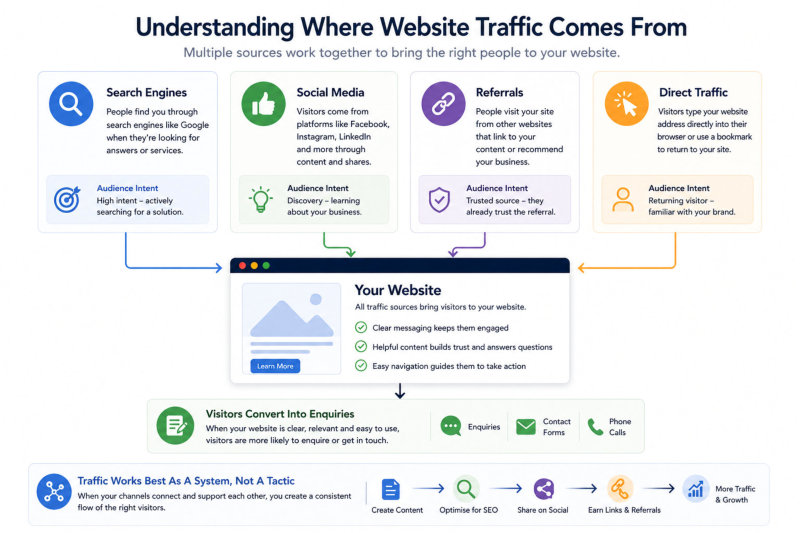
Website traffic does not come from a single place. Visitors can arrive through search engines, social media, referrals from other websites, directory listings, or by typing your website address directly into their browser. Each of these sources contributes differently to how people discover your business.

Search traffic often comes from people actively looking for answers or services. Social traffic is usually driven by content being shared or promoted. Referral traffic comes from other websites linking to you, while direct traffic often includes returning visitors who are already familiar with your business.

Understanding these sources helps you see the bigger picture. Instead of focusing on one channel, you can start to recognise how different types of traffic contribute to your overall visibility.

Why relying on one traffic source can limit your growth

Many small businesses rely heavily on one source of traffic, often SEO or social media. While this can work in the short term, it creates risk. If that channel changes, becomes more competitive, or stops performing, your website traffic can drop significantly.

For example, relying only on search traffic means you are dependent on rankings. Relying only on social media means you are dependent on algorithms and platform changes. Neither approach provides long-term stability on its own.

A more effective strategy is to build multiple traffic sources that support each other. This creates a more stable flow of visitors and reduces the impact of changes in any one channel.

How different traffic sources attract different audiences

Not all traffic is the same. People arriving from different sources often have different levels of intent and awareness.

Someone coming from a search engine may be actively looking for a solution, while someone from social media may be discovering your business for the first time.

This means each traffic source plays a different role in your overall strategy. Some sources bring highly targeted visitors, while others help build awareness and familiarity over time.

Understanding this helps you create content that matches the intent of each audience. It also ensures that your website is prepared to guide visitors, regardless of where they come from.

Understanding where traffic comes from

The role of your website in converting traffic into enquiries

Getting traffic to your website is only part of the process. What happens after someone arrives is just as important. If your website is unclear or difficult to navigate, visitors may leave without taking action.

This is why your messaging and enquiry process play a key role in turning visitors into potential clients.

Each traffic source brings people to your website, but it is your content and structure that determine whether they stay, explore, and take the next step.

Why traffic should be viewed as a system, not a tactic

It is easy to think of traffic as something you generate through individual actions, such as posting on social media or writing a blog post. In reality, traffic works best when it is part of a connected system.

For example, blog content can support SEO, which brings search traffic. That same content can be shared on social media, creating additional exposure. It can also be referenced by other websites, generating referral traffic.

This interconnected approach is what creates long-term results. Instead of relying on isolated efforts, you are building a system where each activity supports the others.

This is why many strategies outlined in these traffic growth strategies focus on combining multiple approaches rather than relying on a single source.

Using Social Media to Support Your Website

Why social media should support your website, not replace it

Social media is often treated as the main marketing channel for small businesses, but this can lead to problems over time. Platforms change, algorithms shift, and visibility can drop without warning. When your audience exists only on social media, you are building your business on borrowed ground.

Your website, on the other hand, is something you control. It is where your content lives permanently, where your services are clearly explained, and where enquiries are generated. Social media should act as a bridge, bringing people back to your website rather than trying to replace it.

This shift in thinking is important. Instead of asking “what should I post?”, the focus becomes “how can I use social media to guide people to my website?”. This approach creates a more stable and sustainable system, where social media supports your long-term visibility rather than being the entire strategy.

When used correctly, social media becomes a distribution channel for your content. It helps amplify what you have already created, rather than requiring you to constantly produce new material from scratch.

Using social media to drive targeted traffic

Not all social media traffic is valuable. Posting frequently without a clear purpose may increase visibility, but it does not always lead to meaningful engagement or enquiries. The goal is not just to attract attention, but to attract the right people.

This starts with understanding your audience and what they are interested in. Social media content should connect to topics that are already relevant to your services. Instead of creating disconnected posts, you can use your existing content as a foundation.

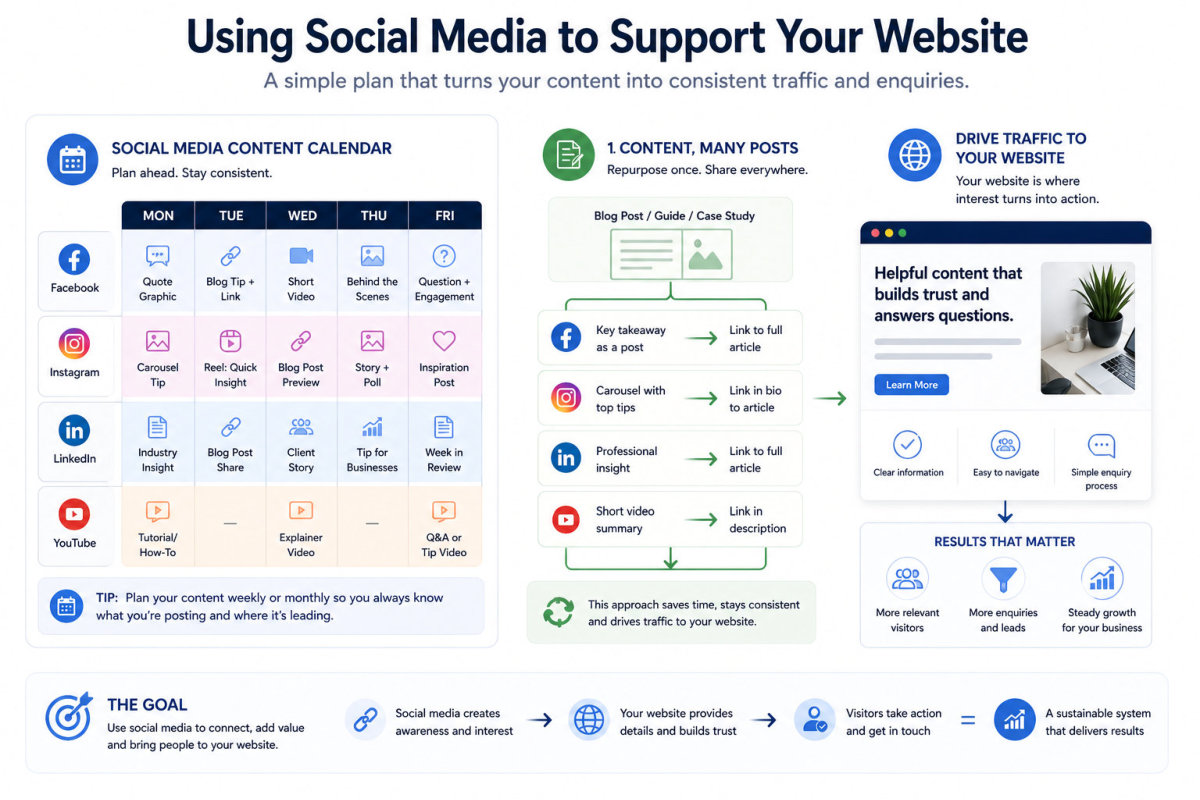
For example, a blog post can be broken into smaller insights, key points, or short explanations that are shared across social platforms. Each of these can then link back to the full article, creating a pathway from social media to your website.

This approach is far more effective than posting random updates. It creates consistency between your social presence and your website, reinforcing your message and improving the quality of traffic you attract.

Practical strategies like this are explored further in driving traffic through social media, where the focus is on using social platforms to support your website rather than distract from it.

Using social media to support your website

Avoiding the trap of constant content creation

One of the biggest challenges with social media is the pressure to constantly create new content. Many business owners feel they need to post daily or keep up with trends, which can quickly become overwhelming and unsustainable.

This often leads to burnout or inconsistent posting. It can also result in content that lacks direction, where posts are created simply to maintain activity rather than support a clear goal.

A more effective approach is to repurpose content you have already created. Blog posts, guides, and website pages can all be used as the foundation for social media content. This reduces the pressure to constantly generate new ideas and ensures that your content remains aligned with your business.

For example, a single blog post can be turned into multiple social media posts, each highlighting a different point. This allows you to stay visible without creating everything from scratch every time.

This approach also helps maintain consistency, as your messaging remains aligned across different platforms.

Creating a simple and sustainable social media plan

Consistency on social media does not require a complex strategy. What matters is having a simple plan that you can realistically maintain over time. This might involve posting a few times per week, focusing on quality rather than volume.

Planning your content in advance can make a significant difference. Instead of deciding what to post each day, you can create a basic content plan that outlines your topics and how they connect to your website.

This could include sharing blog content, highlighting services, answering common questions, or providing useful insights related to your industry. Each post should have a clear purpose and ideally link back to your website where appropriate.

Using tools such as a social media content calendar can help you stay organised and maintain consistency without overcomplicating the process.

The goal is not to be everywhere or post constantly, but to maintain a steady presence that supports your overall visibility.

How social media fits into your overall traffic strategy

Social media should not be viewed in isolation. It is one part of a larger system that includes your website, your content, and your other traffic sources. When these elements are connected, they support each other and create stronger overall results.

For example, social media can bring attention to your content, which supports your SEO efforts. Visitors who discover your website through social platforms may return later through search or direct visits. This creates multiple touchpoints, reinforcing your presence over time.

This is why a balanced approach is important. Social media alone may not generate consistent enquiries, but when combined with strong website content and other traffic sources, it becomes a valuable part of your strategy.

More advanced approaches, such as those outlined in doubling website traffic with social media strategies, demonstrate how social media can amplify your visibility when used alongside a structured website and content system.

When everything is aligned, social media becomes less about constant activity and more about supporting a system that works over time.

Using social media to support your website

Referral Traffic and Partnerships

What referral traffic is and why it matters

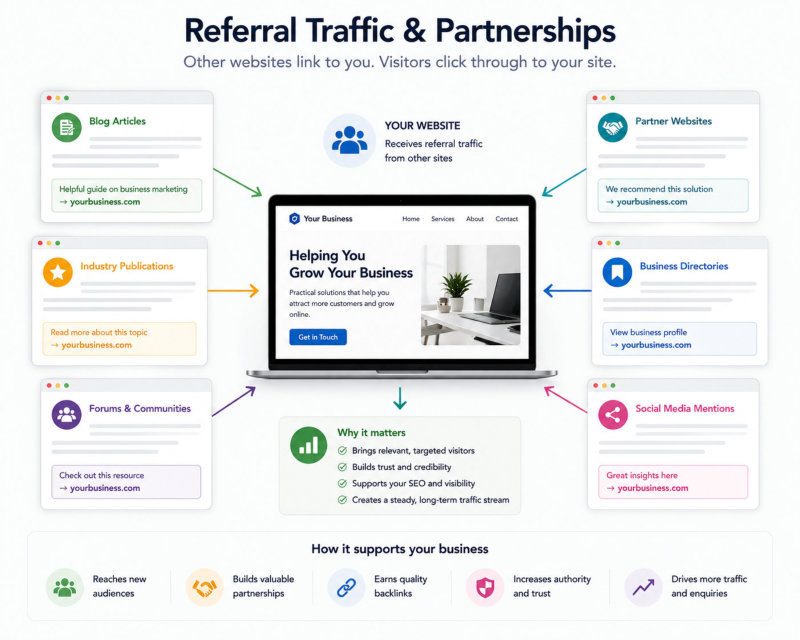
Referral traffic comes from other websites that link to your site. This might include articles, directories, partner websites, guest posts, or mentions in online content. Unlike search traffic, which depends on rankings, referral traffic is driven by visibility on other platforms.

This type of traffic is often more valuable than general traffic because it usually comes from a relevant source. If someone clicks through to your website from a related article or a trusted platform, they are more likely to already have some level of interest or intent.

Referral traffic also plays a role in how search engines view your website. When other sites link to you, it signals that your content is relevant and worth referencing. This can support your SEO efforts and contribute to your overall visibility.

Building referral traffic is not about chasing random links. It is about creating meaningful connections with other platforms and ensuring that your website is being referenced in the right context.

How partnerships can expand your reach

Partnerships are one of the most effective ways to generate referral traffic. These can include collaborations with other businesses, industry connections, or even clients who are willing to feature or recommend your work.

When you partner with businesses that serve a similar audience, you create opportunities to reach people who may not have discovered your website otherwise. This can include joint content, shared resources, or simple mentions that link back to your site.

The key is alignment. Partnerships should make sense for both parties and provide value to the audience. When the connection feels natural, the traffic that comes from it is more likely to be relevant and engaged.

Over time, these partnerships can build a network that supports your visibility beyond your own website.

Using content to attract natural backlinks

One of the most sustainable ways to build referral traffic is through content that others want to reference. When your content is useful, clear, and well-structured, it becomes more likely that other websites will link to it as a resource.

This is why creating in-depth, practical content is so important. Articles that explain concepts clearly, provide guidance, or offer unique insights are more likely to be shared and referenced.

For example, guides such as increasing website traffic or different ways to drive traffic are the type of resources that can attract links over time because they provide ongoing value.

Unlike manual link building, which can feel forced, this approach focuses on creating content that naturally earns attention. While it takes time, it builds stronger and more sustainable results.

Referral traffic and partnerships

Where referral traffic typically comes from

Referral traffic can come from a wide range of sources. These include blogs, online publications, business directories, forums, social media platforms, and industry websites. Each source has its own characteristics and audience.

For example, a mention in a blog article may bring highly targeted traffic, while a listing in a directory may provide a steady but smaller stream of visitors. Social platforms can also act as referral sources when links are shared within posts or profiles.

Understanding where your referral traffic is coming from helps you identify what is working. It allows you to focus on the sources that are bringing relevant visitors and build on those opportunities.

This is where tools such as Google Analytics can help, as they show which external websites are sending traffic to your site and how those visitors are engaging with your content.

Building referral traffic as part of a long-term strategy

Referral traffic is not something that typically produces instant results. It builds gradually as your website becomes more visible and your content is referenced across different platforms.

Instead of focusing on quick wins, it is more effective to treat referral traffic as part of your long-term strategy. This means consistently creating useful content, building relationships, and ensuring your website is worth linking to.

Over time, these efforts can create a network of links that support your visibility and bring in relevant traffic. This also strengthens your overall website authority, which can have a positive impact on your search performance.

When combined with your other traffic sources, referral traffic contributes to a more balanced and resilient strategy. It reduces reliance on any single channel and helps create a steady flow of visitors to your website.

Directory Listings and External Platforms

What directory listings are and how they work

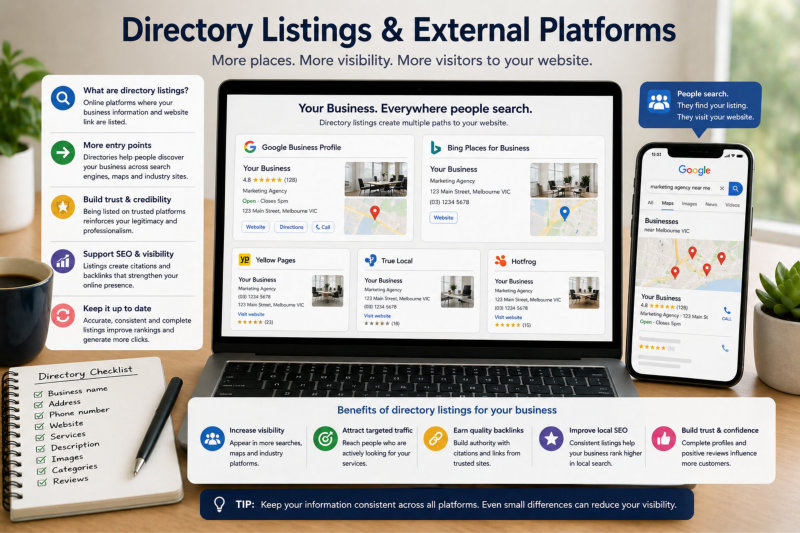
Directory listings are online platforms where businesses can create profiles that include their name, services, contact details, and website link. These range from general directories such as Google Business Profile to industry-specific platforms and local business listings.

These listings act as additional entry points to your website. Instead of relying solely on your own site to be discovered, directories place your business in locations where people are already searching for services. This can include search engines, map results, and specialised platforms.

For many small businesses, directories are one of the simplest ways to improve visibility. They do not require ongoing content creation, but they do need to be set up correctly and maintained over time.

When used effectively, directory listings support both traffic and credibility. They help your business appear in more places and reinforce your presence across the web.

Why consistency across platforms is critical

One of the most important aspects of directory listings is consistency. Your business name, address, phone number, and website should be the same across all platforms. Even small differences can create confusion for both users and search engines.

Inconsistent information can weaken your visibility, particularly for local searches. Search engines rely on consistent data to confirm that your business is legitimate and trustworthy. When details do not match, it can reduce confidence in your listing.

This is why it is important to review your listings regularly and ensure that all information is accurate. Updating one platform but not others can create gaps that affect how your business appears online.

Consistency may seem like a small detail, but it plays a significant role in how your business is perceived and discovered.

Directory listings

Choosing the right directories for your business

Not all directories provide the same value. Some are widely used and trusted, while others may have little impact on your visibility. The goal is not to be listed everywhere, but to be present on platforms that are relevant to your audience and your industry.

General directories, such as Google Business Profile, are essential because they influence local search results. Industry-specific directories can also be valuable, as they attract a more targeted audience.

It is also worth considering platforms where your competitors are listed. This can give you an indication of where your audience is likely to be searching and which directories are worth prioritising.

Being selective helps you focus your efforts on platforms that are more likely to generate meaningful traffic rather than spreading yourself too thin.

How directory listings support SEO and visibility

Directory listings do more than provide direct traffic. They also support your SEO by creating additional references to your website across the internet. These references help search engines confirm your business details and improve your overall credibility.

Listings can also generate backlinks, which contribute to your website’s authority. While not all directory links carry the same weight, they still play a role in building a stronger online presence.

This is particularly important for local businesses, where directory listings can influence how often your business appears in local search results. Combined with your SEO strategy, they help reinforce your visibility across different channels.

Directory listings should not be seen as a standalone tactic, but as part of a broader system that supports your website and content.

Maintaining and improving your listings over time

Creating a directory listing is only the first step. To get the most value, your listings need to be maintained and updated regularly. This includes ensuring your details remain accurate, adding new information when needed, and keeping your profile complete.

Many directories also allow you to include images, descriptions, and updates. Taking the time to improve these elements can make your listing more appealing and increase the likelihood of clicks.

Reviews are another important factor. Positive reviews can improve your credibility and influence how potential clients perceive your business. Encouraging satisfied clients to leave reviews can strengthen your presence across these platforms.

Over time, well-maintained listings can become a reliable source of traffic and support your overall visibility. When combined with other traffic sources, they contribute to a more balanced and effective strategy.

Using Content to Attract Ongoing Traffic

Why content continues to drive traffic over time

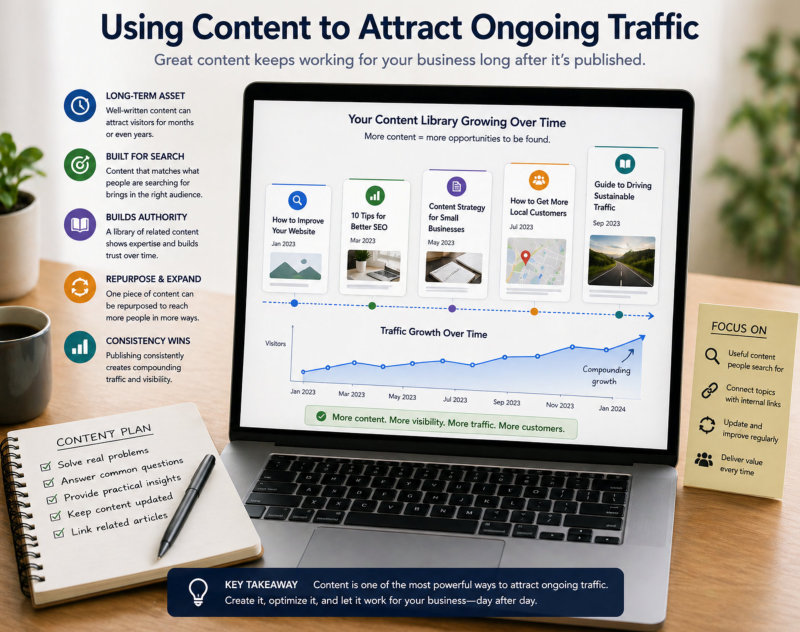
Unlike social media posts or short-term campaigns, content on your website has the ability to attract visitors long after it has been published. A well-written blog post, guide, or resource can continue to appear in search results, be shared, and generate traffic for months or even years.

This is what makes content such a powerful long-term asset. Instead of relying on constant activity to maintain visibility, your content builds over time. Each new piece adds to your overall presence, creating more opportunities for people to discover your website.

Search engines favour websites that consistently publish useful and relevant content. As your content grows, it increases your chances of appearing for a wider range of search queries. This creates a compounding effect, where your visibility improves as your content library expands.

This approach is a core part of strategies outlined in increasing website traffic, where long-term content plays a central role in building sustainable visibility.

Creating content that matches what people are searching for

For content to attract traffic, it needs to align with what people are actually searching for. This means focusing on real questions, common problems, and topics that are relevant to your audience.

Content that is too general or not closely connected to your services may attract visitors, but it is less likely to generate meaningful engagement. The goal is to create content that is both visible and relevant.

This is where your content strategy becomes important. By planning your topics carefully, you ensure that each piece of content contributes to your overall visibility and supports your business goals.

When your content aligns with search intent, it becomes easier for search engines to match your pages with the right queries, improving both traffic quality and engagement.

Building a library of content that works together

Content is most effective when it is not treated as individual pieces, but as part of a larger system. A collection of related posts and pages can work together to cover a topic in depth, making your website more valuable to both users and search engines.

This approach allows you to build authority over time. Instead of relying on one post to perform well, you create multiple pieces of content that support each other and reinforce your expertise.

For example, a main topic can be supported by several related articles, each exploring a different aspect. These can then be linked together, creating a network of content that is easy to navigate and understand.

This type of structure is often highlighted in resources such as moving from content strategy to content planning, where the focus is on creating connected content rather than isolated posts.

Using content to attract traffic

Repurposing content to extend its reach

Creating content does not always mean starting from scratch. One of the most effective ways to maximise your efforts is to repurpose existing content into different formats or platforms.

For example, a blog post can be turned into social media posts, email content, or even expanded into additional articles. This allows you to reach a wider audience without constantly creating new material.

Repurposing also reinforces your message. When the same ideas are shared in different ways, they become more familiar and easier for your audience to understand.

This approach helps maintain consistency across your marketing efforts and ensures that your content continues to work for you beyond its initial publication.

Why consistent content creates long-term visibility

Consistency is one of the most important factors in building traffic through content. Publishing regularly, even at a slower pace, helps maintain momentum and signals to search engines that your website is active and relevant.

Over time, consistent content builds a strong foundation. Each new piece adds to your visibility and increases the number of ways people can find your website. This reduces reliance on short-term tactics and creates a more stable source of traffic.

Strategies such as developing a content marketing strategy emphasise the importance of consistency and planning in achieving long-term results.

When content is approached as an ongoing process rather than a one-off task, it becomes a reliable way to attract visitors, build authority, and support your business over time.

Creating a Balanced Traffic Strategy

Why relying on one traffic source creates risk

Many small business websites depend heavily on a single traffic source. This might be search engines, social media, or referrals from a specific platform. While this can work for a period of time, it creates a level of risk that is often overlooked.

Traffic sources are not static. Search rankings change, social media algorithms shift, and platforms evolve. If your visibility is tied to one channel, any change can have an immediate impact on your traffic and enquiries.

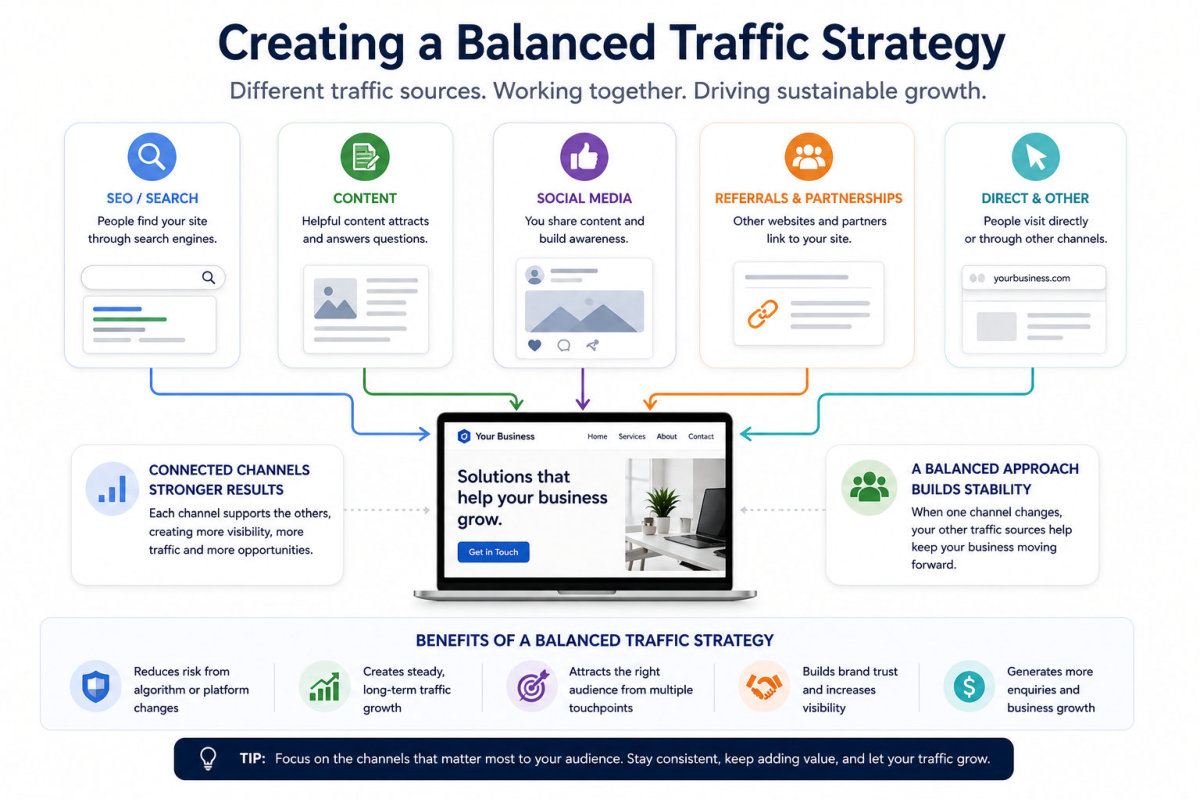
This is why a balanced approach is important. By building multiple sources of traffic, you reduce your reliance on any single channel. This creates more stability and helps maintain a consistent flow of visitors over time.

Instead of trying to maximise one source, the focus shifts to building a system where different channels support each other.

How different traffic sources support each other

Traffic sources are most effective when they are connected rather than treated as separate activities. Each source can support the others, creating a more integrated and efficient strategy.

For example, content created for your website can support SEO by attracting search traffic. The same content can be shared on social media, generating additional exposure. It can also be referenced by other websites, creating referral traffic.

This interconnected approach allows your efforts to compound. Instead of creating separate strategies for each channel, you are building a system where one piece of work contributes to multiple outcomes.

This is why many approaches outlined in different ways to drive traffic to your website focus on combining channels rather than relying on a single tactic.

Balanced traffic strategy

Prioritising the right traffic sources for your business

Not all traffic sources will be equally important for every business. The most effective strategy depends on your industry, your audience, and how your services are typically discovered.

For some businesses, search traffic may be the primary driver. For others, referrals or partnerships may play a larger role. Social media may be more effective for building awareness, while directories can support local visibility.

The key is to identify which sources are most relevant and focus your efforts there. Trying to be active on every platform can dilute your efforts and make it difficult to maintain consistency.

A targeted approach allows you to build strength in the areas that matter most, while still maintaining a balanced presence across other channels.

Creating a system that is realistic to maintain

A balanced traffic strategy does not need to be complicated. In fact, the most effective strategies are often simple and sustainable. The goal is to create a system that you can maintain alongside running your business.

This might involve focusing on a few key channels, such as SEO, content, and one or two supporting platforms like social media or directories. Each of these should have a clear role within your overall strategy.

Consistency is more important than complexity. A simple, well-maintained system will produce better results over time than a complex strategy that is difficult to sustain.

By keeping your approach manageable, you are more likely to stay consistent and build momentum over time.

How a balanced strategy supports long-term growth

When your traffic sources are balanced and connected, your website becomes more resilient. Instead of relying on short-term spikes in visibility, you build a steady flow of visitors from multiple channels.

This creates a stronger foundation for growth. As your content expands, your visibility improves across search. As your presence grows on other platforms, you attract new audiences. As your website becomes more established, referral opportunities increase.

Over time, these elements work together to create consistent traffic and more reliable enquiries. This is what allows your website to support your business in a meaningful way.

A balanced traffic strategy is not about doing everything. It is about doing the right things consistently and ensuring they work together as part of a structured system.

Creating a balanced traffic strategy

Tracking and Improving Your Traffic Sources

Why tracking your traffic sources is essential

Understanding where your website traffic comes from is essential if you want to improve it. Without tracking, it is difficult to know which efforts are working and which ones are not. You may be investing time in activities that generate little value while overlooking sources that are performing well.

Tracking allows you to move from guesswork to informed decisions. Instead of assuming where your visitors are coming from, you can see how people are actually finding your website and how they are interacting with it.

This insight is important for refining your strategy. It helps you focus your time and resources on the channels that are producing results and adjust or remove those that are not contributing effectively.

Over time, this leads to a more efficient and targeted approach, where your efforts are aligned with real data rather than assumptions.

Understanding the key traffic channels in your data

Most analytics tools group traffic into categories such as organic search, direct traffic, referrals, and social. Each of these channels represents a different way visitors are finding your website.

Organic traffic comes from search engines and is often driven by your SEO and content strategy. Direct traffic typically includes returning visitors or those who already know your website. Referral traffic comes from links on other websites, while social traffic is generated through platforms like Facebook, LinkedIn, or Instagram.

Understanding these categories helps you see how your traffic is distributed. It also allows you to identify which channels are contributing most to your visibility and which ones may need more attention.

This broader view makes it easier to connect your traffic sources to your overall strategy and understand how different channels are performing together.

Identifying which sources are driving real results

Not all traffic is equally valuable. Some sources may bring a high number of visitors but result in little engagement or few enquiries. Others may generate fewer visitors but produce more meaningful interactions.

This is why it is important to look beyond traffic numbers and consider what those visitors are doing once they arrive. Are they staying on your site? Are they exploring multiple pages? Are they taking action?

By focusing on these behaviours, you can identify which traffic sources are bringing the right audience. This allows you to prioritise the channels that are most likely to support your business goals.

For example, if visitors from search are engaging more with your content, it may be worth investing further in your traffic growth strategy through SEO and content development.

Tracking and improving your traffic sources

Making small improvements based on what you learn

Improving your traffic does not always require major changes. Often, small adjustments can have a significant impact over time. This might include refining your content, improving internal links, or updating pages that are already attracting visitors.

For example, if a particular blog post is performing well, you can expand on the topic, update the content, or link it more clearly to your services. If a traffic source is underperforming, you can review your approach and make targeted improvements.

These incremental changes are easier to manage and more sustainable than trying to overhaul your entire strategy at once. They also allow you to build on what is already working, rather than starting from scratch.

This approach aligns with many of the methods outlined in traffic improvement strategies, where consistent refinement leads to better long-term results.

Using data to build a stronger long-term strategy

Over time, tracking your traffic provides valuable insight into how your website is performing. Patterns begin to emerge, showing which topics, channels, and strategies are most effective for your business.

This allows you to make more informed decisions about where to focus your efforts. Instead of trying new tactics at random, you can build on proven approaches and refine your strategy based on real data.

Data also helps you stay consistent. When you can see progress, even if it is gradual, it becomes easier to maintain your efforts and continue building momentum.

Ultimately, tracking is not just about monitoring performance. It is about understanding your audience, refining your approach, and creating a strategy that continues to improve over time.

Frequently Asked Questions

Website traffic can come from multiple sources, including search engines, social media, referral links from other websites, directory listings, and direct visits. Each source plays a different role in how people discover your business and interact with your website.

There is no single best method. The most effective approach is to combine multiple strategies, such as SEO, content creation, social media, and referrals. A balanced approach helps create consistent and sustainable traffic over time.

Building website traffic takes time. Some channels, such as social media, can generate quicker results, while others, like SEO and content, take longer to develop. Consistency and structure are key to long-term growth.

Social media can be a useful supporting channel, but it is not essential on its own. It works best when used to drive visitors back to your website rather than being your only source of visibility.

Referral traffic comes from other websites that link to yours. It is important because it often brings relevant visitors and can also support your SEO by increasing your website’s credibility and authority.

Yes, directory listings can help improve visibility, especially for local businesses. They create additional entry points to your website and can also support your SEO when your business details are consistent across platforms.

Content such as blog posts and guides can continue to attract visitors long after they are published. This makes content one of the most effective long-term strategies for building consistent website traffic.

You can use tools like Google Analytics to track where your visitors are coming from and how they interact with your site. The most important measure is whether those visitors are engaging with your content and turning into enquiries.

Traffic is important, but enquiries are what ultimately matter. The goal is to attract the right visitors who are more likely to engage with your content and become potential clients.

A long-term strategy involves combining multiple traffic sources, creating consistent content, and refining your approach based on results. Over time, this creates a system that supports steady growth and ongoing visibility.

Bringing Your Traffic Strategy Together

Website traffic is not built through a single tactic. It comes from a combination of sources working together to support your visibility over time. Search engines, social media, referrals, directories, and content all play different roles in how people discover your business.

Focusing on just one of these channels can limit your results and create unnecessary risk. When your traffic depends on a single source, any change in that channel can affect your visibility. A more balanced approach creates stability and allows your website to continue attracting visitors from multiple directions.

Your website sits at the centre of this system. Every traffic source leads back to it, which is why your messaging, your content, and your overall structure need to work together. When these elements are aligned, your website becomes more effective at turning visitors into enquiries.

Building traffic takes time, but it also builds momentum. As your content grows, your visibility expands. As your presence across platforms increases, more people discover your website. As your strategy becomes more structured, your results become more consistent.

If your website is not generating the level of traffic or enquiries you would expect, it is usually not due to a single issue. It is often a combination of factors that need to be aligned. Taking a structured approach helps bring these elements together and create a system that supports your business over time.

If you would like your website to be set up with a clear structure, strong messaging, and a strategy that supports ongoing traffic, you can explore our website design service. This ensures your website works as a central hub that connects all of your marketing efforts.

Ready to Build or Redesign Your Website?

If you’re reading this and thinking, “This explains exactly what’s wrong with my site,” you’re not alone.

Most small business websites don’t fail because of effort. They fail because they were built without a clear structure, proper planning or long-term thinking.

If you want a website that reflects your business properly, feels organised, and gives you confidence to send people to it, then it might be time for a proper redesign or rebuild.

You can see how I approach website projects here:

Website design services for small business

View recent website design projects

Whether you’re starting from scratch or improving what you already have, the goal is the same – clarity, structure and a site you’re proud to share.

Ivana Katz - Website designer