
Website Copywriting & Messaging That Represents Your Business and Builds Trust
This guide forms part of our complete resource on Small Business Website Content & Visibility.
Having a website is one thing. Explaining what you do clearly, confidently and in a way that actually connects with the right people is something else entirely.
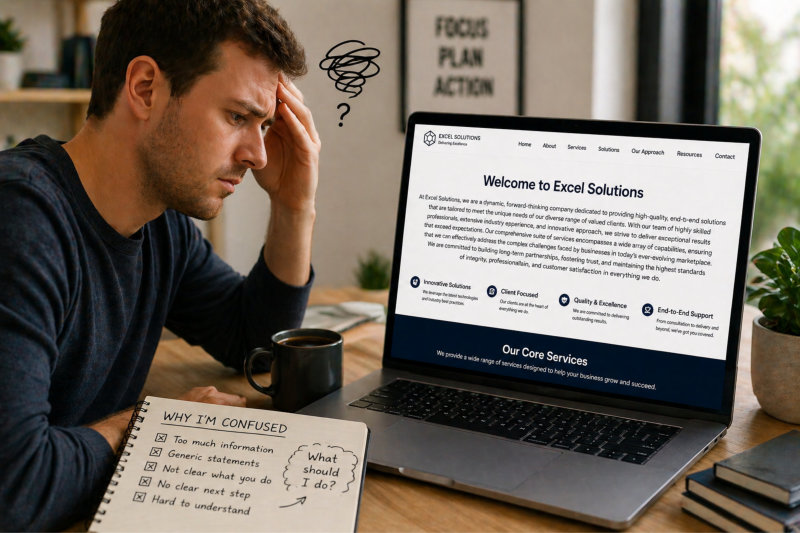
Many small business websites struggle not because the service isn’t good, but because the message isn’t clear. Visitors land on the site, skim a few lines, and leave without really understanding what the business offers or whether it’s the right fit for them. In most cases, it’s not a design problem. It’s a messaging problem.
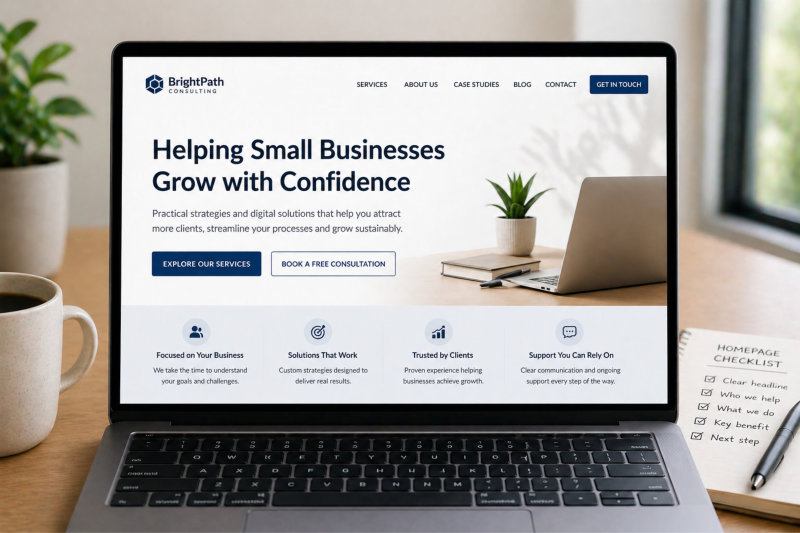
Your website copy is what shapes that first impression. It tells people who you help, what you do, and why they should trust you. When it’s done well, your website feels easy to understand and easy to engage with. When it’s not, even a well-designed site can feel confusing or generic.
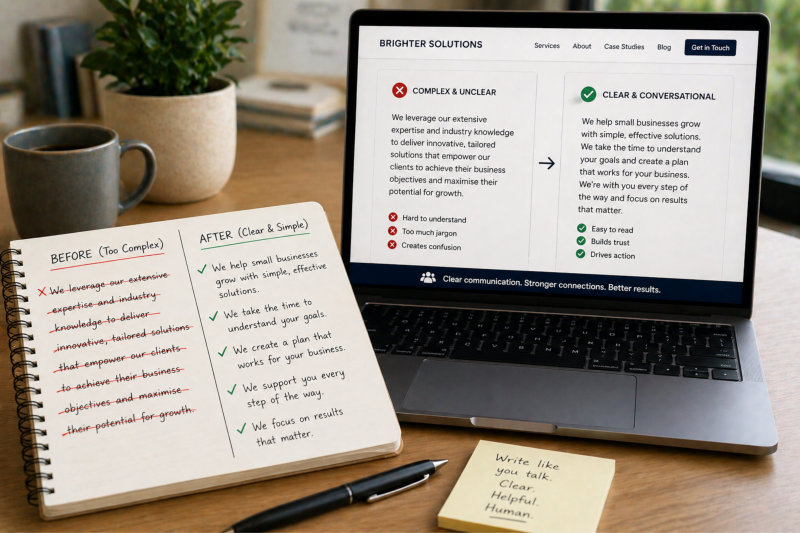
This is where many business owners get stuck. Writing about your own business is harder than it looks. It’s easy to overcomplicate things, rely on industry jargon, or try to sound “professional” in a way that ends up feeling vague and disconnected. The result is content that looks fine on the surface but doesn’t actually communicate anything meaningful.
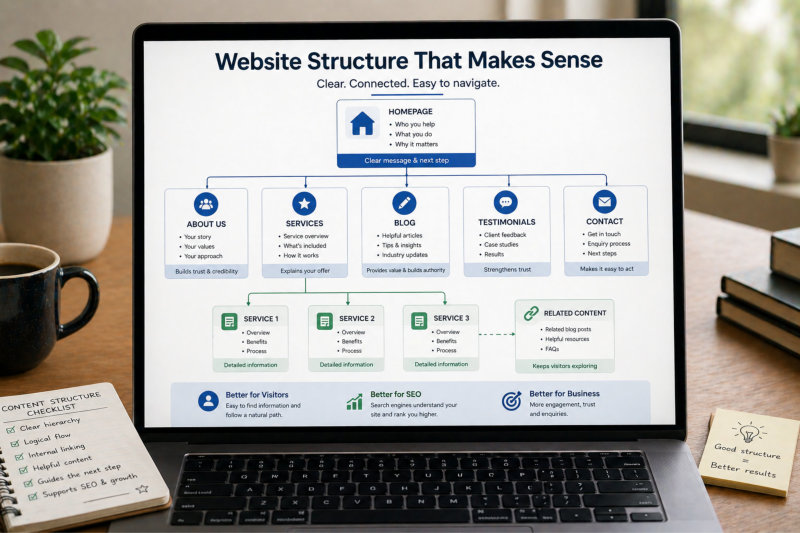
Strong website messaging doesn’t come from writing more. It comes from structuring your content properly, choosing the right words, and understanding what your audience needs to see in order to feel confident taking the next step. This includes everything from your homepage messaging through to your blog content strategy and how your pages connect together.
Clear messaging also supports how your website performs overall. It works alongside your SEO strategy, improves how visitors move through your site, and strengthens trust when combined with elements like testimonials and social proof from your credibility and trust signals.
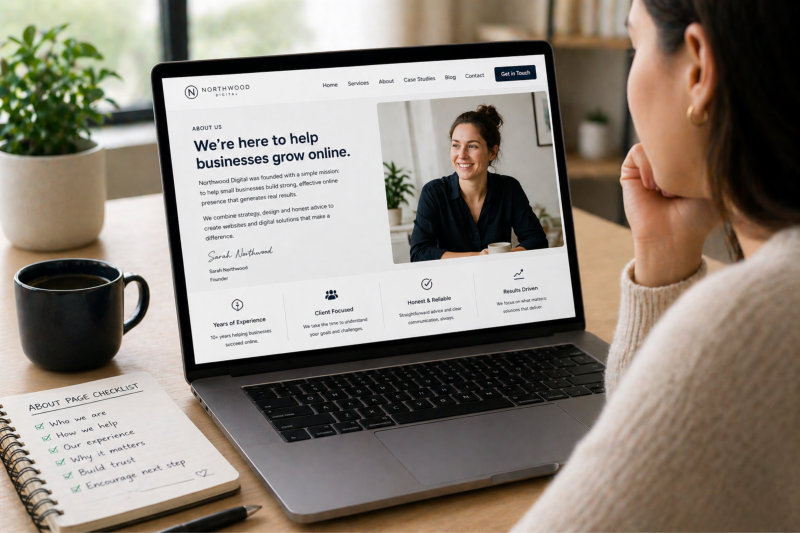
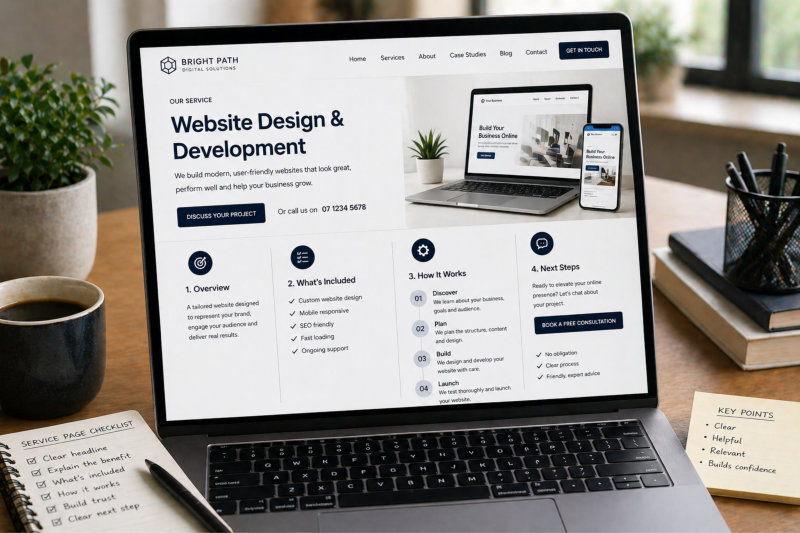
In this guide, we’ll break down how to approach website copywriting in a way that actually reflects your business and helps people understand what you offer. We’ll look at the key pages that matter most, how to structure your messaging, and the common mistakes that quietly cost small businesses enquiries.
If your website feels unclear, inconsistent, or harder to explain than it should be, this is usually where the problem starts. And once your messaging is right, everything else on your website becomes much easier to build on.