
How to Choose the Right Website Designer (Northern Beaches Guide)
Choosing a website designer sounds straightforward until you actually start looking. There are plenty of options, different price points, and very different approaches to how websites are built.
For most small business owners, the challenge is not finding someone who can build a website. It is knowing who will build the right website for your business. A site that not only looks good, but actually helps you get enquiries and supports your growth.
This is where many people get it wrong. They focus on price, visuals, or what looks impressive on the surface, without fully understanding how the website will function once it is live.
If you are based on the Northern Beaches, you are likely working in a competitive local market. Your website needs to clearly communicate what you do, build trust quickly, and make it easy for people to take the next step.
If you are still working out what your website should include, this guide on what pages a website needs will give you a clear starting point.
Why Choosing the Right Designer Matters
Your website is not just a design project. It is part of how your business operates. It is where people go to understand what you do, decide whether they trust you, and take the next step.
If the structure is unclear, the messaging is vague, or the site is difficult to use, it will affect how your business is perceived. Even small issues can reduce enquiries and create unnecessary friction.
This is something that shows up often when reviewing existing websites. Many of the issues are not technical. They come down to how the site has been planned and how well it reflects the business.
This is covered in more detail in this article on common website mistakes, where the most frequent problems are broken down.
Choosing the right designer helps you avoid these issues from the start.
What Most People Look For (And Why It’s Not Enough)
When comparing designers, most people focus on visuals, pricing, and how quickly the website can be completed. While these factors are important, they do not tell the full story.
A visually impressive website does not guarantee that it will perform well. If the structure is unclear or the messaging does not connect with your audience, the design alone will not fix that.
Pricing can also be misleading when it is viewed in isolation. A lower-cost option might seem appealing at the start, but if the website needs to be reworked or does not generate results, it can end up costing more in the long run.
Timelines are another area where expectations can be unrealistic. If you want to understand how long a website should actually take, this guide on website timelines explains what is involved.
The key is to look beyond the surface and focus on how the website will function once it is live.

Website Designer Ivana Katz
If you’re ready to stop overthinking your website and just get it done properly, that’s where I can help.
I work with small business owners across Sydney’s Northern Beaches and beyond, creating websites that reflect your business clearly and give you something you feel confident sharing.
If you’d like to see how this could work for your business, you can explore the options and next steps on the website design Northern Beaches page.
Or if you prefer to talk it through, book a free website strategy call with me.
What to Actually Look For in a Website Designer
Once you look beyond design and pricing, the real difference between website designers comes down to how they approach the process. A good designer is not just building pages. They are helping you structure your website so it makes sense to your clients and supports your business properly.
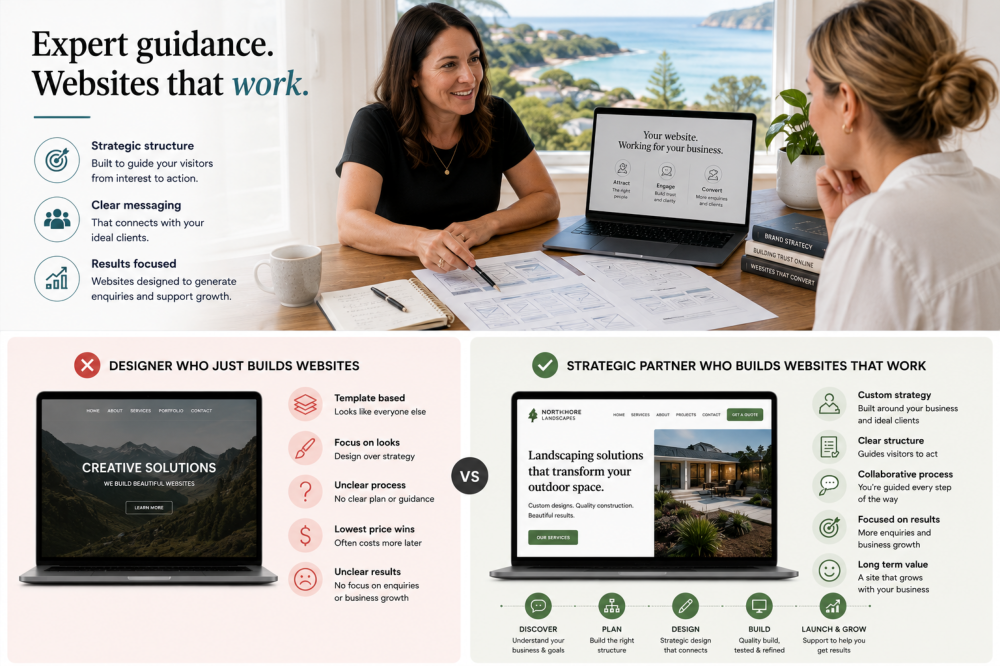
One of the first things to look for is how they talk about websites. If the focus is purely on visuals, colours, and layouts, there is a good chance the structure and messaging are not being given enough attention. A strong website starts with clarity, not design.
You should also look at how they guide the process. Building a website involves a lot of decisions, and without structure, it is easy to get stuck or end up with something that feels incomplete. A good designer will walk you through each step so you are not left trying to figure it out on your own.
Another important factor is how well they understand your type of business. The structure of a website for a coach, tradie, or accountant is not the same, and your designer should be able to adapt the approach based on what will actually work for your industry.
Finally, look at whether they are focused on outcomes. A website should help you get enquiries, not just exist as an online brochure. If that is not part of the conversation, it is worth questioning what the end result will actually achieve.
Questions to Ask Before You Decide
Asking the right questions can quickly show you how a designer works and whether they are the right fit for your business. It also helps you avoid misunderstandings later in the process.
Start by asking how they approach the structure of the website. You want to understand how they decide what pages to include and how those pages will guide your visitors. If the answer is vague, it may be a sign that this part of the process is not clearly defined.
It is also worth asking what is included in the service. Some designers only handle the visual build, while others help with content, structure, and overall direction. Knowing this upfront will give you a clearer idea of what you are actually getting.
Another useful question is how they measure success. A good answer will go beyond the website being finished and focus on whether it is helping your business generate enquiries or support your growth.
A local designer is also more likely to understand how your website connects with things like your Google Business Profile and local search visibility.
You can also ask to see examples of previous work. This is where a portfolio becomes valuable, because it shows how different types of businesses have been approached in practice. You can explore real examples in this Northern Beaches website design portfolio.
Red Flags to Watch Out For
There are a few warning signs that can help you avoid choosing the wrong designer. These are not always obvious at the start, but they tend to show up in how the service is positioned and explained.
One common red flag is a heavy focus on templates without any discussion of how the site will be tailored to your business. Templates can be useful, but if everything is treated as a one-size-fits-all solution, the result is unlikely to reflect your business properly.
Another is a lack of clarity around the process. If it is not clear how the website will be planned, built, and delivered, it can lead to delays, confusion, or a final result that does not meet expectations.
Be cautious of extremely low pricing without a clear explanation of what is included. While it may seem like a good deal, it often means that important parts of the process are missing or will need to be handled by you.
Finally, if there is little focus on how the website will actually be used once it is live, it is worth questioning whether the end result will truly support your business. A good website should feel clear, easy to navigate, and something you are confident sharing with potential clients.
It is not just about how it looks. It is about whether someone can land on your site, understand what you do without confusion, and feel comfortable taking the next step. When that is in place, everything else becomes much easier.
Local vs Remote Designers – Does It Matter?
With so many designers working remotely, it is reasonable to ask whether choosing someone local still makes a difference. In many cases, it comes down to how you prefer to work and what kind of support you value.
Working with someone local can make communication easier and more personal. They are more likely to understand the local market, the types of businesses in your area, and what your clients expect when they visit your website.
At the same time, a remote designer can still deliver a strong result if the process is clear and communication is consistent. The most important factor is not location on its own, but how well the designer understands your business and guides the project.
If you are running your business from home or working from different locations, your website becomes even more important as a central point of contact. This is something that often comes up when working from cafes or shared spaces, where you are regularly sharing your business on the go. If that sounds familiar, this guide on working from home on the Northern Beaches explores how people are structuring their workdays locally.
This article is part of our Northern Beaches website design guide, helping local businesses create clearer, more effective websites.
Ready to Choose the Right Direction?
If you are at the stage where you are comparing options, it usually means your website is becoming more important to your business. Whether you are starting from scratch or improving what you already have, the goal is the same. You want something that feels clear, professional, and easy to share.
Learn more about website design on the Northern Beaches
Get in touch or
Book a quick call and we can talk through what will actually work for your business.
Frequently Asked Questions
How do I choose the right website designer for my business?
The right website designer is someone who focuses on clarity as much as design. They should help you structure your website so it makes sense to your clients, not just create something that looks good. A good designer will guide you through the process, ask the right questions about your business, and make sure the final result is something you feel confident sharing.
What should I look for in a website designer?
Look for someone who explains how your website will be structured, not just how it will look. They should be able to show examples of real work, explain their process clearly, and talk about how the website will support your business once it is live. If everything is focused on visuals without mentioning structure or clarity, that is usually a red flag.
How do I know if a website designer is right for my industry?
A good website designer does not need to specialise in one industry, but they should understand how different businesses work. The way a website is structured for a coach is different to a tradie or an accountant. If they can explain how they would approach your type of business, it is a good sign they will be able to create something that fits properly.
Is it better to choose a local website designer?
Choosing a local designer can make communication easier and more personal, especially if you prefer working with someone who understands your area. However, the most important factor is how well they understand your business and guide the process. A clear, structured approach matters more than location on its own.
How much should I expect to pay for a website designer?
Pricing can vary depending on what is included and how the website is built. Instead of focusing only on cost, it is more useful to understand what you are getting for that price. A cheaper option may not include structure, guidance, or support, which can lead to extra work or the need to fix things later.
What are the warning signs of a poor website designer?
Some common warning signs include a heavy focus on templates without tailoring them to your business, vague explanations of the process, and very low pricing without clarity on what is included. Another red flag is when there is little discussion about how the website will actually be used once it is live.
Can I build my own website instead of hiring a designer?
Yes, and many people start that way. The challenge is that it often takes longer than expected and can be difficult to know if you are making the right decisions. Working with a designer can make the process smoother and help you avoid common mistakes, but the best option depends on your time, confidence, and how important the website is to your business.