
What Pages Does a Small Business Website Need? (Northern Beaches Guide)
Most small business owners know they need a website, but when it comes to deciding what pages to include, things quickly become unclear. Some people keep it too simple and leave out important information, while others add too many pages without a clear purpose, which ends up confusing visitors.
It is easy to look at other websites and copy what they are doing, but that rarely leads to a strong result. Every business is different, and the structure of your website should reflect how your business actually works, how your clients think, and what they need to see before they make contact.
This is where a lot of websites fall short. They either look complete but do not guide the visitor properly, or they include the right pages but do not use them effectively. Getting the structure right from the beginning makes everything else easier, from writing content through to turning visitors into enquiries.
Why Getting the Right Pages Matters More Than You Think
The pages on your website are not just there to fill space. Each one has a specific role, and together they shape how someone understands your business and decides whether to take the next step.
When a potential client lands on your website, they are usually trying to answer a few simple questions. What do you do, can you help me, and can I trust you. If your pages do not answer those questions clearly, people will leave, even if your service is exactly what they are looking for.
This is why structure matters more than most people expect. A well-structured website guides someone naturally from one page to the next. It helps them build confidence as they go, rather than forcing them to search for information or piece things together themselves.
On the other hand, a poorly structured site creates friction. Important information might be missing, buried, or unclear. Visitors may not know where to click next, or they may leave without taking action because they are unsure. These are the kinds of issues that often show up in websites that look fine on the surface but do not perform as well as they should.
Many modern marketing platforms also emphasise the importance of clear customer journeys and page structure.
If you have ever looked at your own website and felt like something is not quite working, even though you cannot explain why, it is often a structural issue rather than a design problem.
The Core Pages Most Small Business Websites Need
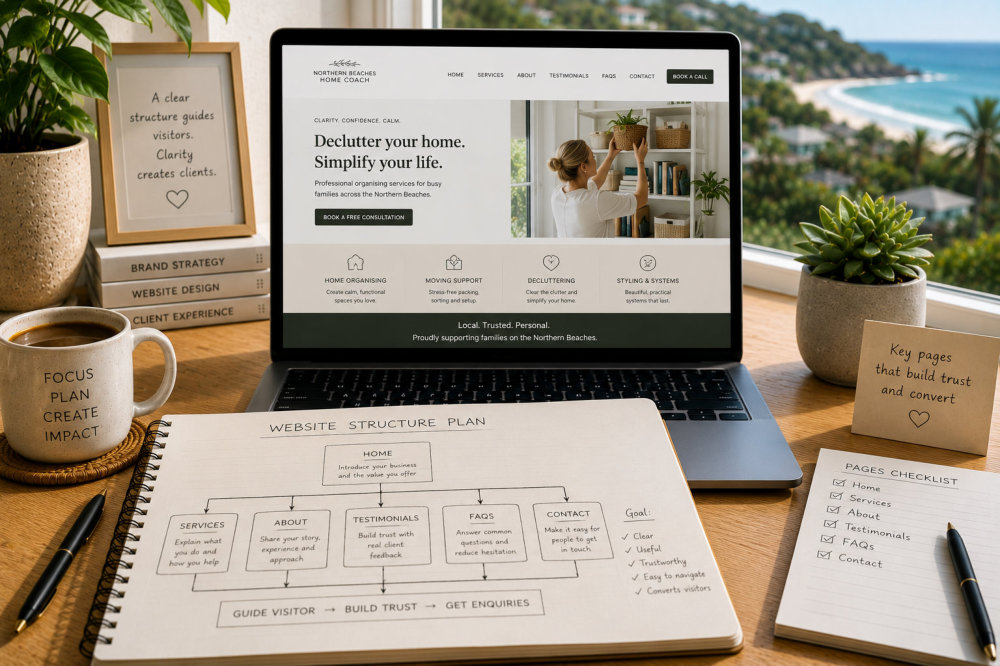
While every business is different, there are a handful of core pages that most small business websites need. The difference is not whether you have these pages, but how well they are used and how clearly they guide your visitors.
The home page is usually the first point of contact, and its role is to quickly explain what you do and who you help. It should give people enough clarity to understand they are in the right place and encourage them to keep exploring. A common mistake is trying to include everything on the home page, which often leads to clutter and confusion instead of clarity.
The services page is one of the most important parts of the entire website. This is where people decide whether you can actually help them. It needs to clearly explain what you offer, how it works, and what someone can expect. Vague or overly general descriptions make it harder for potential clients to see the value of what you do.
The about page is often underestimated, but it plays a key role in building trust. People want to know who they are dealing with, especially for service-based businesses. This page is not just about your background. It is about helping someone feel comfortable choosing you and understanding how you work.
The contact page should make it easy for people to take the next step. That might be filling out a form, sending an enquiry, or booking a call. If this page is unclear or difficult to use, you can lose opportunities even if everything else on the site is working well.
Testimonials or proof-based content is another important element. Whether this is a dedicated page or included throughout the site, it helps reinforce that others have had a positive experience working with you. This builds confidence and reduces hesitation at the point where someone is deciding whether to reach out.
These core pages form the foundation of most websites. Once they are in place and working well, you can then decide whether you need to expand further based on your business, your audience, and how you want to grow.
How Website Pages Change Depending on Your Industry
While most small business websites share a similar foundation, the way those pages are structured and prioritised should reflect the type of business you run. This is where many websites fall short, because they follow a generic template instead of adapting to how their clients actually think and make decisions.
The pages you include should support the way your clients choose, not just what your business offers. Below are some common examples of how website structure changes depending on the type of business.
Coaches and Consultants
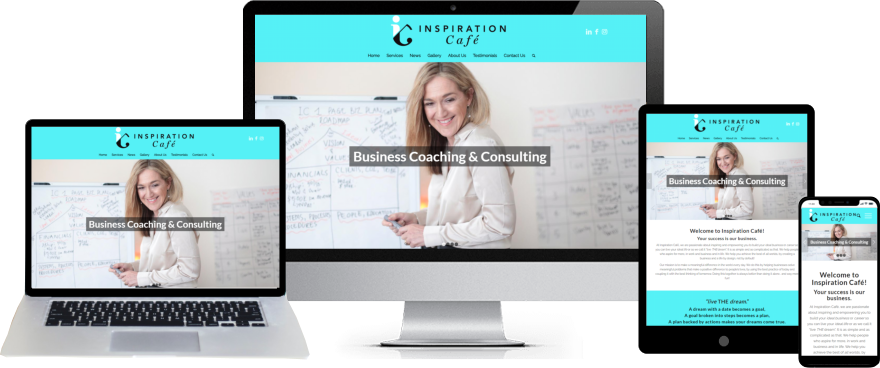
For coaches and consultants, the focus is on clarity, trust, and making it easy for someone to take the next step. People are often looking for reassurance before they commit, so the website needs to clearly explain what you offer, how it works, and what results they can expect. A strong services page and a clear call to action are critical here.
- Home Page
- Services or Programs Page
- About Page
- Testimonials or Case Studies
- Booking or Enquiry Page
- FAQs Page
- Blog or Insights (optional but valuable)
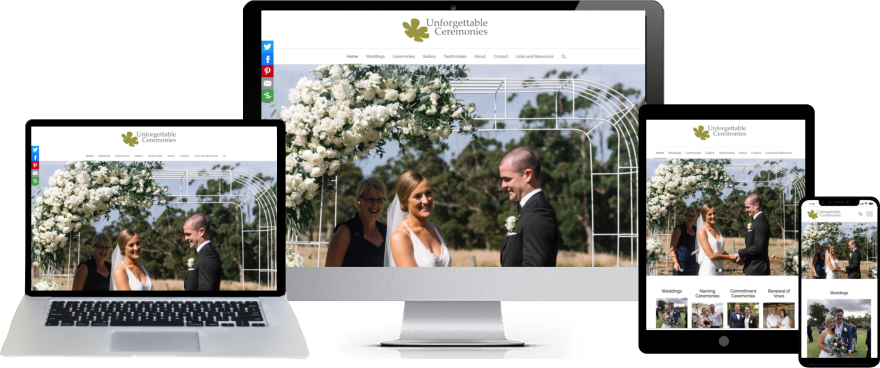
Marriage Celebrants and Event-Based Businesses
For celebrants and event-based businesses, the decision is more emotional. Clients want to picture the experience and feel confident that you will deliver something special. Visual content and real examples play a much bigger role, which is why galleries and testimonials become essential.
- Home Page
- Ceremony or Service Types
- Gallery or Real Events
- Testimonials
- About Page
- Contact Page
- FAQ Page
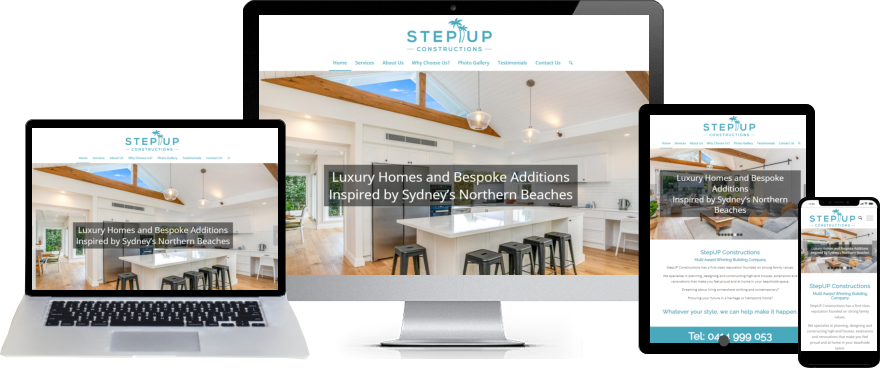
Tradies and Building Services
Tradies need to communicate clearly and quickly. Most clients want to understand what services are offered, see examples of completed work, and confirm that you operate in their area. A clear structure combined with strong visual proof is what drives enquiries.
- Home Page
- Services Page (often broken into individual services)
- Projects or Gallery
- Areas We Service
- Testimonials
- Contact Page
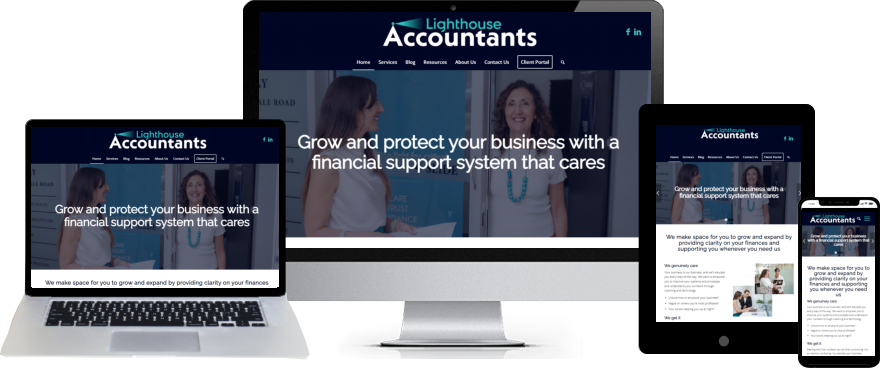
Accountants and Professional Services
For accountants and professional services, credibility and clarity are key. Clients want to understand what is offered and feel confident that they are dealing with someone experienced and reliable. The structure should support this by clearly outlining services and building trust through experience and qualifications.
- Home Page
- Services Page
- About Page (including experience and qualifications)
- Testimonials
- FAQ Page
- Contact Page
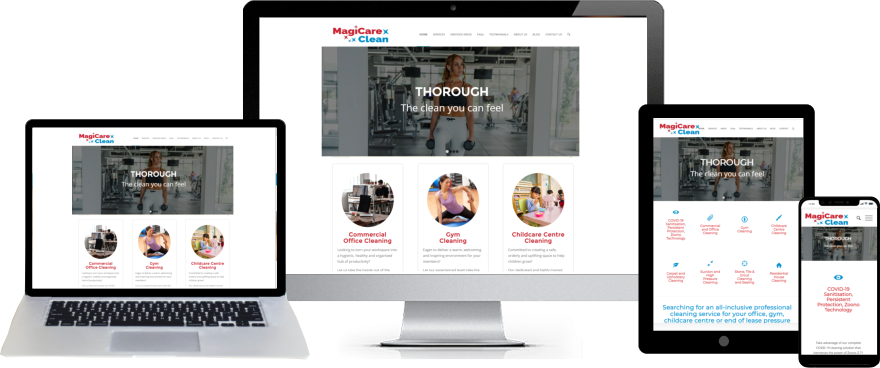
Local Service Businesses (Cleaning, Gyms, Childcare)
Local service businesses benefit from keeping things simple and easy to understand. Clients are usually looking for straightforward information about what is offered, where the service is available, and how to get started. Clear service descriptions and location details are particularly important.
- Home Page
- Services Page
- Areas We Service
- Testimonials
- Contact Page
The key takeaway is that your website should reflect how your business actually operates and how your clients make decisions. The structure should support that process, rather than forcing your business into a generic setup that does not quite fit.

Website Designer Ivana Katz
If you’re ready to stop overthinking your website and just get it done properly, that’s where I can help.
I work with small business owners across Sydney’s Northern Beaches and beyond, creating websites that reflect your business clearly and give you something you feel confident sharing.
If you’d like to see how this could work for your business, you can explore the options and next steps on the website design Northern Beaches page.
Or if you prefer to talk it through, book a free website strategy call with me.
Pages You Might Need as Your Business Grows
Once the core pages are in place and working well, many businesses reach a point where they need to expand their website. This is usually driven by growth, changes in services, or a need to provide more detailed information to potential clients.
One of the most common additions is a blog or resources section. This gives you a place to answer questions, share insights, and create content that helps people find you through search. It also allows you to build authority over time by demonstrating your knowledge in your area.
A portfolio or gallery page is another valuable addition, particularly for service-based businesses where visual proof matters. Being able to show real examples of your work helps potential clients understand what you do and what they can expect. It also reinforces trust in a way that written descriptions alone cannot achieve.
Case studies can take this a step further by explaining not just what you did, but how you approached a project and what the outcome was. This is especially useful for businesses that offer more complex or high-value services, where clients want to understand the process before committing.
Some businesses also benefit from creating dedicated landing pages for specific services or campaigns. These pages are often more focused and tailored to a particular audience or offer, which can make them more effective for generating enquiries.
The key is to expand your website with purpose. Adding pages should make it easier for people to understand your business and take action, not create more confusion or unnecessary complexity.
Common Mistakes When Choosing Website Pages
One of the most common mistakes is adding too many pages too early. It can feel like more content makes your website look more complete, but if those pages do not have a clear purpose, they can actually make it harder for visitors to navigate and understand your business.
Another mistake is copying what other businesses are doing without considering whether it applies to your situation. Just because a competitor has certain pages does not mean they are right for you. Your website should reflect how your business works, not someone else’s structure.
Many websites also suffer from missing key information. Important details about services, pricing, or how to get started are either unclear or not included at all. This creates hesitation and can stop potential clients from reaching out.
There is also a tendency to underestimate how important the services page is. This is often the page where people decide whether to take the next step, yet it is frequently too vague or too brief to be effective.
If you have ever wondered why a website is not generating as many enquiries as expected, it is often due to one or more of these issues. They are not always obvious at first, but they have a direct impact on how people interact with your site.
A more detailed breakdown of these types of issues can be found in this guide to common website mistakes, which highlights where things tend to go wrong and how to fix them.
DIY vs Getting It Done Properly
Once you understand what pages your website needs, the next question is how to actually bring it all together. Some business owners choose to build their own site, while others decide to work with a designer.
Building your own website can work if you have the time to learn the process and are comfortable making decisions about structure, content, and layout. The challenge is that it often takes longer than expected, and it can be difficult to know whether you are making the right choices along the way.
Working with a designer changes the process by providing structure and guidance. Instead of starting from scratch, you are working through a defined approach that is designed to produce a clear and effective result. This can make the process more efficient and help avoid the common mistakes that tend to slow things down.
If you are weighing up both options, this comparison of DIY vs professional website design will give you a clearer understanding of what works in practice.
Whichever approach you choose, the most important thing is that the final website is clear, complete, and ready to support your business properly.
Ready to Get Your Website Structure Right?
If you are trying to figure out what your website should include, you are not alone. Most business owners either keep it too simple and miss important pages, or overcomplicate it and end up with something that feels unclear.
Getting the structure right from the start makes everything else easier. It helps your website make sense to your clients, gives you confidence in what you are sharing, and makes it far more likely that people will take the next step.
- Learn more about website design on the Northern Beaches
- Get in touch or
- Book a quick call and we can map out what your website actually needs.
Frequently Asked Questions
What pages does a small business website need?
Most small business websites need a home page, services page, about page, contact page, and some form of testimonials or proof. These pages work together to explain what you do, build trust, and guide visitors towards making an enquiry. The exact structure can vary depending on your industry, but these core pages form the foundation of a clear and effective website.
How many pages should a small business website have?
There is no fixed number, but most small business websites start with around four to six key pages. The focus should be on clarity rather than quantity. It is far more effective to have a smaller number of well-structured pages than a large number of pages that do not add value or guide the visitor properly.
Do I need a separate page for each service?
In many cases, yes. If you offer multiple services, having separate pages for each one can make it easier for potential clients to understand exactly what you offer. It also allows you to explain each service properly rather than trying to fit everything into a single page, which can become unclear and overwhelming.
Is a blog necessary for a small business website?
A blog is not essential for every business, but it can be very valuable if you want to improve visibility and answer common questions your clients are asking. It gives you a way to create useful content over time and can help people find your website through search. If you are not planning to update it regularly, it is better to focus on getting your core pages right first.
What is the most important page on a website?
The services page is often the most important because it is where people decide whether you can help them. While the home page creates the first impression, the services page is where visitors look for detail and clarity. If this page is vague or incomplete, it can reduce the chances of someone taking the next step.
Can I start with a simple website and add pages later?
Yes, and this is often a practical approach. Starting with a clear, simple structure allows you to get your website live without overcomplicating things. As your business grows, you can then add additional pages such as blogs, case studies, or more detailed service pages based on what you need.
How do I know if my website is missing important pages?
If people are asking you the same questions repeatedly, or if you find yourself explaining your services in detail every time someone enquires, it is usually a sign that your website is missing key information. A well-structured website should answer most of those questions before someone even contacts you.