

Having a website is one thing. Being found and understood is something else entirely.
Many small business websites struggle not because the services aren’t good, but because the message isn’t clear or the right people never find them in the first place. Without strong content and visibility, even a well-designed website can go unnoticed.
Website content and visibility work together. Your content explains what you do, who you help, and why someone should choose you. Visibility ensures that the right people can actually find your website when they are searching or exploring their options.
When these two elements are aligned, your website becomes easier to understand, easier to find, and more effective at attracting the right type of enquiries.
Clear content removes confusion. It helps visitors quickly understand whether your services are relevant to them and what they should do next. Without that clarity, even interested visitors may leave simply because they are unsure.
Visibility supports this by bringing the right people to your website in the first place. This doesn’t require complex strategies or constant activity across every platform. A focused, consistent approach is usually far more effective for small businesses.
It’s also important to see content as something that builds over time. Each page and each piece of content adds to how your website is understood by both visitors and search engines. Over time, this creates a stronger and more reliable online presence.
This guide brings these elements together in a practical way, so you can improve both what your website says and how people find it, without overcomplicating the process.
On this page, you will learn:
- How to write clear, effective website content that reflects your business
- What pages your website needs and how to structure them
- How to plan and create content consistently over time
- How search engines understand your website and what actually matters
- Ways to improve your visibility without relying on complicated strategies
- How to use simple channels like email and referrals to support your website
- How to build trust and authority through your content and online presence
This guide brings these elements together so you can improve both what your website says and how people find it, without overcomplicating the process.
Website Copywriting & Messaging
Your website content is often the first impression people have of your business.
Before someone contacts you, they are reading, scanning, and trying to understand what you do and whether it’s relevant to them. If your message is unclear, too vague, or difficult to follow, people will lose interest quickly and move on.
Good website copy is not about sounding clever or overly polished. It’s about being clear. Visitors should be able to understand what you offer, who it’s for, and how you can help within a few seconds of landing on your site.
Each page on your website plays a different role. Your homepage introduces your business, your services page explains what you offer, and your about page builds connection and trust. When these pages work together, your website feels consistent and easy to navigate.
Tone of voice also matters. The way you communicate should reflect your business and feel natural to your audience. When your content sounds like you, it becomes easier for people to connect with your message and feel confident reaching out.
Clarity is what ties everything together. When your content is simple, structured, and focused, it reduces confusion and helps people take the next step without hesitation.
When your messaging is strong, your website becomes easier to understand, more engaging to read, and more effective at attracting the right type of clients.
What Website Copywriting & Messaging Covers
This section focuses on how to write clear, structured content that reflects your business and helps visitors quickly understand what you offer.
- How to structure homepage messaging so visitors understand what you do immediately
- What to include on an about page to build connection and trust
- How to write services pages that clearly explain your offer
- Developing a tone of voice that feels natural and consistent
- Improving writing clarity so your content is easy to read and understand
- Avoiding common messaging mistakes that confuse or lose visitors
→ Explore Website Copywriting & Messaging
Blogging & Content Strategy
Creating content without a plan can quickly become overwhelming and inconsistent.
Many small business owners start a blog with good intentions, but without a clear direction, it becomes difficult to know what to write about or how often to post. Over time, this leads to gaps, unfinished ideas, or content that doesn’t really support the business.
A simple content strategy makes this easier. It gives you a clear idea of what topics to focus on, how your content connects to your services, and how everything works together over time. Instead of guessing what to write, you’re building content with purpose.
Blogging plays a key role in this. It allows you to answer common questions, explain your services in more depth, and create content that can be found through search. Each article becomes another entry point to your website.
Consistency matters more than volume. You don’t need to publish constantly, but you do need to be consistent enough that your website continues to grow and stay relevant. Even a steady, manageable approach can make a difference over time.
It’s also important to think long-term. Content is not just for today, it builds over time. Articles you create now can continue to bring visitors to your website months or even years later.
When your content is planned, relevant, and connected to your services, it becomes a valuable part of how your website attracts and supports potential clients. Combined with a strong structure and user journey, as covered in our Website Design & Redesign guide, and a clear conversion strategy from our Website Conversion & Growth guide, your content becomes even more effective.
Tools like AI and automation can also support content creation and planning, helping you generate ideas and stay consistent without overcomplicating the process. You can explore this further in our AI & Automation guide.
What Blogging & Content Strategy Covers
This section focuses on how to plan, create, and manage content so it supports your business over time.
- How to plan blog content around your services and audience
- Choosing content topics that are useful and relevant
- Creating a simple and manageable content plan
- Staying consistent without feeling overwhelmed
- Understanding how content supports your website long-term
- Connecting your blog content back to your services
→ Explore Blogging & Content Strategy
SEO for Small Business
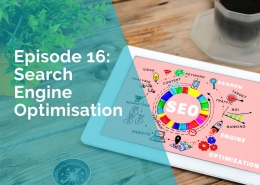
Search engine optimisation, or SEO, is often made to sound more complicated than it needs to be.
For most small business websites, SEO is not about complex strategies or technical tricks. It’s about helping search engines understand what your website is about and making it easier for the right people to find you.
When someone searches for a service you offer, your website needs to clearly reflect that. This comes down to how your content is written, how your pages are structured, and how well everything connects together.
Keywords play a role here, but they are not the whole picture. Using the right words in the right places helps, but what matters more is whether your content actually answers what people are searching for. Clear, relevant content will always perform better than content that is written just to include keywords.
Internal linking is another important part of SEO. When your pages are connected in a logical way, it helps both visitors and search engines navigate your website more easily. This improves how your content is understood and how your pages are ranked.
SEO also works closely with your overall website structure and performance. A well-designed website, as covered in our Website Design & Redesign guide, combined with clear content and a strong user experience, creates a solid foundation for visibility.
When SEO is approached in a simple and practical way, it becomes something manageable. Instead of focusing on technical detail, you focus on creating clear, useful content that supports your business and makes it easier for people to find you.
What SEO for Small Business Covers
This section focuses on the essential elements of SEO that help your website become more visible without overcomplicating the process.
- Understanding how keywords relate to your services and audience
- Where to use keywords naturally across your website
- Basic on-page SEO elements that support visibility
- How internal linking helps connect your content
- How search engines understand your website
- Simple ways to improve your visibility over time
→ Explore SEO for Small Business
Visibility & Traffic Sources
Getting your website live is only part of the process. People still need to find it.
Many small business owners focus heavily on building their website, but don’t spend as much time thinking about how visitors will actually arrive there. Without visibility, even the best website can sit unnoticed.
Search engines are one way people find your site, but they are not the only way. Traffic can also come from referrals, directories, social platforms, and other online touchpoints. Each of these plays a different role in how your website is discovered.
The key is not to try and be everywhere. Spreading yourself too thin across multiple platforms can quickly become overwhelming and difficult to maintain. A more effective approach is to focus on a few channels that make sense for your business and use them consistently.
It’s also important that wherever people find you, the experience connects back to your website. Whether someone clicks through from a directory, a referral, or a social post, your website should feel aligned with what they expect to see.
This is where content and conversion come together. Your visibility brings people in, but your website needs to guide them once they arrive. When both are aligned, your overall results improve. You can explore how this works in more detail in our Website Conversion & Growth guide.
When approached in a simple and focused way, improving your visibility becomes manageable and far more effective over time.
What Visibility & Traffic Sources Covers
This section focuses on the different ways people can find your website and how to use them without overcomplicating your approach.
- Understanding different sources of website traffic
- Using referrals and directories to increase visibility
- How social platforms can support your website (without relying on them)
- Connecting external channels back to your website effectively
- Choosing the right channels for your business
- Avoiding the mistake of trying to do everything at once
→ Explore Visibility & Traffic Sources
Email Marketing & List Building
Email marketing is one of the simplest ways to stay connected with people who are already interested in your business.
Unlike social media or search, where visibility can change quickly, your email list is something you own. It gives you a direct way to communicate with potential and existing clients without relying on external platforms.
For many small businesses, email marketing doesn’t need to be complex. It can start with something as simple as giving visitors a reason to stay in touch, whether that’s a useful resource, a checklist, or occasional updates.
What matters most is relevance. People are more likely to share their email address when what you’re offering feels genuinely useful and aligned with what they are looking for. A simple, well-placed sign-up opportunity can be enough to start building your list over time.
Email also supports your overall website strategy. It gives people a way to return to your site, revisit your services, and stay connected until they are ready to take the next step. This works alongside your visibility efforts and helps reinforce your messaging over time.
It’s important not to overcomplicate things. You don’t need advanced funnels or constant campaigns to make email marketing effective. A clear purpose and consistent, simple communication is often enough for small businesses.
When used well, email becomes a quiet but reliable way to support your website, helping you stay visible and build relationships beyond a single visit.
What Email Marketing & List Building Covers
This section focuses on simple ways to build and use an email list to support your website and business.
- How to create simple and relevant lead magnets
- Where to place email sign-up opportunities on your website
- Building your email list over time without pressure
- Using email to bring visitors back to your website
- Keeping communication simple and consistent
- Avoiding overly complex email strategies
→ Explore Email Marketing & List Building
Authority Building & Personal Branding
Your website is not just about what you do. It’s also about how people perceive you.
When someone visits your website, they are forming an impression within seconds. They are asking themselves whether you understand their needs, whether you seem experienced, and whether they feel confident enough to reach out. This is where authority and personal branding play a role.
Authority is not about being the biggest or most well-known. It’s about being clear, consistent, and confident in how you present your expertise. When your website reflects what you do in a way that feels genuine and easy to understand, it becomes much easier for people to trust you.
Your content contributes to this. The way you explain your services, the examples you share, and the tone you use all shape how people perceive your business. Over time, this builds a sense of familiarity and credibility.
Personal branding also comes into play, especially for small business owners. People are often choosing to work with you, not just your service. Showing who you are, how you work, and what you stand for helps create a stronger connection.
This doesn’t mean sharing everything or trying to be overly personal. It simply means being clear and authentic in how you present yourself. When your website feels consistent and aligned, it builds confidence without needing to over-explain.
When authority and personal branding are handled well, your website becomes more than just informative. It becomes something that people remember and feel comfortable engaging with.
What Authority Building & Personal Branding Covers
This section focuses on how to build trust and credibility through your website and overall online presence.
- How to present your expertise clearly and confidently
- Building trust through consistent messaging and content
- Using your website to strengthen your professional presence
- Balancing personal branding with professionalism
- Creating a consistent and recognisable tone of voice
- Avoiding common mistakes that weaken credibility
→ Explore Authority Building & Personal Branding
Bringing It All Together
Your website content and visibility are not separate pieces. They work together to shape how people find you, understand what you do, and decide whether to take the next step.
You can have a well-designed website, but without clear content, people won’t understand your value. You can have strong content, but without visibility, the right people may never find you. It’s the combination of both that creates a website that actually supports your business.
When your messaging is clear, your content is structured, and your visibility is focused, your website becomes easier to understand and easier to find. This naturally leads to better engagement and stronger results over time.
The key is not to try and do everything at once. Start with the areas that feel unclear or inconsistent. Improve your messaging, simplify your content, and focus on a small number of visibility channels that make sense for your business.
As these elements come together, your website becomes more than just an online presence. It becomes something you can confidently share, knowing it reflects your business and supports how you attract new clients.
If you’re not sure where to start or want support in creating a website that clearly represents your business and helps you get found by the right people, you can explore more about our website design services.
Frequently Asked Questions
What pages should my website include?
Most small business websites should include a homepage, about page, services page, and a contact page at a minimum. Additional pages can support specific services or answer common questions, but the key is keeping the structure clear and easy to navigate.
How do I know if my website content is clear enough?
If someone can quickly understand what you do, who you help, and how to get started within a few seconds, your content is working. If visitors need to read multiple sections to figure this out, your messaging may need simplifying.
Do I really need a blog for my website?
A blog is not essential, but it can be very useful. It allows you to answer questions, explain your services in more detail, and create content that helps people find your website through search over time.
How often should I create new content?
Consistency matters more than frequency. A realistic, manageable schedule is more effective than trying to post frequently and stopping. Even one article per month can build value over time if it’s relevant and useful.
What is the easiest way to improve my website visibility?
Start by making sure your content clearly reflects what you offer and includes the words your audience is likely to search for. From there, adding useful content and linking your pages properly will help improve visibility gradually.
Do I need to understand SEO to improve my website?
You don’t need deep technical knowledge. A basic understanding of how search engines read your content, combined with clear writing and good structure, is often enough for small business websites.
Should I be on every social media platform?
No. It’s more effective to focus on one or two platforms that suit your business and use them consistently, rather than trying to be everywhere and not maintaining any of them properly.
Is email marketing still relevant for small businesses?
Yes. Even a simple email list gives you a way to stay connected with people who are already interested in your business. It doesn’t need to be complex to be effective.
What is the difference between content and visibility?
Content is what your website says and how it communicates your services. Visibility is how people find your website. Both need to work together for your website to attract the right audience.
Do I need personal branding on my website?
Do I need personal branding on my website?
Learn More about Website Content & Visibility








Award Winning WordPress Website Designer in Sydney for Small Businesses and Professionals


Connect


