
Website Analytics, Behaviour & Performance

This guide forms part of our complete resource on Small Business Website Conversion & Growth.

Having a website is one thing. Understanding how it performs is something else entirely.

Many small business owners either ignore website analytics completely or get overwhelmed by too much data. They look at numbers without knowing what they mean, or focus on metrics that do not actually reflect how their website is performing.

The reality is, you do not need complex reports or advanced tools to understand whether your website is working. What you need is clarity on what to track, what to ignore, and how to use that information to improve your results.

This guide forms part of our complete resource on Website Conversion & Growth: Website Conversion & Growth.

You’ll learn which analytics actually matter, how to understand user behaviour, and how to identify where visitors are dropping off. More importantly, you’ll see how to turn that data into practical improvements that support enquiries and business growth.

If your website is not generating consistent results, the answers are usually already there. You just need to know where to look.

Website analytics

What Website Analytics Actually Matter (And What to Ignore)

Focusing on Metrics That Reflect Real Outcomes

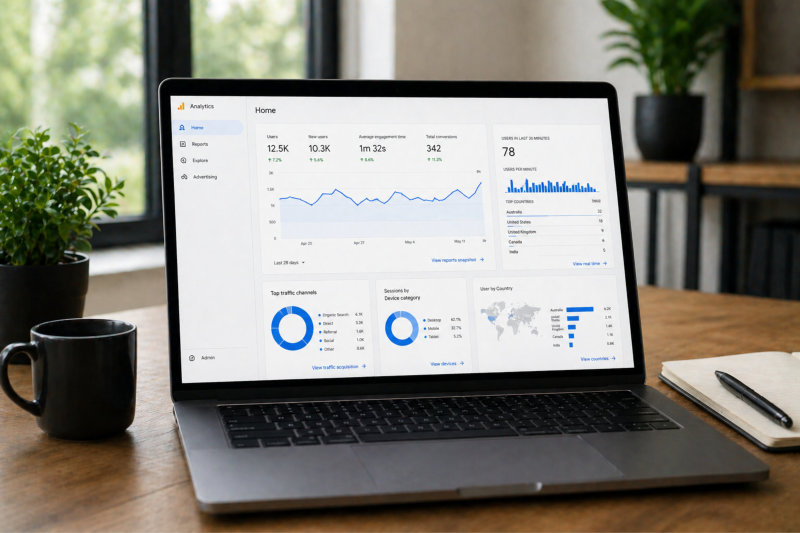
Not all website data is useful. One of the biggest mistakes business owners make is focusing on numbers that look impressive but do not actually reflect meaningful results. High traffic, page views, or impressions might seem positive, but on their own, they do not tell you whether your website is generating enquiries or supporting your business.

The most valuable metrics are those tied directly to outcomes. This includes enquiries, form submissions, calls, bookings, and other actions that indicate real engagement. These are the signals that show whether your website is doing its job.

When you focus on outcome-based metrics, it becomes much easier to understand what is working and where improvements are needed.

Everything else should be viewed as supporting data rather than the main measure of success.

Understanding Traffic Quality, Not Just Volume

Traffic is often treated as the primary measure of website performance, but not all traffic is equal. A large number of visitors means very little if they are not the right audience or if they leave without engaging.

What matters more is the quality of your traffic. Are visitors relevant to your services? Are they spending time on your pages? Are they moving through your site or leaving immediately?

Looking at metrics such as time on page, pages per session, and behaviour flow can give you a clearer picture of how engaged your visitors are.

High-quality traffic is far more valuable than high-volume traffic that does not convert.

What website analytics matter

Identifying Engagement Through Behaviour Metrics

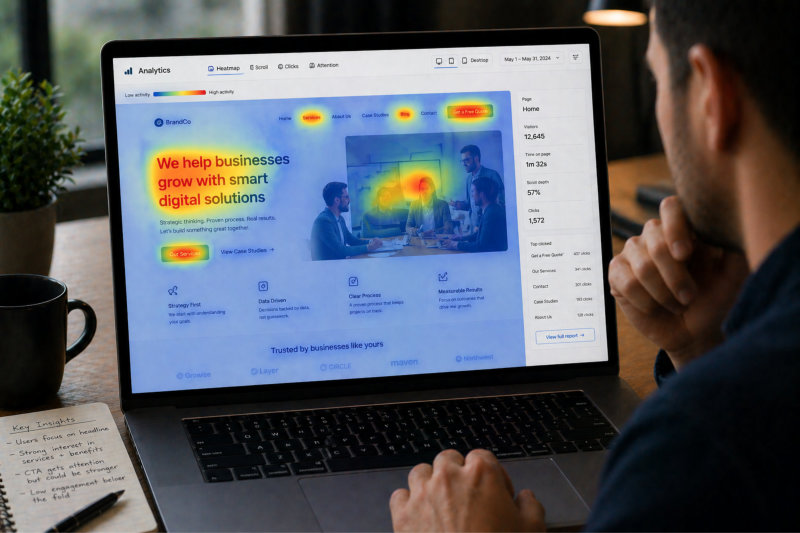
Behaviour metrics help you understand how users interact with your website. This includes how long they stay, which pages they visit, and how they move between sections.

These insights reveal whether your content is holding attention or causing users to lose interest. For example, if visitors leave quickly from a key page, it may indicate that the messaging is unclear or the structure is not working.

Tracking behaviour helps you identify patterns rather than relying on assumptions.

This is where analytics becomes practical, as it shows you how users are actually experiencing your website.

It also helps you pinpoint specific areas for improvement. If users consistently drop off at the same point or fail to move to the next step, it highlights where your website may be creating friction. These insights allow you to focus your efforts on the areas that will have the greatest impact.

Over time, these patterns become clearer and more actionable. Instead of guessing what might be wrong, you can make informed decisions based on real behaviour, leading to more effective changes and better overall performance.

Ignoring Vanity Metrics That Do Not Drive Decisions

Vanity metrics are numbers that look good but do not help you make better decisions. This includes metrics like total page views, impressions, or social shares without context.

While these can provide general insight, they should not be the focus of your analysis. Relying on them often leads to false conclusions about performance.

For example, a page with high traffic but no enquiries is not performing well, even if the numbers appear strong.

Focusing on the wrong metrics can lead you to prioritise the wrong improvements.

Connecting Analytics to Action

Data is only useful if it leads to action. Simply reviewing analytics without making changes does not improve your website.

The goal is to use data to identify what needs to be adjusted. This might include refining content, improving calls to action, or restructuring key pages.

Even small insights can lead to meaningful improvements when applied correctly.

If your analytics show that users are not taking action, it is often worth reviewing how your website guides them. The Lead Generation & Enquiries section explains how structure and enquiry pathways influence results.

Understanding User Behaviour on Your Website

Seeing Your Website Through the User’s Eyes

Understanding user behaviour means looking beyond numbers and focusing on how people actually experience your website. It is about seeing your site from the perspective of a first-time visitor who does not already know your business.

Users arrive with a goal in mind. They are looking for information, answers, or a solution to a problem. If your website does not make that easy, they will leave and look elsewhere.

By analysing behaviour, you can start to see whether your website supports that goal or creates friction. This includes how quickly users find what they need, how they move through pages, and whether they reach a point where they are ready to take action.

When you understand this journey, you can make changes that align your website with real user expectations rather than assumptions.

Tracking How Users Move Between Pages

User behaviour is not just about what happens on a single page. It is about how visitors move across your website as a whole. This journey often reveals more than individual metrics.

For example, a user might land on your homepage, visit a service page, then move to another section before leaving. This path can indicate where they are finding value and where they are losing interest.

Behaviour flow tools in analytics platforms can help visualise these journeys, showing how users navigate your site and where they drop off.

Understanding these patterns allows you to improve how pages are connected and how users are guided toward enquiries.

Identifying Points of Engagement and Drop-Off

Every website has points where users engage and points where they leave. Identifying these moments is key to improving performance.

High engagement areas show where your content is working well. These are sections where users spend more time, interact with elements, or continue to other pages.

Drop-off points, on the other hand, highlight potential problems. This might be unclear messaging, poor structure, or a lack of direction.

By comparing these areas, you can start to understand what is keeping users interested and what is causing them to leave.

It is also important to look at where these drop-offs occur within the overall journey. If users consistently leave before reaching key pages or conversion points, it suggests that the path leading them there is not strong enough. Small gaps in structure or messaging can have a significant impact on whether users continue or exit.

When you identify both engagement and drop-off points together, you gain a clearer picture of how your website is performing as a whole. This allows you to strengthen what is working and fix what is not, creating a smoother experience that keeps users moving toward action.

Understanding Intent Behind User Actions

Not all user actions mean the same thing. Clicking a link, spending time on a page, or leaving quickly can have different meanings depending on the context.

For example, a short visit to a contact page may indicate that the user found what they needed quickly. A short visit to a service page may suggest that the content did not meet expectations.

This is why it is important to interpret behaviour carefully rather than relying on single metrics.

Understanding the intent behind actions helps you make more accurate decisions about what to improve.

Using Behaviour Insights to Improve Conversions

The ultimate goal of analysing user behaviour is to improve how your website performs. Once you understand how users interact with your site, you can make targeted changes that support better outcomes.

This might include adjusting page structure, improving calls to action, or simplifying the enquiry process. Behaviour insights often highlight small issues that can be fixed quickly.

Over time, these changes can have a significant impact on how users move through your site and whether they convert.

If your website is not generating the level of enquiries you expect, it is often worth reviewing how users are guided through your pages. The Calls to Action & Conversion Strategy section explains how better guidance can improve results.

Where Visitors Drop Off (And Why)

High Bounce Pages That Fail to Engage

One of the most common drop-off points is immediately after a visitor lands on a page. If users leave without interacting further, it usually indicates that the page did not meet their expectations or failed to capture their attention quickly enough.

This often happens when the headline is unclear, the messaging does not match what the user expected, or the page feels confusing or overwhelming. Visitors make quick decisions, and if they do not immediately understand what is being offered, they move on.

High bounce rates on key entry pages such as your homepage or landing pages are a strong signal that something is not working.

Improving clarity, structure, and relevance at the top of the page can significantly reduce early drop-offs.

Service Pages That Do Not Build Enough Confidence

Service pages are a critical part of the user journey, but they are also a common point where visitors lose interest. This usually happens when the content does not provide enough clarity, detail, or reassurance.

If users cannot quickly understand what the service includes, how it works, or whether it is right for them, they are unlikely to continue. A lack of structure or overly generic content can make it difficult for users to connect with the offer.

Another issue is the absence of trust signals. Without testimonials, examples, or clear explanations, users may hesitate and leave before taking action.

Strengthening service pages with clearer messaging and supporting content can help keep users engaged for longer.

Breakdown Between Content and Calls to Action

Many websites lose visitors at the point where content should transition into action. This happens when there is a disconnect between what the page explains and what it asks the user to do next.

For example, a page may provide useful information but fail to include a clear or well-placed call to action. In other cases, the CTA may feel too abrupt or unrelated to the content.

This gap creates hesitation. Users may be interested but unsure of how to proceed, leading them to leave without taking action.

Ensuring that each section of content leads naturally into a relevant CTA helps maintain momentum and reduces drop-offs.

This often comes down to how smoothly the transition is handled. If the content builds understanding but suddenly jumps to a generic or poorly positioned CTA, it breaks the flow and forces users to rethink their next step.

When the connection is clear, the experience feels effortless. Users move from reading to action without interruption, because the next step is obvious and aligned with what they have just learned.

Complicated or Frustrating Enquiry Processes

Even when users reach the point of enquiry, they may still drop off if the process feels difficult or time-consuming. Long forms, unclear instructions, or technical issues can quickly discourage users from completing their enquiry.

This is one of the most frustrating drop-off points because it happens after interest has already been established. Small barriers at this stage can have a significant impact on conversion rates.

Users expect the enquiry process to be simple and straightforward. Any unnecessary complexity increases the likelihood of abandonment.

Reviewing and simplifying your enquiry process is often one of the quickest ways to improve results.

Lack of Direction Across the Overall Journey

Another common reason for drop-offs is a lack of clear direction across the website as a whole. When users move between pages without a clear sense of progression, they may lose interest or become unsure of what to do next.

This often happens when pages are not well connected or when the user journey has not been clearly planned. Visitors may explore a few pages but eventually leave because there is no strong path guiding them toward action.

A well-structured website provides a clear journey from entry point to enquiry. Each page builds on the previous one and leads naturally to the next step.

If your website feels disconnected, it is worth reviewing how your pages work together. The Landing Pages & Sales Pages section explains how focused pages can help reduce these drop-offs.

How to Tell If Your Website Is Working

Measuring Outcomes, Not Just Activity

The most reliable way to tell if your website is working is to look at outcomes rather than activity. Many websites show signs of movement, such as traffic, page views, or clicks, but these do not automatically translate into business results.

A working website generates enquiries, starts conversations, or supports your business goals in a measurable way. If visitors are coming to your site but not taking action, the website is not performing as it should.

This shift in focus is important. Instead of asking how many people visited your website, the more useful question is how many of those visitors became potential clients.

When you measure outcomes, it becomes much easier to assess performance accurately.

Tracking Enquiries and Conversion Points

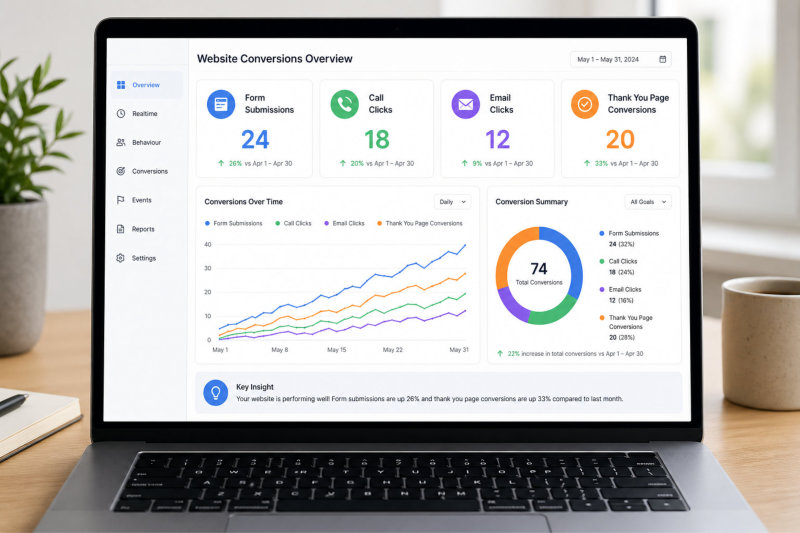
A website that is working will show clear signs of engagement at key conversion points. This includes contact form submissions, phone calls, booking requests, or any action that indicates interest in your services.

If these actions are not being tracked, it becomes difficult to evaluate performance. Setting up basic tracking for enquiries allows you to see how often users are taking that next step.

Even simple tracking methods can provide valuable insight into what is happening on your site.

Without this visibility, you are relying on assumptions rather than data.

Understanding Engagement Across Key Pages

Engagement is another indicator of whether your website is working. This includes how long users spend on important pages, how many pages they visit, and whether they continue exploring your site.

If users are spending time on your service pages, reading content, and moving between sections, it suggests that your website is holding their attention.

On the other hand, if users leave quickly or do not engage beyond the first page, it may indicate issues with messaging, structure, or relevance.

Looking at engagement alongside conversion data provides a more complete picture of performance.

It is also important to identify which pages matter most. Not every page needs high engagement, but key pages such as your homepage, service pages, and landing pages should be holding attention and encouraging further exploration. If these pages are underperforming, it often points to deeper issues in how your website is communicating value.

When you understand how users engage across these key pages, you can make more targeted improvements. Strengthening the pages that play a critical role in the user journey can have a direct impact on how effectively your website turns interest into enquiries.

How to tell if your website is working

Comparing Traffic Sources and Their Results

Not all traffic contributes equally to your website’s success. Some sources may bring high volumes of visitors but low engagement, while others may bring fewer visitors who are more likely to convert.

Understanding where your traffic comes from and how it performs helps you identify which channels are most effective.

For example, organic search traffic may behave differently from paid advertising or social media traffic. Each source should be evaluated based on its ability to generate meaningful results.

This allows you to focus your efforts on the channels that deliver the best outcomes.

Recognising When Something Is Not Working

Sometimes the most valuable insight is recognising that your website is not performing as expected. This might be indicated by low enquiry rates, high drop-offs, or weak engagement across key pages.

These signals should not be ignored. They highlight areas where improvements are needed and provide direction for what to focus on.

Rather than assuming the issue is traffic, it is often more effective to review how your website guides users and supports action.

If your website is not generating consistent enquiries, it may be worth revisiting your structure and conversion strategy. The Calls to Action & Conversion Strategy section explains how clearer direction can improve results.

Simple Ways to Track Enquiries and Conversions

Tracking Contact Form Submissions

One of the most important conversion points on a website is the contact form. If someone takes the time to complete a form, it is a clear signal of interest and a key measure of performance.

Tracking form submissions allows you to see how often users are reaching this point and taking action. This can be done through basic setup in tools like Google Analytics or by using built-in tracking features within your website platform.

Even a simple confirmation page or thank-you message can be used as a tracking point. When a user reaches this page, it indicates that a form has been successfully submitted.

Without tracking this, it becomes difficult to measure how effectively your website is generating enquiries.

Monitoring Click-to-Call and Email Actions

Not all enquiries come through forms. Many users prefer to call or send an email directly, especially on mobile devices where quick contact is easier.

Tracking click-to-call buttons and email links provides a more complete view of how users are engaging with your website. These actions often represent high intent, as users are choosing to contact you immediately.

Basic tracking can be set up to record when these elements are clicked, giving you insight into how often they are used.

This helps ensure you are not underestimating the number of enquiries your website is generating.

Simple ways to track enquires

Using Thank You Pages to Confirm Conversions

Thank you pages are one of the simplest and most effective ways to track conversions. After a user completes an action, such as submitting a form or booking a call, they are redirected to a dedicated page confirming the action.

This page can then be tracked as a completed goal in your analytics setup. It provides a clear and reliable signal that a conversion has occurred.

In addition to tracking, thank you pages also create an opportunity to guide users further, such as providing next steps or additional information.

Using thank you pages keeps tracking clean, accurate, and easy to manage.

They also help reinforce confidence immediately after the action is taken. A clear confirmation reassures users that their enquiry has been received and sets expectations for what will happen next, reducing uncertainty and improving the overall experience.

When used effectively, thank you pages can do more than confirm a conversion. They can continue the user journey by suggesting relevant content, outlining the next steps, or encouraging additional engagement, turning a single action into a deeper connection with your business.

Tracking Behaviour Through Key Page Interactions

Beyond direct enquiries, tracking how users interact with key elements on your website can provide valuable insight. This includes clicks on buttons, scrolling behaviour, and engagement with important sections.

These interactions help you understand whether users are engaging with your content and moving toward conversion, even if they do not complete an enquiry immediately.

For example, if users frequently click on a CTA but do not complete the process, it may indicate an issue with the next step rather than the CTA itself.

Tracking these behaviours allows you to identify where users are progressing and where they may be encountering obstacles.

Keeping Tracking Simple and Actionable

It is easy to overcomplicate tracking by trying to measure everything at once. In most cases, a simpler approach is more effective.

Focus on tracking the actions that matter most to your business, such as enquiries, calls, and key interactions. These provide enough insight to understand performance and identify areas for improvement.

Once you have a clear view of these core metrics, you can make informed decisions without getting lost in unnecessary data.

If your tracking shows that users are not taking action, it often points back to how your website is structured. The Lead Generation & Enquiries section explains how to improve those pathways.

Turning Data Into Practical Improvements

Moving from Observation to Action

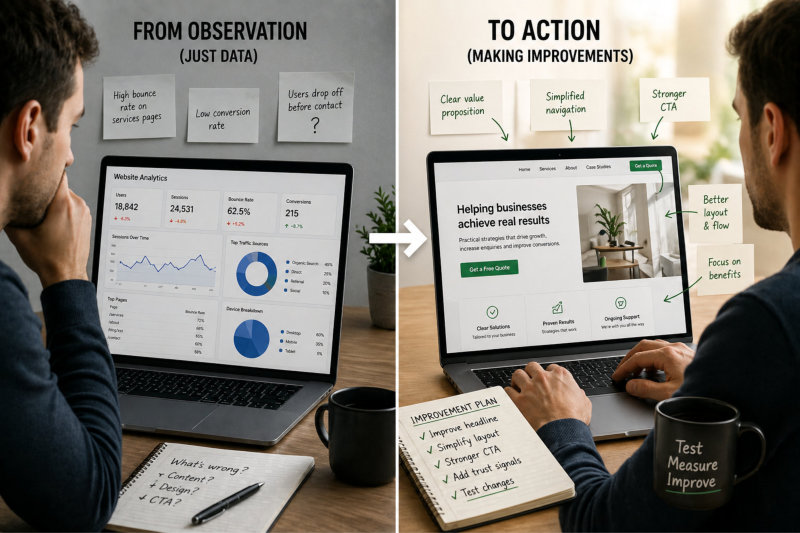
Collecting data is only the first step. The real value comes from using that information to make practical improvements to your website. Many businesses review analytics but stop there, without translating those insights into changes.

To improve performance, you need to look at what the data is telling you and decide what action to take. This might involve adjusting content, refining structure, or improving how users are guided through your site.

Even small observations can lead to meaningful improvements when acted on consistently.

Without taking action, data remains just numbers rather than a tool for growth.

Identifying Patterns Rather Than Isolated Issues

One data point on its own rarely tells the full story. Effective analysis involves looking for patterns across multiple pages and behaviours.

For example, if several service pages show high drop-off rates, this may indicate a broader issue with messaging or structure rather than a problem with a single page.

Similarly, if users consistently engage with certain types of content, it highlights what is working and where to focus your efforts.

Recognising patterns helps you prioritise the changes that will have the greatest impact.

Improving Structure, Not Just Content

When performance issues appear, the instinct is often to rewrite content. While content matters, structure plays an equally important role in how users interact with your website.

If users are not moving through your pages as expected, it may be due to unclear navigation, weak connections between pages, or poorly placed calls to action.

Improving structure can include repositioning key elements, simplifying layouts, or creating clearer pathways toward enquiry.

In many cases, structural improvements have a more immediate impact than content changes alone.

Structure determines how easily users can understand what to do next. Even strong content can be overlooked if it is buried within a confusing layout or disconnected from the overall flow of the page. When the structure is clear, content becomes easier to follow and more effective.

Focusing on structure also helps create consistency across your website. When pages follow a logical pattern and guide users in a predictable way, it builds confidence and makes the overall experience feel more intuitive, increasing the likelihood of users continuing toward action.

Turning data into practical improvements

Testing Small Changes for Measurable Results

Improving your website does not require major overhauls. Small, targeted changes can often produce noticeable results when they are tested and refined over time.

This might include adjusting a headline, changing the wording of a call to action, or repositioning a key section on a page. By making one change at a time, you can see how it affects user behaviour and conversion rates.

This approach allows you to improve your website incrementally without introducing unnecessary complexity.

Testing and refining over time leads to more stable and predictable improvements.

Creating an Ongoing Improvement Process

Website performance is not something that is fixed once and left unchanged. As your business evolves and user behaviour shifts, your website needs to adapt.

Creating a simple process for ongoing improvement ensures that your website continues to support your goals. This might involve reviewing analytics regularly, identifying areas for improvement, and implementing small updates.

This approach keeps your website aligned with your business rather than becoming outdated or ineffective over time.

If you want to build a more structured approach to ongoing improvements, the Continuous Website Improvement & Growth section outlines practical steps to follow.

Frequently Asked Questions

The most important analytics are those that reflect real outcomes, such as enquiries, form submissions, phone calls, and bookings. These metrics show whether your website is supporting your business goals. Supporting data like traffic and page views can provide context, but they should not be the primary focus when evaluating performance.

A website is performing well if it is generating consistent engagement and enquiries. This includes users spending time on key pages, moving through your site, and taking action. If you have traffic but no enquiries, it usually indicates an issue with structure, messaging, or the enquiry process rather than a lack of visitors.

Users often leave a website because they cannot quickly find what they are looking for or do not understand the next step. This can be caused by unclear messaging, poor structure, lack of direction, or too many distractions. If the path to action is not obvious, most users will not take it.

Google Analytics is one of the most widely used tools, but you do not need a complex setup to gain useful insights. Even basic tracking of enquiries, calls, and key interactions can provide enough information to understand how your website is performing and where improvements are needed.

A conversion is any action that supports your business goals. For most service-based websites, this includes enquiries, contact form submissions, phone calls, or booking requests. Conversions indicate that a visitor has moved beyond browsing and is actively engaging with your business.

Analytics can help you identify where users are engaging and where they are dropping off. By analysing these patterns, you can make targeted improvements such as refining content, improving calls to action, simplifying the enquiry process, or adjusting page structure. Even small changes can lead to noticeable improvements.

Traffic refers to the number of visitors coming to your website, while conversions refer to the actions those visitors take. A website with high traffic but low conversions is not performing effectively. The goal is to attract the right traffic and guide those users toward meaningful actions.

Regular reviews are important, but they do not need to be overwhelming. Checking your analytics monthly or quarterly is usually enough to identify trends and make improvements. The key is consistency and focusing on actionable insights rather than trying to analyse everything at once.

Using Data to Strengthen Your Website Performance

Understanding how your website performs is not about collecting more data. It is about focusing on the right information and using it to make better decisions.

When you track meaningful metrics, understand how users behave, and identify where they drop off, you gain a clearer picture of what is working and what needs to improve.

This allows you to move beyond assumptions and make targeted changes that support real outcomes. Whether it is refining your content, improving your structure, or simplifying your enquiry process, these adjustments can have a direct impact on your results.

A website that is regularly reviewed and improved will always outperform one that is left unchanged. Small, consistent updates based on real data lead to stronger performance over time.

If you want a website that is not only well designed but also built to perform, you can explore our website design services.

You can also explore practical strategies and step-by-step resources here: Guides.

When you understand what your website is doing and take action on that insight, better results become far more predictable.

Ready to Build or Redesign Your Website?

If you’re reading this and thinking, “This explains exactly what’s wrong with my site,” you’re not alone.

Most small business websites don’t fail because of effort. They fail because they were built without a clear structure, proper planning or long-term thinking.

If you want a website that reflects your business properly, feels organised, and gives you confidence to send people to it, then it might be time for a proper redesign or rebuild.

You can see how I approach website projects here:

Website Design Services for Small Business

View recent website design projects

Whether you’re starting from scratch or improving what you already have, the goal is the same – clarity, structure and a site you’re proud to share.

Ivana Katz - Website designer