How Digital Transformation Is Reshaping the Transportation Industry
Digital transformation isn’t limited to websites and marketing. Entire industries – including transportation – are being reshaped by data, automation and AI. This article explores the key trends driving that change and what they signal for the future of business at scale.
If in the middle of the last century we only dreamed of flying cars, today transport has come close to what once seemed like science fiction. Of course, we’re not yet racing through the city in a DeLorean like in Back to the Future, but trucks are learning to move without drivers and smart roads already exist.
Manufacturers and logistics companies are actively restructuring their processes to meet current demands, reflecting the latest transportation industry trends. Artificial intelligence analyzes traffic flows, predicts congestion and accidents, and helps reduce fuel costs. Data analytics allows us to predict breakdowns before they happen.
All of this creates a unique moment in history, driven by major transportation industry trends, where the sector is actually undergoing a fundamental reboot.
Digital Transformation on Wheels: Smart Mobility and Data-Driven Transport
Digitalization has changed everything, from how we order food to how we manage entire fleets. The transportation sector is actively implementing solutions that make logistics smarter and transportation more efficient.
Companies are developing digital platforms that help operators optimize routes, manage data in real time, and predict problems before they arise. For example, DXC Technology offers comprehensive digital transformation solutions that integrate IoT and analytics for transport companies in the USA and Europe. You can learn more about their solutions here: https://dxc.com/industries/travel-transportation
In Sweden, Volvo Group Connected Solutions collects terabytes of data from trucks and buses. Algorithms determine which parts wear out faster and how efficiency changes depending on route or climate. Thanks to this, companies reduce maintenance costs and downtime.
Today, transport analytics isn’t just about numbers. It’s about solutions that help move the entire sector faster, more accurately, and more safely. Connected mobility and predictive analytics are gradually becoming the new standard for everyone who wants to remain competitive, representing key trends in transportation within this fast-paced digital game.
The Green Shift: Electric, Hydrogen, and Everything In Between
Environmental sustainability has long ceased to be a trend for marketing presentations. Tansport industry is one of the main sources of CO2 emissions. That’s why a global transition to cleaner technologies is now underway.
But electricity isn’t the only path. Toyota is seriously betting on hydrogen. Its Mirai model runs on fuel cells and emits only water vapor. France’s Alstom went further — launching Coradia iLint hydrogen trains that are already running in Germany and Italy, replacing old diesel trains.
Of course, any “green” transport requires infrastructure. ABB and ChargePoint are deploying networks of fast-charging stations worldwide. AI is here too: it helps intelligently balance the load on power grids and use renewable energy during peak hours.
In the “green race,” Germany, the Netherlands, Norway, Japan, and the USA are ahead. In Norway alone, over 80% of new cars are electric. This is clear confirmation that transportation trends are truly moving toward a cleaner, quieter, and smarter future.
Automation Takes the Wheel: From Autonomous Cars to AI Rail Systems
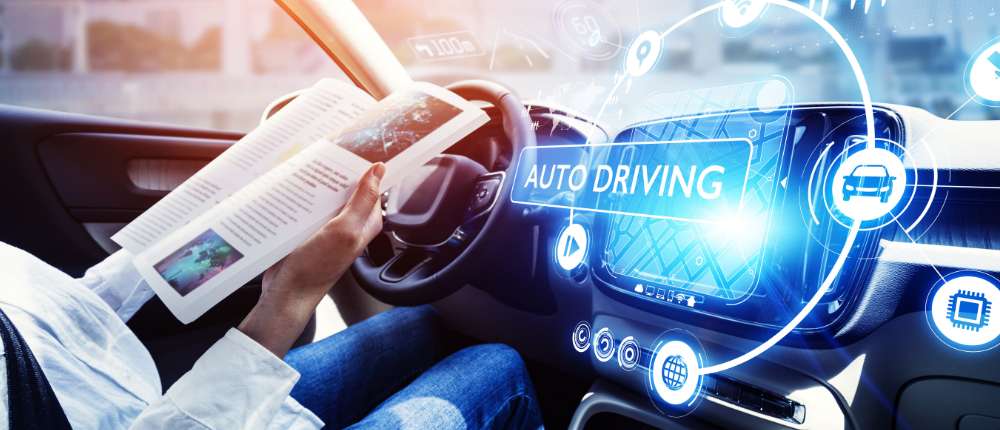
Autonomous transport is no longer science fiction but a reality gaining momentum. Not long ago, the idea of a “driverless car” sounded like a joke, but today Waymo (a subsidiary of Alphabet) is already carrying passengers in self-driving taxis in Arizona. You order a car through an app and it arrives on its own. No driver, no small talk about the weather.
Cruise from General Motors is testing similar services in San Francisco, although facing typically urban problems: complex traffic, unpredictable pedestrians, thousands of cyclists. But it’s through such tests that technologies become more precise.
The railway sector is also heating up. Deutsche Bahn, together with Siemens, is conducting autonomous train trials in Hamburg. They use AI, computer vision, and LIDAR to see the road literally through “machine eyes.” And NVIDIA DRIVE platform provides the computing power for such systems.
If drivers once feared parallel parking, now it’s just a menu function. The system does everything itself, smoothly, calmly, without cold sweat on the forehead. Trends in the transportation industry show that we’re moving toward a world where transport makes decisions better and faster than humans.
Hyperconnectivity and the Internet of Transport Things
Transport no longer exists by itself. Cars, buses, traffic lights, stops — they’re all connected to a single digital system. This is hyperconnectivity, or the Internet of Transport Things. Vehicles “communicate” with each other (V2V), with infrastructure (V2I), and even with pedestrians through smartphones (V2X).
Qualcomm develops chips for V2X communication that allow cars to exchange data in milliseconds. A car can warn others about ice, traffic jams, or a pedestrian on the road before the driver sees it.
Cisco and IBM are building the foundations of “smart cities”: traffic analysis, traffic light management, public transport optimization. The result is fewer traffic jams, fewer emissions, and more peace on the roads.
IoT sensors on roads, stops, and transport collect huge amounts of data. 5G provides the speed needed for the system to work in real time. And yes, now a traffic light can “see” that an ambulance is approaching from behind and switch the signal itself, creating a green wave. Leaders in implementing such solutions are South Korea, Singapore, Japan, and the USA
The Human Factor: Urban Mobility, Shared Transport, and Experience
When we talk about urban mobility today, imagine that car ownership is no longer a must what matters now is access. Why buy a car when you can just hop on a car-sharing service, take a scooter, or order a taxi through an app? This is the essence of Mobility as a Service, or MaaS — a powerful concept and one of the defining trends in transportation that is changing not just how we get around, but how we think about the city as a space for living.
Global players in this market have long become part of everyday life: Bolt and Uber make trips available with literally one click, while Lime and Bird add the flexibility of micromobility. And if you want a truly integrated experience, check out Helsinki’s Whim App, here, you can plan a journey across all modes of transport in a single app, from metro to bike, without opening ten different programs.
It’s fascinating to watch cities become more people-focused: Barcelona, Amsterdam, Singapore pedestrians and cyclists are getting priority, and cars are no longer kings of the streets. The idea is simple, yet revolutionary: the city should work for people, not the other way around.
I must admit, sometimes it feels like an episode of Black Mirror: the future of mobility is already here, but it’s important to make sure it’s not written by TV writers. After all, we want it to be convenient and safe, not just stylish and a little scary. So next time you order a scooter or plan a route through an app, remember: urban mobility isn’t just about transport — it’s an experience we’re building every day.
Automation of the Last Mile: When Robots Ring the Doorbell
If you look at logistics more closely, the most expensive piece of the route isn’t ocean shipping or the highway between cities. It’s the last few hundred meters from the warehouse to your doorstep. This is where delivery turns into a real quest: traffic, parking, human factor, different addresses, weather conditions. This part is called the “last mile,” and it’s now becoming the battlefield for technologies.
Companies like Amazon have been testing Prime Air for several years — drones that can deliver a small package in minutes. In several US cities, these drones actually work, although still with many restrictions: permits, safety, strong winds. But the pace of development speaks for itself: a few years ago, the idea of a drone with a box seemed like a meme; now it’s a fully working technology.
There are other players too. Zipline initially delivered medical supplies to remote regions of Africa. Their drones have flown millions of kilometers and delivered over 50 million doses of vaccines and medicines. Now the company is expanding in Europe and the USA, testing fast commercial delivery. They have everything like in a good movie about the future: accuracy to within meters, automatic route planning, and no traffic jams.
On the ground, other robots are taking action. Starship Technologies created an army of six-wheeled couriers that calmly roll along sidewalks in European and US cities. They see everything around them through sensors, recognize people, crossings, and traffic lights. They’re already used on university campuses, business centers, and even residential areas. It sounds funny, but these small devices really help companies solve the shortage of couriers during “peak” hours.
For large logistics operators, this isn’t just an experiment. It’s a future where delivery becomes predictable, safer, and cheaper. Last-mile automation is about making service closer to the customer literally at the doorstep. And if previously a courier rang the intercom, soon it’s quite possible that a robot with a package will knock on the door and politely say in a synthetic voice: “Your delivery is ready.”
Transportation Trends Defining the Future
Defined by current transportation industry trends, the sector is undergoing a massive transformation that touches all aspects: from technology integration to the human experience. The main drivers of change are digitalization, ecology, automation, and artificial intelligence.
The transport of the future isn’t separate cars or trains. It’s an ecosystem of data, energy, and technologies that works as a single organism. Cars “talk” to roads, trains predict breakdowns, and cities optimize traffic flows in real time.
Buckle up, and let’s head into the future!
*****
Elita Vob