
The Rise of Chatbots for Startups and Enterprises
Businesses are no longer asking whether they need a chatbot — the question is which chatbot platform can drive the most impact. With customers expecting instant replies on channels like WhatsApp, Instagram, and Messenger, chatbots have evolved into essential business tools. They’re not just about answering FAQs anymore; today’s chatbots book appointments, qualify leads, automate sales, and even manage multilingual customer support at scale.
The reason is simple: people expect fast, personalized, and 24/7 communication. A well-designed chatbot can turn a website visitor into a customer in seconds, nurture relationships through email and SMS, and hand off conversations seamlessly to human agents when needed. Companies that adopt the right chatbot solution save time, boost revenue, and improve customer satisfaction — all while reducing operational costs.
But with so many platforms available, choosing the right one can feel overwhelming. That’s why we’ve compared 10 leading chatbot builders — including SendPulse, Chatbase, Xenioo, Sequel, Flow XO, Jotform AI Chatbot Builder, Landbot, Trengo, Uchat, and ChatBot — to help you make an informed decision. Let’s dive in and explore what each platform offers in terms of usability, supported channels, features, and pricing.
1. SendPulse
SendPulse positions itself as a true all-in-one platform for businesses that want to combine chatbots with email, SMS, and marketing automation. Unlike tools that focus narrowly on one or two channels, SendPulse integrates multiple communication layers under a single dashboard. This makes it especially attractive to businesses that want a unified ecosystem rather than juggling different software for each channel.
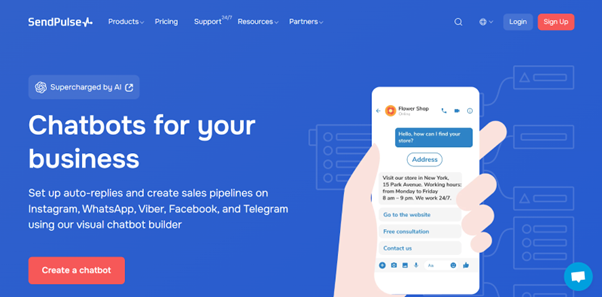
SendPulse supports the essentials: WhatsApp (with official BSP status), Instagram, Facebook Messenger, Telegram, website widgets, SMS, and email. Businesses can use it to launch chatbots across all major messaging apps while also running traditional email and SMS campaigns. This multichannel flexibility is a huge advantage for businesses in regions where customers may prefer one app over another.
Feature-wise, SendPulse stands out with its drag-and-drop chatbot flow builder, unified inbox, AI-powered segmentation, and multilingual chatbot support. It also provides bot-to-human handover, making it easy for support teams to step in when a customer needs personalized help. Analytics are built in, showing campaign performance, subscriber growth, and message delivery rates. Plus, SendPulse includes GDPR compliance tools, ensuring businesses stay aligned with data protection laws.
Pricing is another strength. SendPulse offers a free plan that includes up to 3 chatbots, 500 subscribers, and 10,000 messages per month — more generous than most competitors. Paid plans are scalable and affordable, making SendPulse accessible for startups and cost-effective for larger enterprises. You can purchase a paid plan just for $8/month to get 500 subscribers, unlimited chatbots, live chat, and messages. Overall, it’s one of the most versatile platforms on the market, ideal for businesses looking for a balance of affordability, scalability, and robust multichannel support.
2. Chatbase
Chatbase is an AI-powered chatbot builder that gained popularity for its ease of use. Unlike SendPulse, which combines multiple marketing functions, Chatbase focuses primarily on conversational AI and chatbot deployment. It allows businesses to quickly create bots by uploading a knowledge base or connecting a website link. The system then generates an AI chatbot trained on that data, making setup incredibly fast for non-technical users.
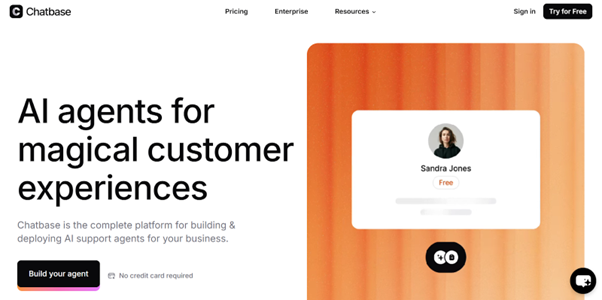
For supported channels, Chatbase primarily focuses on website integration. Businesses can embed their AI chatbot directly into a web page, giving site visitors immediate access to automated help. While it doesn’t natively offer broad coverage of WhatsApp, Instagram, or Messenger, it can sometimes be integrated through third-party connectors. That said, companies that want omnichannel capabilities may find Chatbase more limited compared to SendPulse or other competitors.
When it comes to features, Chatbase highlights its natural language processing, ability to learn from data, and detailed analytics on chatbot interactions. It’s particularly well-suited for FAQ-style chatbots or businesses that want a simple AI layer for customer support without building complex flows. However, it lacks advanced features like a unified inbox, native handover to agents, or deep marketing automation. For companies looking for conversational intelligence rather than full marketing automation, Chatbase is still a strong option.
Pricing is straightforward. Chatbase offers a free plan with 100 message credits. Paid plans scale based on the number of messages or interactions. You can pay $32/month to increase your message credit limit to 2,000. While it may not be the most cost-effective solution for large-scale customer engagement, it is perfect for small businesses and startups looking to get an AI chatbot live on their website quickly.
3. Xenioo
Xenioo is a no-code chatbot platform designed for flexibility and professional-grade automation. It’s often compared to tools like Landbot or Flow XO, but differentiates itself with a more developer-friendly ecosystem and deep integration capabilities. Xenioo is suitable for businesses that want both drag-and-drop simplicity and advanced customization through APIs and scripting.
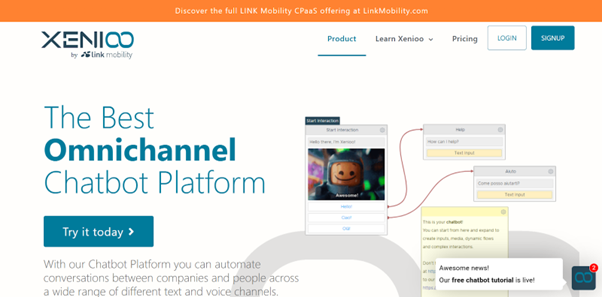
Channel coverage is strong. Xenioo supports WhatsApp, Messenger, Instagram, Telegram, websites, and even voice assistants like Amazon Alexa. It also allows businesses to integrate SMS through external providers. This wide channel support makes it appealing for companies operating internationally or needing to engage users across different platforms.
Xenioo’s features include a visual flow builder, multilingual support, advanced conditional logic, and handover to human agents. It also offers analytics to monitor performance and optimization. One of its unique strengths is the ability to handle both text and voice bots, giving businesses an extra layer of engagement. GDPR compliance and team collaboration tools are also part of the package, making it suitable for regulated industries and larger teams.
Pricing-wise, Xenioo has a free trial, allowing users to experiment before committing. Paid tiers scale based on active users and feature access. While not the cheapest option, its flexibility and robust feature set justify the cost for businesses that need advanced capabilities. For startups, it may feel complex, but for mid-size companies or enterprises, Xenioo offers powerful customization that simpler chatbot builders lack.
4. ManyChat
ManyChat is one of the most popular no-code chatbot platforms, especially among businesses focused on marketing and sales automation. Known for its user-friendly interface, it empowers companies to build chatbots quickly and deploy them across multiple channels, with a particular focus on social media platforms. ManyChat’s sweet spot is helping businesses convert followers into customers through automated conversations.
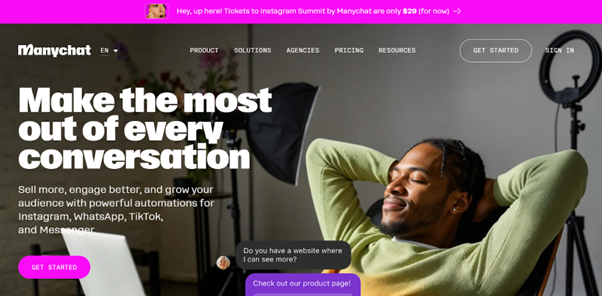
Channel support is robust. ManyChat integrates with Instagram (as an official partner), Facebook Messenger, WhatsApp (official BSP), SMS, and email. This multichannel reach makes it a go-to choice for e-commerce stores, influencers, and small businesses that rely heavily on social media marketing. While it doesn’t cover as many traditional marketing features as SendPulse, it excels at connecting directly with customers where they already engage most.
Feature highlights include drag-and-drop chatbot building, automated lead nurturing, broadcast messaging, and campaign analytics. ManyChat also integrates with Shopify, Google Sheets, and other popular apps, enabling e-commerce businesses to automate order confirmations, cart reminders, and customer support. Its unified inbox and human handover features ensure businesses can step in seamlessly when personal assistance is needed.
Pricing is straightforward: ManyChat offers a free plan for up to 1,000 contacts, making it accessible for beginners. Paid Pro plan unlocks unlimited contacts for $15/month. ManyChat is an excellent choice for businesses focused on social media growth, e-commerce automation, and conversational marketing.
5. Flow XO
Flow XO is a no-code chatbot builder that strikes a balance between simplicity and power. It’s designed for businesses that want to create multi-channel bots without writing code, but still require enough flexibility to customize workflows with integrations and logic. The platform is especially popular among small businesses and agencies managing multiple clients.
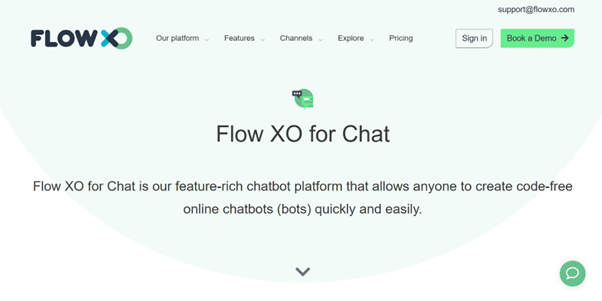
Flow XO covers Facebook Messenger, Slack, Telegram, WhatsApp (via integration), and websites. It also supports email notifications and webhooks, making it more versatile than Sequel but still less integrated than SendPulse’s full marketing ecosystem. This gives businesses a broad set of options for engaging customers where they already are.
Feature highlights include its visual flow builder, live chat functionality, integrations with over 100 third-party apps (via Zapier and native connectors), and detailed analytics. Flow XO also supports conditional logic, making it possible to build more advanced conversation trees compared to simpler platforms. However, it lacks an all-in-one marketing suite — so businesses may need to combine it with separate tools for email, SMS, or CRM.
Pricing is transparent: the platform offers a 14-day free trial to test the features. When you are sure about choosing this tool, you can proceed to its paid plans. The starting price is $25/month for 5,000 interactions and 15 bots or active flows.
6. Jotform AI Chatbot Builder
Jotform, well-known for its online form-building platform, recently introduced its AI Chatbot Builder as part of its expanding product suite. The chatbot builder is primarily designed for businesses that already use Jotform for data collection and want to take customer interaction to the next level by turning static forms into conversational experiences.
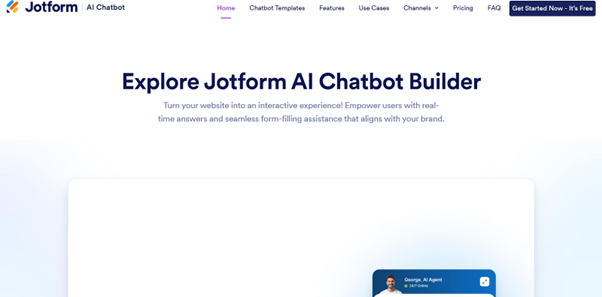
For channels, Jotform Chatbot Builder is mainly web-based. Businesses can embed chatbots directly on their websites to collect information in a more engaging, conversational format. Unlike SendPulse or Xenioo, it doesn’t natively support WhatsApp, Messenger, or Instagram — so it’s best suited for companies prioritizing website engagement and lead capture.
Key features include the ability to convert existing Jotform forms into chatbots, integration with Jotform’s 100+ apps (payment processors, CRMs, email tools), and customization options for tone, branding, and flow. Because it’s part of Jotform’s ecosystem, data collected through chatbots is instantly available in Jotform Tables, making it highly efficient for workflows like applications, surveys, and registrations.
Pricing aligns with Jotform’s overall model: a free plan includes 5 AI chatbots with 100 monthly conversations and 10,000 monthly sessions. After paying $34 monthly for a paid plan, you’ll get 25 AI chatbots and 2,500 monthly conversations.
7. Landbot
Landbot has earned a reputation as one of the most user-friendly chatbot builders, particularly for businesses that want to create engaging, interactive website experiences. Unlike many platforms that focus on messaging apps first, Landbot started with website chatbots and then expanded to WhatsApp and Messenger. Its visual builder feels more like creating a flowchart than programming, making it accessible even for complete beginners.
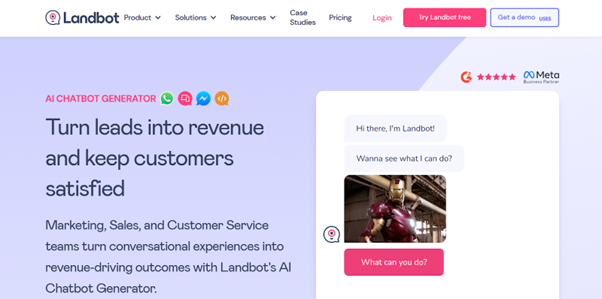
Channel support includes websites, WhatsApp (via official integration), and Facebook Messenger. While it doesn’t have the same breadth of channels as SendPulse or Xenioo, its focus on conversational website widgets makes it particularly valuable for lead generation and customer onboarding. Businesses can embed chatbots as popups, full-page experiences, or sidebar widgets, giving them a lot of control over user experience.
Feature highlights include conditional logic, customizable templates, rich media responses, API and Zapier integrations, and real-time analytics. Landbot also offers team collaboration features, making it easy for multiple people to contribute to chatbot creation and management. However, it doesn’t offer a unified inbox or full marketing automation tools, meaning companies may still need other software for email or SMS campaigns.
Pricing includes a free plan with 100 monthly conversations. For businesses that prioritize website engagement, interactive lead capture, and WhatsApp integration, it’s better to buy a paid plan, and the cheapest one will cost you €32/month for 500 web and Messenger chats, 100 AI chats.
8. Trengo
Trengo positions itself as a multichannel customer communication platform with chatbots as one of its many features. Its core strength lies in bringing all customer conversations — from email, social media, live chat, and messaging apps — into a single unified inbox. This makes it less of a pure chatbot builder and more of a customer service and collaboration platform enhanced by chatbot automation.
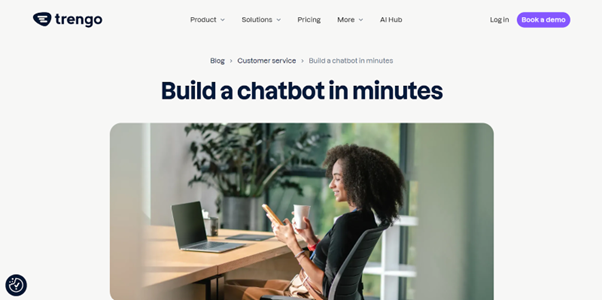
Trengo supports WhatsApp (officially), Messenger, Instagram, Telegram, email, live chat, and even voice channels. Its unified inbox is particularly appealing for support teams that need to handle high volumes of incoming requests from multiple sources without missing messages.
Trengo’s chatbot features include rule-based automations, AI-powered replies, and handover to human agents. It integrates with popular CRMs and business tools, making it easy to create streamlined workflows. While it doesn’t offer the deep customization of Xenioo or the marketing automation of SendPulse, it shines in customer service settings where team collaboration and fast response times are critical.
Pricing is tiered by seat and features, making it a better fit for teams and enterprises than solo entrepreneurs. The platform offers a demo, so if you are sure about choosing this tool, then you can book one. The pricing starts at $350/month for 10 users and 6,000 conversations per year.
9. Uchat
Uchat is a relatively new but rapidly growing chatbot platform known for its versatility. It markets itself as a “business automation platform” that can connect with multiple channels, integrate payments, and run complex workflows. Uchat is designed to give businesses a high level of control, bridging the gap between no-code and low-code platforms.
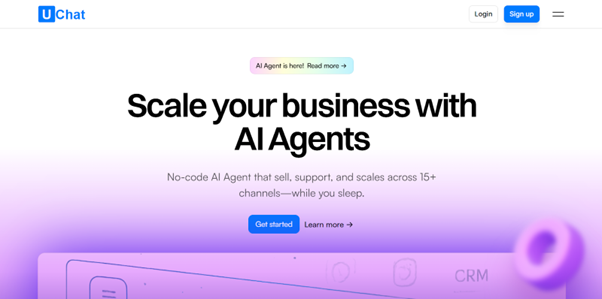
Channel support is one of Uchat’s biggest strengths: it covers WhatsApp, Messenger, Instagram, Telegram, Slack, SMS, email, and websites. This makes it comparable to SendPulse in terms of breadth, though Uchat leans more toward automation and integration flexibility than marketing automation.
Key features include visual flow building, e-commerce integrations, payment collection, AI-based intent detection, and voice bot support. Uchat also allows businesses to set up cross-channel automation, such as triggering a WhatsApp follow-up after a Messenger conversation. Its payment integrations (Stripe, PayPal, etc.) make it especially useful for businesses selling directly through chat.
Pricing is competitive, with a free plan for small users and scalable paid tiers. The free plan includes 200 contacts and 1 bot. Its Pro plan costs $15 /month for 1 bot, 1,000 bot users, and unlimited conversations. While Uchat offers impressive flexibility, it can be overwhelming for beginners. Businesses with technical expertise or those that want to deeply customize their chat automation will appreciate Uchat.
10. ChatBot
ChatBot, developed by the team behind LiveChat, is a professional-grade chatbot builder designed for businesses that want to automate conversations on websites, Messenger, and other channels while maintaining a strong customer service backbone. Since it’s integrated with LiveChat, it’s particularly powerful for organizations that already use LiveChat for support and want to add automation on top.
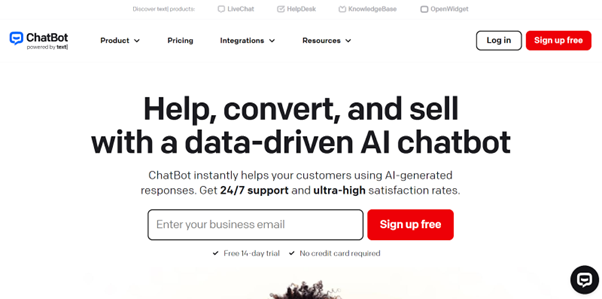
Channels supported include websites (via widgets), Messenger, and email integrations. While not as broad as SendPulse or Uchat, its close integration with LiveChat ensures seamless handovers between bots and human agents, making it ideal for customer service-focused teams.
Feature highlights include drag-and-drop conversation building, AI-driven suggestions, a knowledge base integration, and robust reporting tools. ChatBot also offers pre-built templates for lead generation, customer support, and e-commerce. Its strength lies in customer service automation rather than multichannel marketing, but for teams prioritizing support workflows, it’s highly effective.
Pricing is subscription-based with a 14-day free trial, after which businesses can choose plans based on active chats and features. Its Starter plan will cost you $52/month for 12,000 chats per year. ChatBot excels at combining automation with human support — making it a reliable choice for customer-focused companies.
Conclusion
After comparing 10 leading chatbot platforms, it’s clear that each has unique strengths. Sequel and Landbot shine in interactive website engagement, Chatbase and Jotform AI Chatbot Builder excel at simplicity, Xenioo and Uchat provide developer-level flexibility, Trengo and ChatBot focus on customer service, while Flow XO balances affordability and multi-channel coverage.
But when it comes to an all-in-one solution that combines multichannel chatbot automation, email, SMS, push notifications, unified inboxes, and marketing automation in one platform, SendPulse stands out as the best option. It’s beginner-friendly yet scalable, cost-effective yet powerful, and ensures businesses can grow without constantly switching tools.
For companies that want a single, unified platform to handle customer engagement across all major channels — while keeping setup simple and costs manageable — SendPulse is the smartest investment.
***
Aleksandr Botvynko