

4 Unique Methods to Identify and Meet Customer Needs in 2025
2024 research reveals that actively collecting and acting on customer feedback leads to higher retention rates and more sales, especially in B2B spaces. And with modern technology, collecting said customer feedback can be done in your sleep.
Here are four highly effective ways you can identify customer needs with examples. Plus, how to optimize the post-purchase customer experience so that no need goes unmet.
1. Shadowing and Observation
This method immerses you in the customer’s environment. You watch how they use your product or service in real-time, which helps you understand their needs more authentically.
When done right, shadowing reveals challenges you didn’t know customers were facing, workarounds they use to solve them, and preferences that may not surface in your surveys or interviews.
The best part about this technique is that it can be used for businesses of all stages—whether you’ve been a leader in your industry for decades or your product is the result of a fresh, new business idea.
But how do you start shadowing and observation?
- Define your objectives. Are you trying to understand how customers interact with a specific feature? Do you want insights into their full experience with a product? Set specific objectives to focus your observations on the most relevant details.
- Select participants carefully. Choose a diverse range of customers to observe. Consider different user types (for example, beginners vs. advanced users), demographics, and contexts in which they use your product. Each of these factors can lead to different insights.
- Get permission and set expectations. Tell your participants what the shadowing will entail and get their consent. Explain that you’ll be observing their behaviour to improve the product and reassure them that there’s no pressure to perform in a certain way. You’re just interested in their natural use of the product.
- Blend into the background. Try to be as unobtrusive as possible. Ideally, the customer should forget you’re there so they behave naturally. This also means avoiding guiding or prompting them unless they’re explicitly looking for assistance. It’ll most likely interfere with their natural interactions.
- Observe contextual and emotional cues. Take note of their body language, facial expressions, and any verbalized frustrations or delight. People’s faces say things their mouths never do, so these are crucial. For example, if you notice someone furrowing their brow or hesitating, they’re probably confused or frustrated.
- Ask follow-up questions sparingly. At the end of the observation session, ask follow-up questions to clarify what you observed. For instance, if they performed a certain action repetitively, ask if it’s something they find frustrating or if they have suggestions for improvement. Keep these questions open-ended to avoid leading them to specific answers.
- Document the experience thoroughly. Record key observations, such as frequent actions, points of friction, and any unspoken needs that might have emerged. You can even use a structured template to take notes on each observation session.
- Analyze for patterns and insights. Are there features that many customers struggle with? Are there frequent workarounds that hint at a missing functionality? Patterns help you identify universal needs, while outliers can sometimes reveal unique opportunities for niche improvements.
2. Customer Journey Mapping
A customer journey map outlines every interaction a customer has with your brand, from first exposure to post-purchase support.
The goal is to step into their shoes and gain a clearer understanding of their thought processes at each touchpoint. This helps you optimize each point to push them through to the next one before they drop out.
Here’s how to create a step-by-step customer journey map.
We will be using HJV Personal Injury Lawyers as an example.
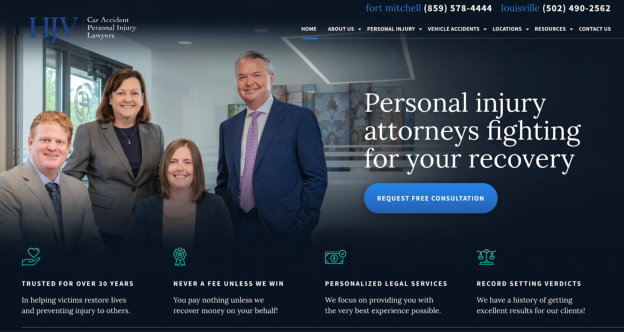
First, define the scope and buyer persona.
Start by defining which buyer persona you’re mapping the journey for and the specific product or service you’re focusing on. The journey for a first-time user will differ from that of a returning customer, so it’s important to segment your customer base accordingly.
Let’s say HJV’s buyer persona is a new client named Maria, who was a victim of medical malpractice by a hospital in Louisville, KY.
Next, outline the stages of the customer journey. These stages are:
- Awareness: When customers first discover your brand or product.
- Consideration: When they evaluate your product and compare it to others.
- Purchase: When they decide to buy.
- Retention: When they decide to continue buying from your business or using your product/service.
- Loyalty/Advocacy: When they become repeat customers or recommend the product to others.
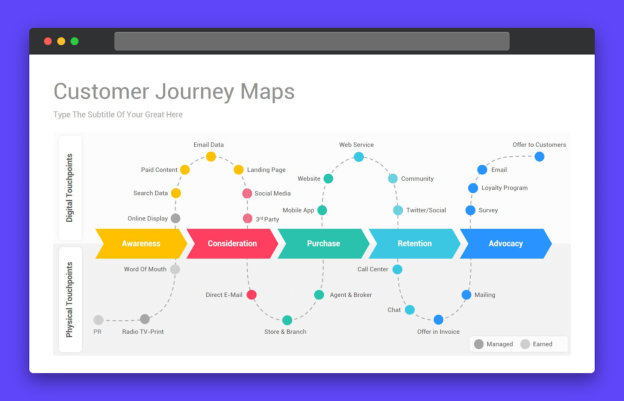
Now, identify customer actions and touchpoints.
List out what actions customers take at each stage and note all touchpoints, such as ads, social media, emails, website interactions, checkout, customer support, or in-store visits. This step ensures you capture every interaction.
For example, Maria might have found HJV through his PPC ads when she Google searched “medical malpractice lawyer Kentucky.”
She then read one of his blog posts and did a free case evaluation.
Then, gather customer insights. Collect data to back up your map. Use interviews, surveys, feedback, website analytics, and customer service logs to understand actual behaviors, preferences, and frustrations.
Real customer insights will help you build a more accurate map. For example, HJV could’ve figured out Maria found him through his Google ad (entering the awareness stage) by asking her quickly how she heard of him at the end of a phone consultation.
As you uncover these insights, map out emotions and pain points. For example, excitement, confusion, frustration, and any pain points. For HJV, this might’ve been slow website navigation or long holds when calling his offices.
Based on those findings, identify needs at each stage. What do customers need to make their experience smoother and more positive at each stage? This could be practical needs (like clearer instructions), emotional needs (like reassurance), or functional needs (like faster response times).
Finally, analyze the map and identify opportunities to improve the experience and meet customer needs. Ask questions like:
- Where are customers most frequently dropping off?
- Which stages are associated with negative emotions?
- Are there stages where customers need more support or guidance?
- Where would personalization add value?
3. Ask “Job to Be Done” Questions
The “Jobs to Be Done” (JTBD) framework is a method of understanding customer needs by focusing on the specific “job” a customer is trying to accomplish, rather than simply the product they want.
People buy products and services to achieve particular goals or resolve certain “jobs” in their lives. Your goal as a business owner is to figure out what job your product/service does. What are they delegating by “hiring” your product or service?
Let’s start with a very simple example first: a smoothie. The “job” the customer is hiring the smoothie to do could be:
- To get a convenient breakfast on a busy morning (functional job)
- To feel energized and healthy (emotional job)
- Or to fit in with their fitness-conscious friends (social job)
4. Social Listening and Sentiment Analysis
Social listening actively tracks social media channels and other online platforms to gather mentions of your brand, products, competitors, or industry topics.
It helps you understand what’s being said about your business directly from the voices of your customers.
This can be done by a company in any industry. For example, Zehl & Associates, keeps track of what clients are saying about their services on various online platforms.
They then use that information to make better decisions for their company future and also use positive reviews to bring in new customers by showcasing those reviews prominently.

Sentiment analysis involves using natural language processing (NLP) to determine the tone or emotion behind online mentions. Sentiment can be classified as positive, negative, or neutral, but some advanced sentiment analysis tools can also identify more nuanced emotions like excitement, frustration, or disappointment.
Implementing these two strategies together can lead to powerful breakthroughs, but it involves using the right tools. Here’s how to leverage them correctly.
Another effective way to capture detailed customer-spoken feedback is through Meeting Transcription, which ensures every customer conversation, whether interviews, calls, or focus groups, is accurately recorded, searchable, and analyzable.
Step 1 – Choose the right tools.
Your tool should offer both, social listening and sentiment analysis capabilities. Some popular options include Brandwatch, Sprout Social, and Hootsuite. Here’s what The Social Intelligence Lab found when researching the most commonly used social data analysis tools:
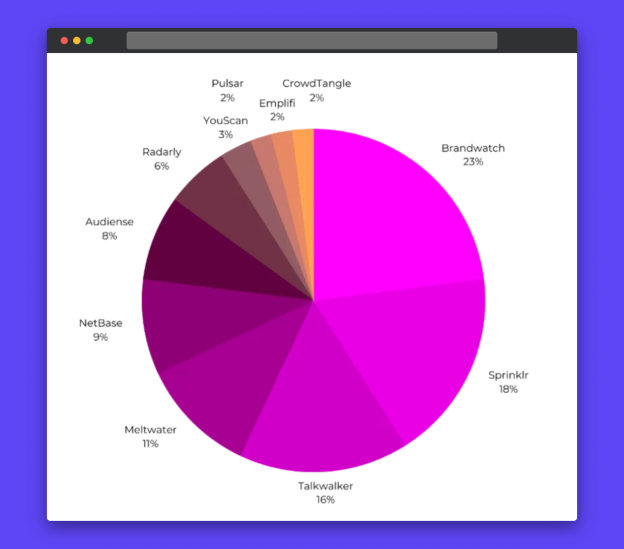
Source
Step 2 – Collect and organize data from multiple channels.
Track conversations across major social media platforms (like Twitter, Facebook, Instagram), review sites, forums like Reddit, blogs, and news sites. Organize the data by channel, topic, or sentiment, and make note of high-traffic posts or discussions that generate a lot of engagement.
Step 3 – Analyze customer feedback for patterns and pain points.
Review conversations to look for recurring themes, questions, or complaints. Identifying these patterns allows you to see where customers are experiencing friction, which in turn helps you identify needs.
Step 4 – Take note of frequently asked questions.
Notice what people are confused about. What do they ask for help or advice on from other people, but not from you? For example, if users repeatedly ask on forums how to use a feature, it probably needs improved documentation, tutorials, or simplification.
Ways to Meet Customer Needs After and Before Identifying Them
Now that you know how to identify customer needs, here are a few ways to continue meeting their needs throughout the customer journey.
1. Personalized Product Recommendations
Use insights from identified customer needs to provide tailored recommendations.
For example, offer product suggestions based on their past behaviors, needs, or preferences to create a highly personalized experience.
2. Customized Onboarding Experiences
Tailor the onboarding process based on specific needs and usage patterns.
For instance, if a customer is new to a complex product, provide a step-by-step tutorial with tips for beginners. If they’re an advanced user, skip the basics and highlight features they might find useful right away.
This is especially important when it comes to products or services that are not popular in society. So, for example, Google does not need to adopt this onboarding strategy for people creating GMail accounts because mail usage is so popular in modern society.
However, a company like Kenny Habetz Injury Law needs to provide very personalized onboarding since most civilians are very confused when it comes to the laws that protect them.
If a client has been in an accident, not only are they very confused and vulnerable, but they also have no idea where to begin seeking help, and a personalized onboarding call can help them feel less alone while also building trust.
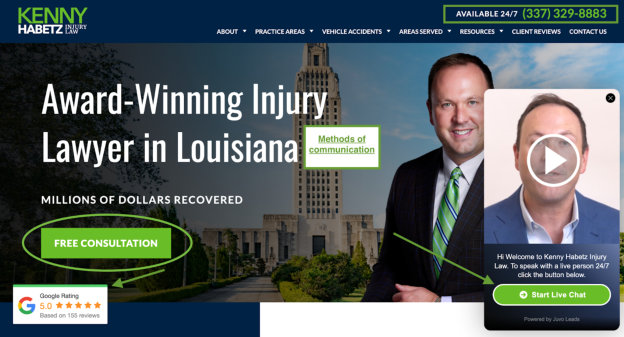
3. Adaptive Communication Channels
Offer multiple ways to reach customer support (chat, phone, email, social media, or in-app help) based on customer preferences.
Then, ensure follow-ups and resolutions are communicated on the platform they prefer, for a seamless experience. This also means making sure your site or platform is optimized for mobile users.
4. Proactive Solutions with Predictive Insights
Use predictive data to address needs before customers even reach out. For instance, if data shows a particular issue arises after six months of usage, send a maintenance reminder or a troubleshooting guide to address it preemptively.
5. Empower Customers with Self-Service Options
Create a resource library or knowledge base that is easily searchable and well-organized.
This allows customers to find answers at their own pace, giving them more control and meeting the need for instant, accessible support.
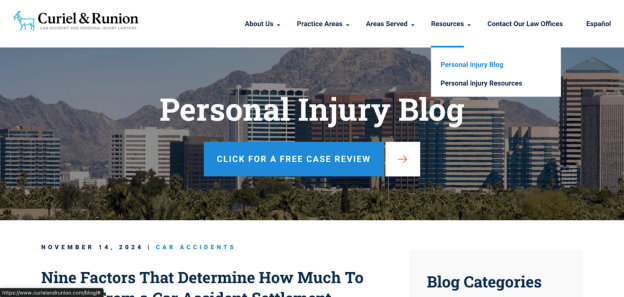
For example, Curiel & Runion Personal Injury Lawyers make sure they maintain a very updated blog so that a potential client can answer some basic questions they might have, develop more trust in their abilities, and learn more about the firm all at once.
6. Implement a Feedback Loop for Continuous Improvement
Regularly gather feedback, and then act on it to improve products or services.
Let customers know that their input has influenced changes—it builds trust, shows your commitment to meeting their needs on an ongoing basis, and for service-based businesses, helps build stronger client relationships.
Final Thoughts
Modern technology has completely demystified customer needs. All you have to do is leverage the tools at your disposal and start listening to what your customers have to say.
Whether you prefer interview-style interactions or would rather use a social listening tool to gather insights for you, there’s a plethora of options to explore.
***************
Freya Laskowski is the founder of SERPManiac, an agency focused on helping brands scale their organic growth with content marketing and SEO services. She is a quoted contributor in online publications like Business Insider, Fox Business, Yahoo Finance, and the Huffington Post. She also owns CollectingCents- a personal finance blog that she grew.